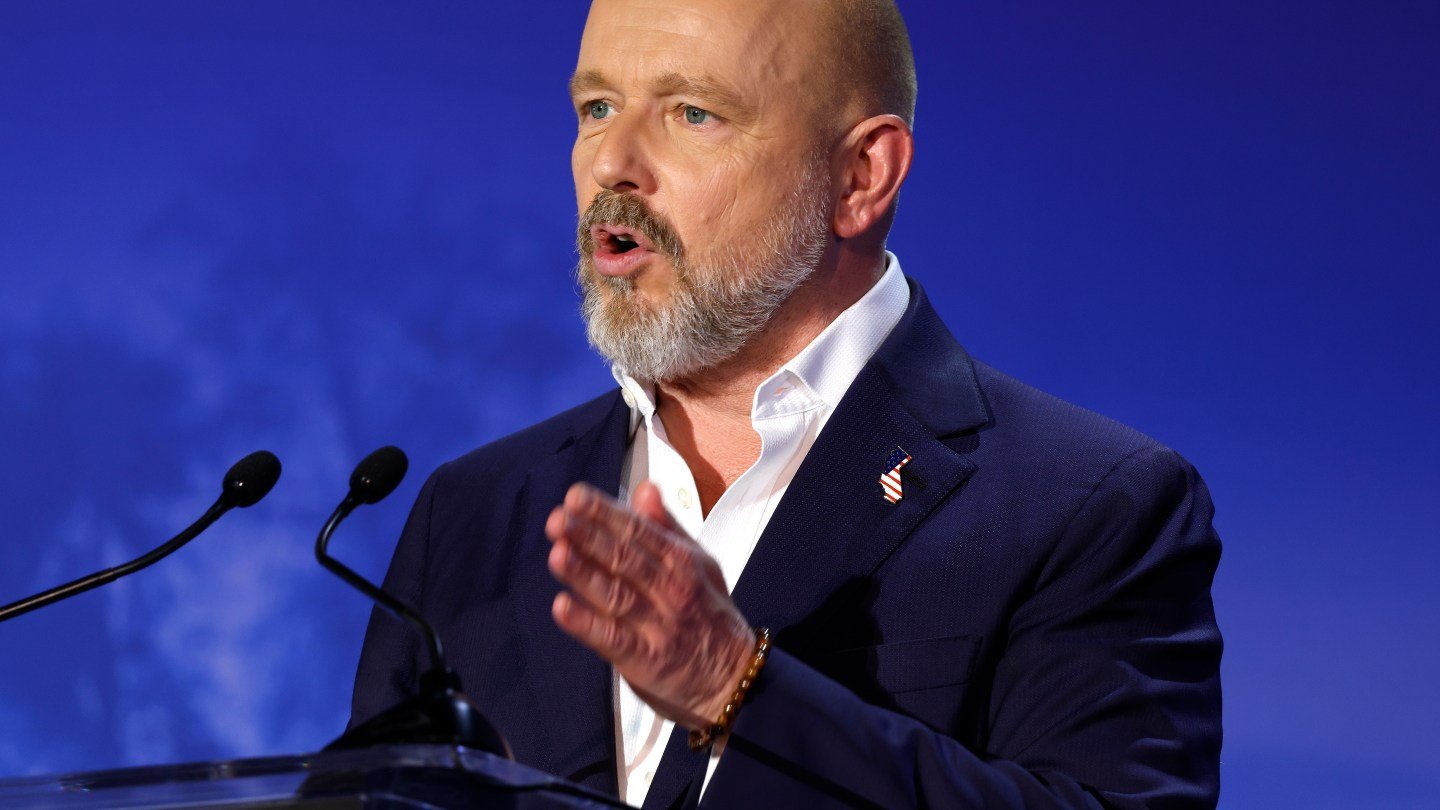
If He Becomes Governor, Steve Hilton Would Propose a Film Tax Credit as High as 60 Percent to Save Hollywood (Exclusive)
California gubernatorial frontrunner Steve Hilton is preparing to announce an ambitious plan to save Hollywood productions and jobs,The Hollywood Reporterhas learned. The Republican candidate will support a film tax-credit plan that could go as high as 60 percent for some productions and would never go lower than 40 percent. Currently, the ceiling in California usually…
California gubernatorial frontrunner Steve Hilton is preparing to announce an ambitious plan to save Hollywood productions and jobs,The Hollywood Reporterhas learned.
The Republican candidate will support a film tax-credit plan that could go as high as 60 percent for some productions and would never go lower than 40 percent. Currently, the ceiling in California usually sits at 45 percent, with many productions getting 35 percent. The move would substantially increase what is already, by many metrics, the most generous film tax-break program in the country.
Like some of his opponents, Hilton also does not want the overall credit capped (it currently cannot exceed $750 million per year). Under the candidate’s plan, the incentive dollars could also be used for post-production and above-the-line costs, neither of which is currently permitted.
Hilton is expected to officially unveil his Hollywood platform Thursday, shortly after meeting with the Motion Picture Association earlier in the day.
Other candidates have offered parts of his plan. Democrats Matt Mahan and Tom Steyer, for instance, both support taking off the cap, while Mahan also favors including above-the-line expenses, a controversial idea for unions, who want to see the money earmarked for more middle-class workers. A Democrat-sponsored bill making its way through the Assembly also would allow credits for post work on projects not shot in the state, which is not currently allowed.
Some gubernatorial candidates, such as Katie Porter, have been more circumspect when it comes to the credits cap, wary of gifting too many incentives to the entertainment industry as the state budget threatens to crack under other pressures.
The issue is existential for Hollywood. California-based shoots have seen a reduction of more than 50,000 jobs in recent years as studios cut back or move elsewhere, though some rays of light have peeked through this year, particularly in Los Angeles.
In the hope of making California more attractive to producers, Hilton also aims to propose a “Governor’s Expediter” role for entertainment shoots, revamp theCalifornia Film Commission and require that credit applications, in many cases, are adjudicated within 30 days, all of which he believes will help the cause.
But it is the potential 60 percent credit that would really turn heads, making productions exceptionally inexpensive and countering the effects of lower prices in other states. Cost-of-living in production-hotbed Georgia, for instance, is 39 percent lower than in the Golden State, which means housing and feeding a film crew there comes a lot cheaper. But a tax credit of double the size in California (Georgia usually caps out at 30 percent) would offset that.
In a phone interview about the plan, Hilton said, “I don’t want to be reckless with resources but if we want to really change behavior, we may have to do something extravagant.”Hilton said he has been influenced byCass Sunstein and Richard Thaler’s“Nudge Theory,” which essentially argues that incentives change behavior more than restrictions.
He does caution that the 60 percent credit is something he is “floating” and that the final number could depend on a lot of factors, including a federal tax credit, should it happen. (A higher federal credit would allow for a smaller California increase.)The 60 percent could also be intended as a “kick-start” plan that would only run for a fixed period, like five years.
Hilton has been running on a traditional small-government platform of lower taxes and fewer regulations. He believes that such a plan can assist in restoring some of the productions that have left California. A recent regulatoryincident involving a Baywatch shoot at Venice Beach potentially would support his claims, though the issue was resolved without too much fanfare.
“I’ve been hearing for months about how hard it is to shoot in Los Angeles,” Hilton said on the phone call. “We would have an office run by someone who’s just a bulldozer when it comes to bureaucracy and who could just get on the phone to move things along.”
While appealing to studios, the post-production and above-the-line credits initiatives would be expensive, perhaps running in the billions. Hilton does have a bit more wiggle room on tax incentives than his Democratic opponents since he aims to lower spending elsewhere, allowing for lower tax revenue even in an austere environment.
Also not addressed by Hilton — or, for that matter, any other candidate’s public proposals — is how to account for the advent of AI-generated video, which seems poised to drastically cut down on physical shoots generally, making the real enemy of California shoots not New York or Georgia but Silicon Valley.
The production issue cuts to the heart of the race for the state’s top job. As the gubernatorial campaign continues to be something of an unresolved free-for-all, the question of how to save Hollywood, a core industry (and, not insignificantly, an appealing fundraising opportunity) remains top-of-mind for many candidates to go along with education, housing and the rest of the electoral bucket.
Hilton has won the endorsement of DonaldTrump, which he will argue will help him win approval for that federal film tax credit to keep productions in the U.S., even if that issue has mostly stalled in Washington. Hilton has met with Jon Voigt, who has been pushing the credit in D.C., on multiple occasions, including last week.
A former Fox News host, Silicon Valley entrepreneur and British policy advisor, the U.K.-born, Bay Area-dwelling Hilton believes he has a certain outsider appeal other candidates lack; unlike many of his opponents, he has never run for public office.
For both the primary and, should he get there, the general election, Hilton believes he can win over enough moderates and Democrats disenchanted with the educational and financial condition of the state to land him in Sacramento. But California has run increasingly blue since Arnold Schwarzenegger left the governor’s office in 2011, and whether aTrump-approved Republican can turn that tide on an Election Day already expected to be a national repudiation of the president remains to be seen.
The primary takes place on June 2, with the top two vote-getters advancing regardless of party. Hilton maintains a narrow lead in the latest polls over all primary candidates, though a far greater number of voters say they are undecided.