North Korea Amends Constitution to Mandate Automatic Nuclear Strike if Kim Jong Un is Assassinated
Pyongyang: North Korea has revised its constitution to require an automatic nuclear retaliation if leader Kim Jong Un is killed or if the country’s nuclear command-and-control system is threatened by hostile forces.The amendment was approved during a two-day session of the Supreme People’s Assembly (SPA), North Korea’s rubber-stamp parliament. State media KCNA reported that Kim…
Pyongyang: North Korea has revised its constitution to require an automatic nuclear retaliation if leader Kim Jong Un is killed or if the country’s nuclear command-and-control system is threatened by hostile forces.
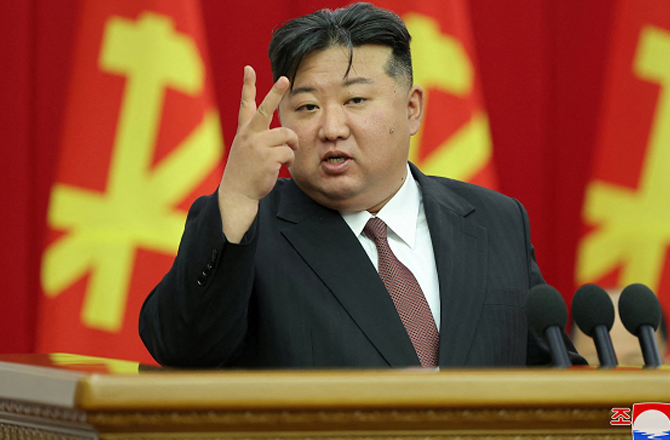
The amendment was approved during a two-day session of the Supreme People’s Assembly (SPA), North Korea’s rubber-stamp parliament. State media KCNA reported that Kim Jong Un addressed the participants, describing the move as a “historic” step to bolster national defense capabilities and protect the country’s sovereignty.4e1351
According to the updated Article 3 of the nuclear policy law, “If the command-and-control system over the state’s nuclear forces is placed in danger by hostile forces’ attacks, a nuclear strike shall be launched automatically and immediately.” The provision also explicitly covers scenarios involving the assassination of the supreme leader.
Kim Jong Un emphasized that the changes strengthen the nation’s irreversible status as a nuclear power and serve as a powerful political tool against external threats. He highlighted trilateral military cooperation among the United States, South Korea, and Japan as a major security risk.
Analysts link the timing of this constitutional update to heightened global tensions following the US-Israel strikes on Iran earlier this year, in which Supreme Leader Ayatollah Ali Khamenei and other top officials were killed. The move further rejects any possibility of nuclear disarmament, a key demand from the US and its allies.
In addition to nuclear provisions, the amendments reportedly remove references to peaceful reunification with South Korea, formalizing the “two hostile states” policy.
This development is expected to raise concerns in the region and among Western powers regarding escalation risks on the Korean Peninsula.