Former Grand Mufti Ahmad Badreddine Hassoun, Ally of Assad Regime, Stands Trial
DAMASCUS (International Desk) — More than a year after the fall of Bashar al-Assad’s government in Syria, prosecutions of officials and supporters of the former regime continue. Among those now facing trial is former Grand Mufti Ahmad Badreddine Hassoun, whose first court hearing was held recently at the Palace of Justice in Damascus.The 77-year-old cleric…
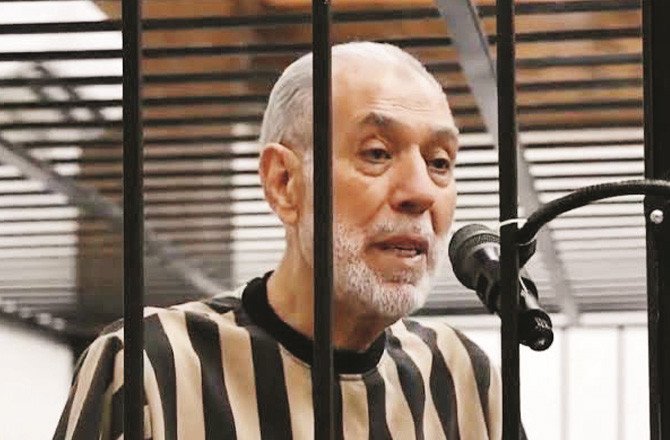
DAMASCUS (International Desk) — More than a year after the fall of Bashar al-Assad’s government in Syria, prosecutions of officials and supporters of the former regime continue. Among those now facing trial is former Grand Mufti Ahmad Badreddine Hassoun, whose first court hearing was held recently at the Palace of Justice in Damascus.
The 77-year-old cleric is accused of war crimes, crimes against humanity, and incitement to murder committed while he held his official post. According to the charge sheet presented in court, statements he made in his official capacity provided legal and moral justification for atrocities committed by regime forces during the armed conflict. Hassoun is also known as the “Barrel Mufti” for his support of the use of barrel bombs in various parts of Syria, particularly Aleppo.
Ahmad Badreddine Hassoun was born on April 25, 1949, in Aleppo. His father, Sheikh Adib Hassoun, was a Sufi scholar. In 1967 he went to Egypt, where he studied Shafi’i jurisprudence at Al-Azhar University and later earned a doctorate. After serving as an imam and preacher in mosques in Aleppo, he was elected to the Syrian parliament in 1990, serving until 1998. In 2005, he was appointed Grand Mufti of Syria, a position that was itself abolished by presidential decree in 2021.
Hassoun’s rise was closely tied to the Baath Party and the Assad family’s rule, and he was seen as close to Syria’s security establishment. From the outset of the 2011 Syrian uprising, he backed the Assad government and dismissed the protests as a “foreign conspiracy.” According to Amnesty International, his position was also used in the process of approving death sentences.
Following the collapse of the Assad government in December 2024, Hassoun found himself facing accountability before the new leadership. In February 2025, protesters stormed his home, and after an arrest warrant was issued in March 2025, he was detained at Damascus Airport. Formal proceedings against him began in July 2025, and following the first hearing, the case has now been adjourned until July 16.
An incident during the hearing also drew attention: reports say that when Hassoun rose to give his defense statement, he began reciting a verse from the Quran, prompting the judge to interrupt him, saying, “You are not here to preach — you are here to answer the court’s questions.” Video of the exchange went viral on social media, drawing mixed reactions — some users defending the proceedings against him, while others felt such treatment of a religious scholar was inappropriate.