Saudi Arabia, Turkey and Pakistan sign landmark defense pact in Mecca
Riyadh/Ankara/Islamabad — Saudi Arabia, Turkey and Pakistan have signed a joint defense agreement in Mecca, marking a significant realignment of security cooperation among three of the world’s largest Muslim-majority countries amid rising regional tensions.Leaders of the three states — Turkey’s President Recep Tayyip Erdogan, Saudi Crown Prince Mohammed bin Salman and Pakistan’s Prime Minister Shehbaz…
Riyadh/Ankara/Islamabad — Saudi Arabia, Turkey and Pakistan have signed a joint defense agreement in Mecca, marking a significant realignment of security cooperation among three of the world’s largest Muslim-majority countries amid rising regional tensions.
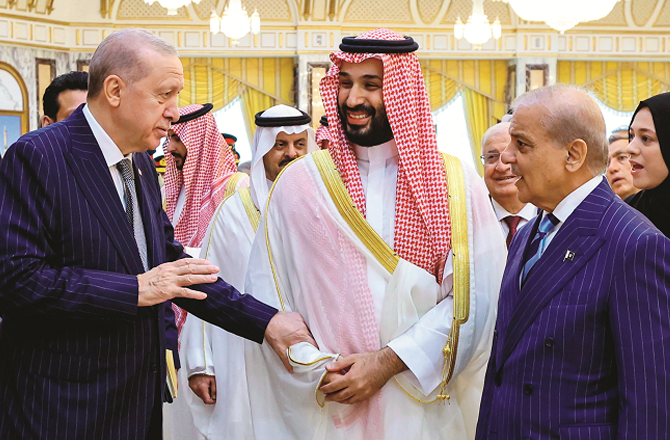
Leaders of the three states — Turkey’s President Recep Tayyip Erdogan, Saudi Crown Prince Mohammed bin Salman and Pakistan’s Prime Minister Shehbaz Sharif — formally endorsed the “Mecca Joint Defense Agreement,” officials said. The pact pledges mutual security support, shared defense planning, and closer coordination of military operations and defense industry cooperation. Signatories described the deal as defensive in nature and not directed at any specific country.
International media framed the agreement against the backdrop of escalating tensions with Iran. Major outlets including Reuters, BBC, CNN, The New York Times, Associated Press, Financial Times and The Wall Street Journal emphasized that the pact unites influential Sunni-majority U.S. partners and could reshape regional security dynamics if implemented. Some analysts noted the move signals an effort to reduce dependence on external security guarantees while creating a regional deterrent.
Officials said the pact includes commitments to consider an armed attack on any one signatory as an attack on all, joint exercises, intelligence-sharing, and collaboration in defense manufacturing. The agreement’s backers argue it will strengthen collective defense, burden-sharing and regional stability; critics warn it could deepen divisions and risk escalation during an already volatile period.
The Pakistani Foreign Ministry said it was closely monitoring developments and reiterated Pakistan’s broader defense and diplomatic priorities. Riyadh described the accord as a step toward deeper regional cooperation; Ankara framed it as reinforcing collective security for Muslim-majority states. Observers will watch whether other countries join, how the pact is operationalized, and its effect on relations with the United States, Iran and Israel.