Iran and Oman Agree on Shipping Route Map for Strait of Hormuz
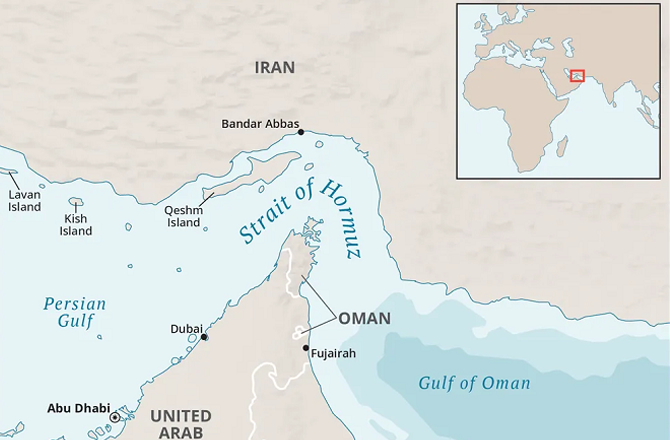
Tehran/Muscat: Iran and Oman have agreed on a joint map for a secure shipping corridor in the Strait of Hormuz, a move described as significant progress in bilateral maritime cooperation. Iranian Foreign Ministry spokesman Esmaeil Baqaei said technical talks continue, but full restoration of peace and security in the strait depends on an end to…
Tehran/Muscat: Iran and Oman have agreed on a joint map for a secure shipping corridor in the Strait of Hormuz, a move described as significant progress in bilateral maritime cooperation. Iranian Foreign Ministry spokesman Esmaeil Baqaei said technical talks continue, but full restoration of peace and security in the strait depends on an end to U.S. interference and maritime restrictions.
According to the spokesman, Iran and Oman — both coastal states bordering the Strait of Hormuz — held constructive consultations that resulted in an agreed plan and a designated safe shipping route. Baqaei told reporters that no major obstacles arose during discussions and both sides engaged constructively.
Baqaei blamed the current insecurity in the Strait of Hormuz and the Persian Gulf on what he described as aggressive actions by the United States and Israel. He said talks with Oman are technical in nature and focused on ensuring safe maritime transit, whereas the full reopening and durable security of the strait hinge on the United States ending interference and lifting maritime restrictions, and complying with the terms of any memorandum of understanding.
The Strait of Hormuz is crucial for global trade and energy flows. Given its importance to international oil shipments, any instability can have immediate implications for global markets. While the Iran-Oman agreement is being viewed as a positive step toward regional stability, experts say lasting peace will also depend on policies of other global powers.
International reaction and next steps
Iran’s Foreign Ministry said technical discussions will continue and coastal states will monitor implementation.
Regional and international partners are likely to assess political and economic implications, while maritime security organizations may increase oversight.
Analysts note that a change in U.S. policy and the lifting of restrictions would be decisive for fully securing the corridor.