Darth Vader’s Satirical Speech Steals the Show at San Diego Meeting on Flock Cameras
SAN DIEGO: At a public meeting on the controversial Flock Safety surveillance cameras used by police in San Diego, California, a man dressed as Darth Vader took the microphone and delivered a satirical speech that highlighted a sensitive dimension of the debate.At the August 19, 2026 meeting of the Public Safety and Livable Neighborhoods Committee,…
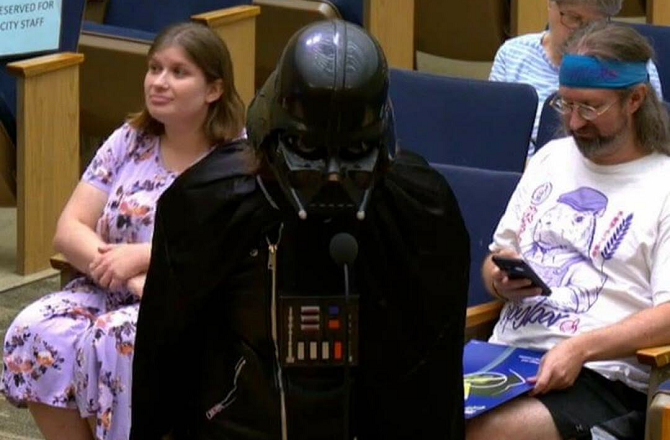
SAN DIEGO: At a public meeting on the controversial Flock Safety surveillance cameras used by police in San Diego, California, a man dressed as Darth Vader took the microphone and delivered a satirical speech that highlighted a sensitive dimension of the debate.
At the August 19, 2026 meeting of the Public Safety and Livable Neighborhoods Committee, the man — in full costume and helmet, speaking in Vader’s signature deep voice — appeared to endorse the Flock cameras. “The Empire loves Flock,” he declared, adding that the technology should be used to track down and monitor “rebel scum.” According to video of the meeting, he even joked that he’d like to use the cameras to keep tabs on his ex-girlfriend.
In reality, the speech was not an endorsement but a satirical jab at the cameras’ potential for misuse. The speaker mocked the idea of a city’s surveillance network expanding to the point of monitoring people’s everyday movements, playgrounds, and public spaces. He also sarcastically suggested cutting funding for parks, libraries, daycare centers, and homeless shelters in order to boost police funding.
Flock Safety’s automatic license plate reader (ALPR) cameras are deployed in more than 6,000 communities across the US, with the company claiming over 120,000 cameras in its network. The American Civil Liberties Union (ACLU) has warned the system is moving toward creating a “nationwide mass surveillance network,” and has raised concerns about data being shared with federal agencies such as ICE. Despite mounting public pressure, the ACLU has called Flock’s recent policy changes insufficient to address civil liberties concerns.