26 incursions into Al-Aqsa in September, call to prayer blocked 150 times at Ibrahimi Mosque: Palestinian ministry
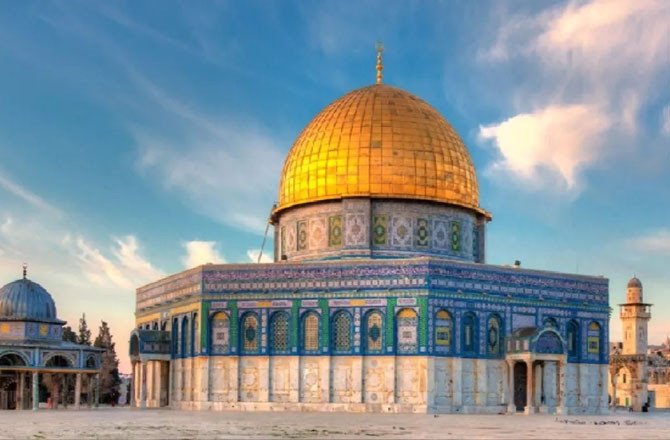
The Palestinian Ministry of Endowments and Religious Affairs says Israeli forces and settlers stepped up actions against Islamic holy sites in September, including Al-Aqsa Mosque in occupied East Jerusalem and the Ibrahimi Mosque in Hebron.According to the ministry’s monthly report, issued October 6, Israeli forces and settlers entered the Al-Aqsa compound 26 times during the…
The Palestinian Ministry of Endowments and Religious Affairs says Israeli forces and settlers stepped up actions against Islamic holy sites in September, including Al-Aqsa Mosque in occupied East Jerusalem and the Ibrahimi Mosque in Hebron.
According to the ministry’s monthly report, issued October 6, Israeli forces and settlers entered the Al-Aqsa compound 26 times during the month. The report says some Jewish religious groups have increased calls to allow settler entry on Saturdays as well. The ministry says the aim is to pave the way for changing the holy site’s existing administrative and religious arrangements and to entrench its temporal and spatial division.
The ministry also noted a rise in Jewish religious rituals and group prayers in the Al-Aqsa courtyard. Some settlers also held group rituals in the Bab al-Rahma cemetery, next to the eastern wall, and a shofar was blown near Muslim graves, all under heavy security. The report describes so-called Talmudic rituals, collective prayers and full prostration in the courtyard. It adds that during Friday prayers and sermons, Israeli forces kept strict restrictions on parts of the mosque, especially the Qibli prayer hall and the area around the Dome of the Rock.
Entry via Bab al-Maghariba since 2003
Al-Aqsa is the third holiest site in Islam. Jews call the whole compound the “Temple Mount” and religiously claim that Jewish places of worship stood there in antiquity. The compound has historically been administered by the Jerusalem Islamic Waqf, which is linked to Jordan’s Ministry of Endowments, and under the current arrangement it is reserved for Muslim worship. According to the Palestinian ministry, since 2003 Israeli police have allowed settlers to enter the compound through Bab al-Maghariba under police protection, despite opposition from Palestinians and Jordan.
Call to prayer blocked 150 times at Ibrahimi Mosque
At the Ibrahimi Mosque in Hebron, the report says the call to prayer was blocked 150 times in September, and the mosque was closed completely for six days for Jewish holidays. The ministry says the mosque’s eastern gate remains closed and its windows have been covered with barriers, measures in place since early 2025. Restrictions on certain prayer times also continued for 100 consecutive days, according to the report.
The mosque is in Hebron’s old city, where, according to the ministry, about 400 Israeli settlers live under the protection of roughly 1,500 Israeli soldiers. Its current division dates to the 1994 massacre in Hebron, when a Jewish settler killed 29 Palestinians praying in the mosque. It was then split in two, with 63 percent allocated to Jews and 37 percent to Muslims.
Nablus mosque set on fire, Jericho prayer hall demolished
The ministry also listed attacks on other West Bank mosques. It says settlers set fire to the Imad al-Din Zangi Mosque in Nablus and wrote racist slogans on its walls. In al-Jiftlik, in the Jericho governorate, Israeli forces demolished a prayer hall known as “al-Duwaisat.”
The ministry said the actions are not confined to Al-Aqsa and the Ibrahimi Mosque but are spreading to other Islamic places of worship and holy sites in the West Bank. Calling the incidents “dangerous provocation,” it appealed to the international community, human rights organizations and aid agencies to protect Islamic holy sites and preserve their historical and legal status.