
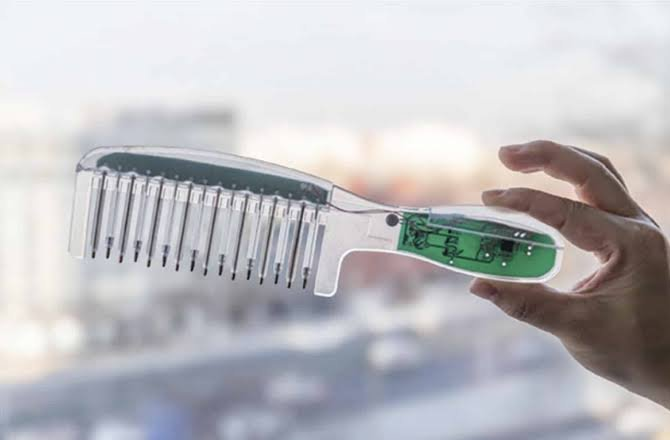
Electric comb shows promise against baldness in mice, regrew hair within 28 days
BEIJING, — Chinese scientists have developed an experimental electric comb, called “Detangle,” that may help regrow hair by using mild electrical stimulation and delivering medication directly to hair follicles. In tests on mice, the system produced nearly 100 percent hair regrowth within a month, compared with about 70 percent for conventional minoxidil treatment. However, it…
BEIJING, — Chinese scientists have developed an experimental electric comb, called “Detangle,” that may help regrow hair by using mild electrical stimulation and delivering medication directly to hair follicles. In tests on mice, the system produced nearly 100 percent hair regrowth within a month, compared with about 70 percent for conventional minoxidil treatment. However, it has not yet been tested on humans.
Researchers at Beihang University designed the device to be used like an ordinary comb. Its teeth contain electrodes of varying heights and compartments that hold medication. When combed through the hair, the electrodes create an electric field near the roots, helping treatment compounds reach hair follicles beneath the skin.
The research was published in the scientific journal Nature Communications on November 3, 2026. According to the researchers, the electric field delivered treatment to the hair-root area nearly nine times deeper than conventional topical application.
The system uses two biological approaches. In the first, genetic material related to vascular endothelial growth factor A (VEGF-A) is delivered to hair follicles to promote angiogenesis, the formation of new tiny blood vessels. Improved blood supply can help deliver nutrients and oxygen to hair roots.
In the second approach, small interfering RNA (siRNA) targeting the SRD5A2 gene is used to reduce production of androgen, a hormone linked to male-pattern baldness. The device therefore aims to influence both hair-root stimulation and key biological factors involved in hair loss.
The researchers tested the technology in an experimental model of male-pattern hair loss. Within a month, the Detangle system showed nearly 100 percent improvement in hair regrowth, while conventional topical minoxidil produced a result of about 70 percent.
Male-pattern baldness, medically known as androgenetic alopecia, is one of the most common forms of hair loss. Genetic sensitivity causes hair follicles to gradually shrink under the influence of certain hormones. Hair becomes thinner and weaker before growth stops in some areas.
Existing treatments include minoxidil, finasteride and hair transplantation, but results vary from person to person. Minoxidil can take several months to show results and must be used continuously, while finasteride can have possible side effects including sexual problems and depression. Hair transplantation is an expensive surgical procedure.
The researchers stressed that Detangle cannot yet be considered a replacement for existing treatments, as its success has only been demonstrated in mice. A treatment that works in animals does not necessarily work in the same way in humans.
Before human trials, researchers will need to conduct further studies on the device’s safety, appropriate electrical dosage, drug delivery and possible side effects. If future trials prove its effectiveness and safety in humans, it could open a new avenue for treating male-pattern baldness.


