Japan and China continue to spar over Takaichi’s Taiwan remarks
The Japanese and Chinese governments continue to trade words over Prime Minister Sanae Takaichi’s remarks about a role for Japan in a Taiwan contingency, with the Japanese governmentprotestingthe Chinese government’sissuanceof a travel warning about Japan to its citizens. This exchange followed each government’s summoning the other’s ambassador for reprimands. On Friday, Japan’s Ministry of Foreign…
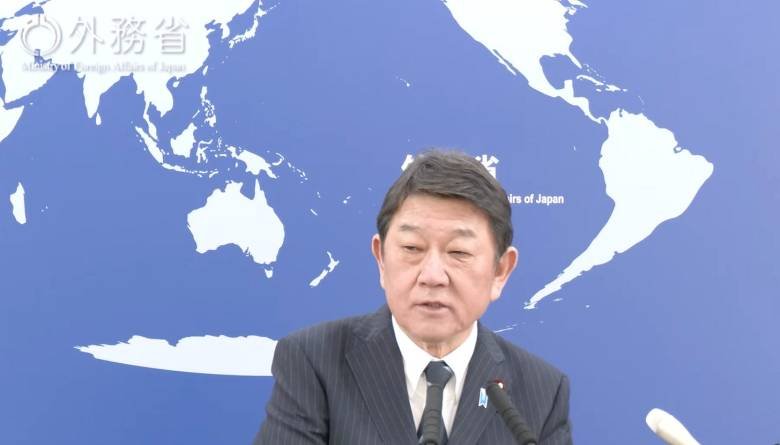
The Japanese and Chinese governments continue to trade words over Prime Minister Sanae Takaichi’s remarks about a role for Japan in a Taiwan contingency, with the Japanese governmentprotestingthe Chinese government’sissuanceof a travel warning about Japan to its citizens.
This exchange followed each government’s summoning the other’s ambassador for reprimands. On Friday, Japan’s Ministry of Foreign AffairssummonedChina’s ambassador to lodge a protest with his government; Japan’s ambassador had previously beensummonedfor a similar dressing down in Beijing.
The Takaichi government may bereluctantto escalate further– notwithstandingcallsfrom within the Liberal Democratic Party (LDP) and Ishin no Kai to declare Xue Jian, China’s consul-general in Osaka, persona non grata – but even if the two governments are able to refrain from further steps,it isdifficultto see how Tokyo and Beijing will be able to put the relationship on a sounder footing in the near term.
Takaichi government prepares the groundwork for a fiscal shift
The Takaichi administration, focused on introducing a stimulus package including measures to address public concerns about the rising cost of living, may benearinga package totaling JPY17 trillion, surpassing last year’s JPY13.9tn.
The pillars of the extra budget are familiar from earlier reporting – tax reductions, including increasing the income tax reduction to JPY1.6 million, additional defense spending to bring total spending to 2% of GDP this fiscal year, and initial “strategic investments” in priority sectors – but the scale is higher than suggested previously.
This package, which could entail the largest supplemental budget since 2013 (excepting those introduced to combat the Covid shock), is the clearest sign yet that Takaichi, despite her government’s emphasis on “responsible fiscal expansion,” is, inNikkei’swords, “aiming to remove restraints” on fiscal policy.
Takaichi has now repeatedly discussed shifting how Japan pursues a primary balance target, which, when combined with her ambitious spending plans, suggests that the result could be larger deficits even as the government hopes that raising tax revenues will facilitate fiscal expansion.
And, despite hopes that former finance minister Taro Aso might push the government in the direction of greater fiscal responsibility, these reports come shortly after Asosaidthat he wanted the government to talk about regulatory reform and “not just how much to allocate.”
The cabinet is expected to approve the stimulus package on Friday, November 21.
The next phase in building a national security establishment
An important part of the late Shinzo Abe’s political project was the construction of a Japanese national security state that would be comparable to those in the United States and Japan’s other peers.
To this end, between his two governments, Abe established the Ministry of Defense and the National Security Secretariat, elevated the status and visibility of uniformed Self-Defense Forces personnel and passed laws to strengthen the government’s management of state secrets.
The Takaichi government is preparing to continue this project. The LDP and Ishin no Kai already agreed in their partnership agreement to pursue the creation of a national intelligence agency, and on November 14 the LDPconvenedits Intelligence Strategy Headquarters for the first time to begin discussions on legislation – intended to be submitted to the Diet in 2026 – to establish an intelligence agency.
The party is also considering counterespionage legislation that would be Japan’s answer to the US Foreign Agents Registration Act (FARA), for which Takaichireiterated her support during parliamentary questioning on Thursday, November 13.
Separately,Finance Minister Satsuki Katayama met with the prime minister Friday andexpresseda desire to begin discussions on drafting legislation to establish a Japanese-equivalent of the Committee on Foreign Investment in the United States (CFIUS).
Finally,a debate may bestirringabout Japan’s nuclear weapons policy. The Takaichi government is looking to update Japan’s three national security documents in 2026 and the government has hinted that it could welcome a debate on modify or exclude Japan’s three non-nuclear principles – that Japan will not make, possess, or permit the introduction of nuclear weapons – as part of the drafting process.

During the 2024 LDP leadership election Takaichi had suggested that Japan should consider modifying the principles to permit the introduction of US nuclear weapons, following Abe’s suggestion in 2022 that Japan discuss nuclear sharing with the US.
When asked about this in the Diet this week, she ducked the question but attention to this issue will likely grow as the drafting process ramps up. As a sign that this debate is likely to grow, Constitutional Democratic Party (CDP) leader Yoshihiko Nodasaidon Saturday that the three principles should absolutely be maintained.
The LDP celebrates its 70th birthday
The Liberal Democratic Party (LDP)markedthe 70th anniversary of its founding on November 15, issuing astatementboasting of its history as a “national party working for the benefit and happiness of the entire nation” while noting the challenges facing the country at a “historic turning point.”
On Friday, November 14, the partyheldits first meeting of the committee tasked with drafting a “vision” statement in time for its next convention in March, intended to chart the party’s course until its hundredth anniversary in 2055. With the party marking this anniversary amidst a serious crisis, the occasion seems to be mostly prompting discussionof how this existential crisis compares with the party’s earlier existential crises.
Further reading
- Adeep divefromNikkeiinto thepolitics of Japan’s potential involvement in a Taiwan contingency.
- South Korea’splansto raise defense spending to 3.5% of GDP could putpressure on Japan ahead of the revision of the three documents.
- Sankeicolumnist Hideo Tamura wants Takaichi toscrapthe primary balance target entirely.
- The unusualcircumstancessurrounding thereplacement of Masataka Okano as national security adviser by Keiichi Ichikawa at the start of the Takaichi government.
- Bungei Shunjuhasmore on Ichikawahere.
- AprofileofTakayuki Kobayashi in his role as LDP policy chief.
- The LDP’s tourism policy committee hascalledforraising the departure tax to JPY 3000.
- Takaichi is taking somecriticism forrefusingto commit to retaining a JPY1,500 minimum wage target.
- One month after the end of the coalition,Komeito supporterscontinueto grapple with the question of where the party goes next.
- FromMainichi, areportonthe complicated status of the LDP’s former factions, including insight into how the ex-Kishida faction tried and failed to coordinate in the leadership election.
- In a television appearance Thursday, former prime minister Shigeru Ishiba questionedthe wisdom of reducing the number of Diet members.
- Ishiba alsocriticizedTakaichi’s remarkson a Taiwan contingency.
- In an interview Saturday,Ishin no Kai co-leader FumitakeFujita saidthat his party wants to pursue electoral reformin the form of the reintroduction of multi-member districts ahead of the next general election.
- Butdoes Fujita havemorequestionable payments in his accounts?
Longtime Japan politics and policymaking analystTobias HarrisheadsJapan Foresight LLC.This article was originally published on his Substack newsletterObserving Japan.It is republished with permission.