See Trump foreign policy patterns in Art of the Deal health care
President Trump is often derided for not having a health reform plan, or even his “concepts of a plan” he’s talked about, or more narrowly, a plan to replace the Affordable Care Act and its enhanced tax credits currently under debate. It’s true he has none of these. But he does have a distinctive game…
President Trump is often derided for not having a health reform plan, or even his “concepts of a plan” he’s talked about, or more narrowly, a plan to replace the Affordable Care Act and its enhanced tax credits currently under debate. It’s true he has none of these.
But he does have a distinctive game plan of sorts that’s unlike anything we’ve seen before: a series of one-off deals with the health care industry. Most rely on presidential jawboning and voluntary action by industry groups. Some have the threat of regulatory action to go along with hard-edged presidential persuasion. They have the character more of real estate deals than “plans.”
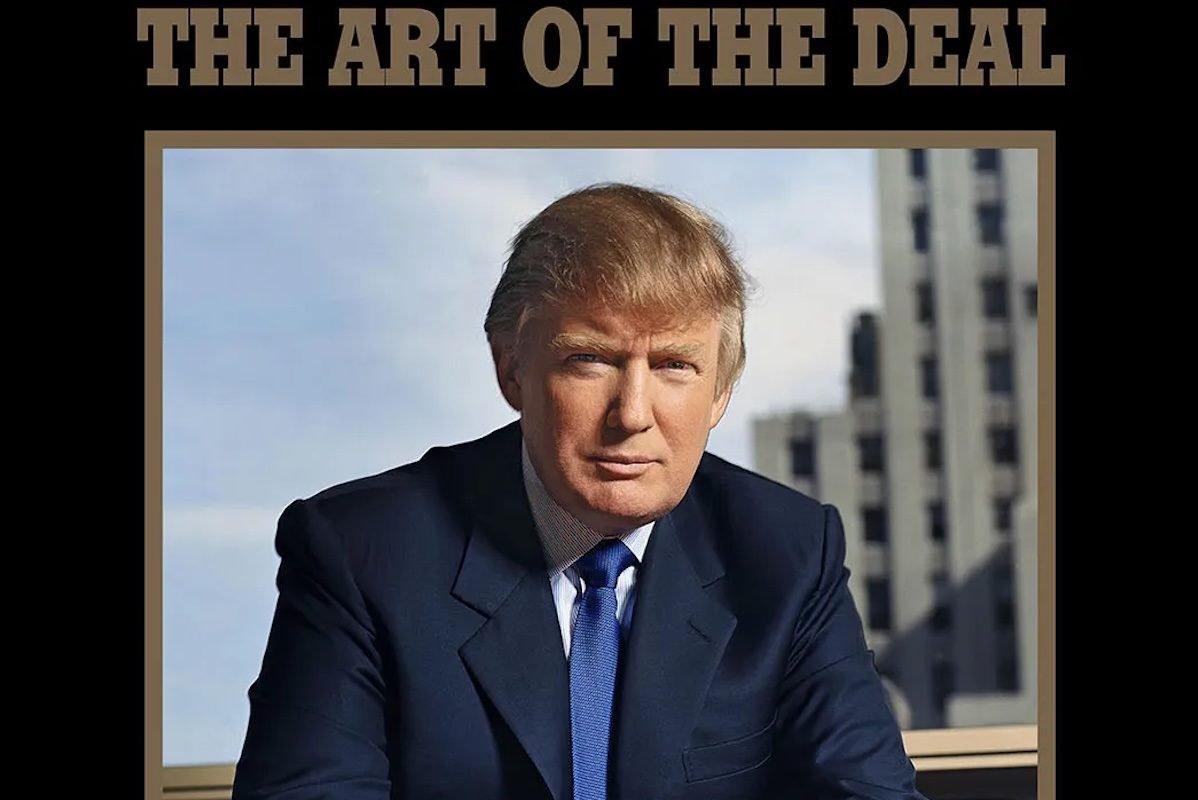
Or they’re more similar to Trump’s approach to some of what he calls his foreign policy “deals” (like the current attempt at a peace deal in Ukraine). Or his tariff deals that come and go. To use a word commonly associated with Trump, it’s health policy by transaction.
The plans are far from comprehensive health reform plans addressingcoverage and costs and they don’t change the long-term profit incentives of the health care companies that participate in the deals. They in no way offset the huge cuts in Medicaid and the Affordable Care Act made on his watch.
Still, they signify action to voters on issues they care about, can capture news cycles, and even do some good, like lowering some drug prices, at least temporarily. The benefits of some of the deals are exaggerated as Trump is wont to do.A big question about them is whether they have staying power.
There have been three major deals so far, and Trump has started to talk up a fourth deal that, at first blush, sounds bigger than all the others combined.
Trump’s first big set of deals was with the drug companies. It began with deals with three, then eventually nine, drug companies to lower prices on drugs provided to Medicaid beneficiaries, characterized as part of a voluntary “most favored nation” (MFN) policy aligning prices with those paid by other wealthy nations, in return for reported tariff relief. (Whether these deals actually lower costs for Medicaid programs below the rebates they currently get is not my focus here.)
Trump also made deals with Eli Lilly and Novo Nordisk to cut GLP-1 weight-loss drug prices voluntarily for some patients and to sell the drugs to others on TrumpRx. The Center for Medicare and Medicaid Innovation will test out models for MFN targets,and regulations have now been promulgated to codify the MFN policy, potentially giving it staying power, at least for some drug prices. For a discussion, see KFF’s Wonk Shop.
The administration also announced a voluntary effort with big health insurance companies to speed upand simplify prior authorization review, including promised reforms to cut back on what is reviewed and how often. The effort is expected to kick in this year, though follow through by the companies is TBD and merits scrutiny.
The public is beyond frustrated withprior authorization review, as are physicians, but only 20% of the public wasawareof the announcement when it was made in June, and few had much faith that it would produce results.
Somewhat incongruously, at the same time as they were cutting back on prior authorization review, the administration also announced a demonstration project to introduce targeted prior authorization review to traditionalMedicarefor the first time, focusing on procedures it sees as prone to fraud and abuse.
Another Trump voluntary initiative led by the Centers for Medicare and Medicaid Services is a partnership with more than 60 providers, payers and software companies to improveelectronic patient information sharingand give consumers better digital tools to use to navigate the health system and public programs.
The partnership would require that some companies commit to inter-operability but generally presents participating companies with more new opportunities to make money than sacrifices.
And just before the holidays, in what would be by far the most ambitious deal yet, the president turned to what sounded like a fourth deal in the works, talking the health insurance industry into lowering their premiums.
Trump’s characterization of what might happen was grandiose:
We should have a meeting, and we should talk to them because I would say that maybe with one talk, they would be willing to cut their prices by 50, 60, or 70%. They’ve made a fortune.
Trump’s rhetoric is often exaggerated, and it’s possible he was mixing up profits and prices in his remarks or even that this deal will not materialize. Still,he said what he said, and cuts of that magnitude are fanciful. However inflated the premiums charged by health insurance companies may be, they do reflect the underlying costs of hospitals, outpatient care, drugs and the entire health system, and cannot simply be cut in half.
The would-be insurance company initiative is illustrative of the “make a deal” approach: jawbone, negotiate in some fashion, make a deal, keep it simple and understandable to voters and announce it with fanfare and usually lots of exaggeration, with no broader plan and without addressing the underlying causes of the problem.
Still, any concessions made by the insurance industry would be a political win for Trump, garner news coverage, and at least appear to address voter concerns about affordability in a tangible way. It could also be argued that Trump’s deals, however limited and exaggeratedthey may be, are disruptive in a positive way. Trump’s drug deals, for example, have helped move the drug industry from politically untouchable to fair game.
Similarly, his policies towards Russia and Europe are reprehensible to many but have resulted in Europe coming together and increasing defense spending in response.
There’s an infamous example of a voluntary effort to restrain costs in health care under threat of government action that taught us a lot. It happened in the late 1970s and was called the Voluntary Effort. The shorthand was the “VE.”
President Jimmy Carter and then Health, Welfare and Education Secretary Joesph Califano put together what was probably the most aggressive cost containment plan ever in health care,featuring a cap on hospital revenue growth. (Bill Clinton had an aggressive one as well, proposing to cap increases in insurance premiums).
Carter’s plan failed partly when the industry, led by virtually every major industry group, promised a voluntary effort to restrain hospital expenditure growth by 2 percentage points below 1977 rates. Growth rates were so high then (partly due to high inflation) that the target rates for 1978 and 1979 were 13.6% and 11.6%, respectively, which is hard to fathom now as we complain mightily about much smaller increases.
As I captured in aSad History of Health Care Cost Containment As Told in One Chartarticle years ago, a Health Affairs article I wrote with Larry Levitt, the impact of the VE was short lived, but Carter’s cost plan died in Congress in 1979, partly due to the VE.
Trump’s VEs are a little different. They are not industry efforts to ward off government action so much as deals initiated by President Trump to achieve short term gains (arguably in some cases) and create at least the appearance of progress on the issue of the day—affordability—and of action on “health reform.”
In the larger picture, by no accounting can the benefits of these one-off deals offset the combined impact on the public of the nearly trillion dollars in Medicaid cuts that will kick in over the next 10 years and the premium spikes that will hit Affordable Care Act Marketplace enrollees if the enhanced tax credits are not extended, as now seems inevitable.
I doubt President Trump connects these dots. His approach isn’t about a policy direction he’s pursuing, or a health reform plan, or a bigger picture – it’s a series of deals. There are likely more to come.
This article was originally published by KFF, a nonprofit health policy research, polling, and news organization. It is republished under a Creative Commons license.