sand and deliver we raced across dunes to find the best beach wagon 2096

Similar Posts

  • Record warm seas help to bring extraordinary species to UK waters

    Mark Poynting and Justin Rowlatt BBC News Climate and Science Some of the UK’s new subsea wonders seen in recent years The UK’s seas have had their warmest start to the year since records began, helping to drive some dramatic changes in marine life and for its fishing communities. The average surface temperature of UK…

  • Workers remittances for July 2025 up by 7.4pc on yearly basis

    Remittances from overseas Pakistani workers went up by 7.4 per cent on year-on-year basis for the month of July, the State Bank of Pakistan (SBP) said on Friday. Every month, millions of overseas Pakistanis send money home. These remittances are now a cornerstone of Pakistan’s balance-of-payments, hitting a record $4.1 billion during March alone. “Workers’…

  • Loose edible oil: A health bomb in Pakistan’s market

    KARACHI: Approximately 30 per cent of edible oil consumed in Pakistan annually — more than 4.5 million tonnes — comprises unbranded, loose oil, primarily found in semi-urban and rural areas. In these regions, affordability often outweighs concerns about the oil’s quality, exposing millions to significant health risks.

    The loose oil, typically sold in bulk without proper packaging or labelling, often contains harmful chemicals, impurities, and biological contaminants. These pose serious health threats, including cardiovascular diseases, strokes, and brain disorders, experts warn.

    This issue was highlighted during a recent consultative meeting on edible oil regularisation, organised by Nutrition International (NI), a Canadian organisation. Mueen Qureshi, a representative from NI, noted that between 40pc and 45pc of Pakistan’s low-income population relies on this informal sector for their oil supply.

    Dr Hasan Orooj, NI’s Technical Consultant, pointed out that Sindh is home to 33 loose oil mills, with the majority located in Karachi, followed by Hyderabad and Sukkur. Balochistan, on the other hand, has only two mills, relying heavily on oil from Sindh, with smuggled Iranian oil also finding its way into the local market.

    Consensus has been reached to bring the sale of loose edible oil into a regulatory framework, requiring sealed packaging, licencing and traceability

    Dr Orooj emphasised that Iranian oil is 100pc fit for consumption, whereas samples from Sindh and Punjab have failed health tests.

    Pakistan ranks as the eighth-largest consumer of edible oil globally, with per capita consumption at 22 kg annually. While branded oils undergo rigorous refining processes, including filtration, deodorisation, and neutralisation, loose oil is often produced without such safeguards. It is commonly stored in unsterilised containers and transported under unsanitary conditions, making it highly prone to contamination and oxidation.

    The price difference between loose and branded oil is considerable. Loose oil, which lacks essential vitamins A and D, costs between Rs1,000 and Rs1,500 for a 5-litre container, while branded oil is priced around Rs2,700 for the same quantity.

    However, the quality of loose oil is compromised due to high levels of trans fats, oxidised lipids, and other toxic compounds formed during improper processing. Trans fats, known for raising bad cholesterol (LDL) while lowering good cholesterol (HDL), significantly increase the risk of heart disease. Additionally, the common practice of reheating oil, particularly in Pakistani and South Asian cooking, further degrades its quality, producing carcinogenic substances like acrylamide and polycyclic aromatic hydrocarbons (PAHs).

    Dr Orooj explained that proper refining processes remove free fatty acids, eliminate gums, and neutralise unpleasant odours, ensuring the oil is safe for consumption. In contrast, unrefined oils retain higher levels of pesticides and aflatoxins, both of which are linked to liver damage and cancer.

    Regulating edible oil sector

    He also pointed to successful regulatory transitions in India and other Asian nations, where informal oil markets were brought into formal regulatory frameworks through government intervention. As part of the proposed solution, Dr Orooj called for the establishment of a “Regularisation Compliance Committee” (RCC) to oversee the registration and regulation of loose oil vendors.

    The committee, which would include representatives from SFA, Nutrition International, Karachi University, and other bodies, would oversee the completion of the necessary legal and safety requirements.

    Dr Seema Ashraf of the Sindh Food Authority (SFA) noted that while over 54 PSQCA standards exist for various edible oils, Codex standards specific to cold-pressed and expressed oils (e.g., mustard, sesame, sunflower) are yet to be adopted. She urged the implementation of these standards or the development of provincial regulations to fill the gap.

    Mr Farhan, Chairman of the Karachi Edible Oil Association (KEOA), acknowledged the health risks associated with loose oil but emphasised the sector’s importance in supporting millions of consumers and livelihoods. He suggested that a formal licensing and registration system be introduced, allowing small producers to comply with safety and quality benchmarks.

    A consensus emerged at the meeting, with stakeholders agreeing that all edible oils should be sold in sealed, labelled packaging with traceable batch numbers. Loose oil, under current regulations, should be considered non-edible, and vendors must adhere to standards set by PSQCA or Codex Alimentarius. In addition, licensing and registration should apply to wholesalers, distributors, and small-scale processors, and the sale of unbranded oils should be phased out through a clear regulatory framework.

    Dr S. M. Ghufran Saeed, from the University of Karachi’s Department of Food Science and Technology, raised concerns about the lack of traceability and labelling of loose oils, which often leads to adulteration with hazardous substances, such as recycled frying oils or even industrial-grade fats.

    He recommended a complete ban on the commercial sale of loose oils, which currently operates in a regulatory grey area, and called for a nationwide enforcement of formal licensing procedures.

    Dr Umar Mukhtar Tarar from PCSIR Karachi proposed categorising stakeholders into distinct regulatory groups, each requiring tailored measures. He stressed the importance of monitoring inter-provincial trade and the movement of substandard oils through joint inspection teams.

    Ms Farah Athar from the Punjab Food Authority (PFA) recommended that the sale of loose oils be banned by the SFA after a three-month transition period, with small vendors allowed to continue operating under regulated conditions. She also called for mandatory labelling requirements to ensure compliance with national food safety standards.

    Dr Ahmed Ali Sheikh, representing the Sindh Food Authority, concluded that the government is committed to regulating the loose oil sector and is prepared to support sellers through the registration and regularisation process.

    As Pakistan grapples with the health and economic implications of loose edible oils, the need for urgent reform is clear. The collective efforts of regulators, academics, and industry representatives are crucial to safeguarding public health and ensuring that the edible oil sector transitions into a more formal, regulated framework.

    Published in Dawn, August 10th, 2025

  • What does recognising a Palestinian state mean?

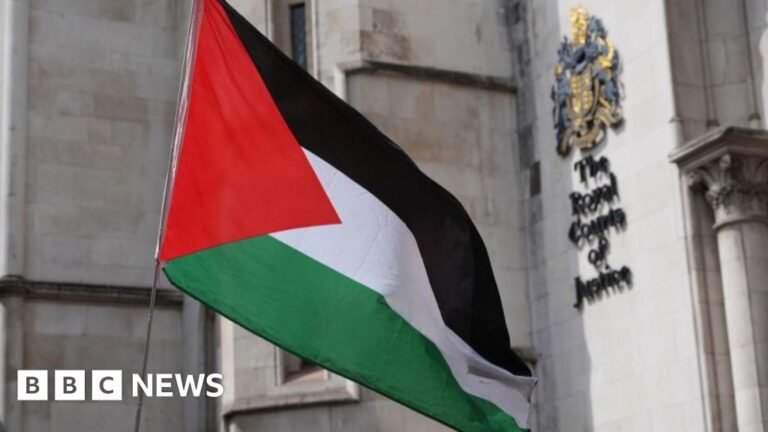
    Paul Adams BBC diplomatic correspondent PM: UK will recognise Palestinian state unless conditions met Prime Minister Sir Keir Starmer has announced the UK will recognise a Palestinian state in September unless Israel meets certain conditions, including agreeing to a ceasefire in Gaza and reviving the prospect of a two-state solution. Israeli Prime Minister Benjamin Netanyahu…

  • Best Friend Forever Boards ‘Nina Roza,’ Geneviève Dulude-De Celles’ Investigation Into Contemporary Art World (EXCLUSIVE)

    Brussels-based Best Friend Forever has boarded Geneviève Dulude-De Celles’ “Nina Roza”. The film has been selected for Locarno’s First Look. In the film, a viral video of an eight-year-old Bulgarian girl, a painting prodigy, is circulating online. The phenomenon catches the attention of a collector eager to acquire her work. Mihail is sent to assess […]