
Former surgeon general: The CDC shooting must be a wakeup call – statnews.com
Former surgeon general: The CDC shooting must be a wakeup call statnews.com

Former surgeon general: The CDC shooting must be a wakeup call statnews.com

Rawalpindi,— The Pakistan National Heart Association (PANAH) organized a World Heart Day awareness walk in front of the Rawalpindi Press Club, drawing strong participation from civil society representatives, students, teachers, health professionals, and members of the media. Participants carried placards and banners highlighting messages on heart health and preventive care. Addressing the gathering, PANAH President…

There’s a new person in charge at HATCo. What does that mean for Summa? | Editorial Akron Beacon Journal Powered by WPeMatico

Stellantis subsidiary Dodge announced two new muscle cars, flexing its 2026 model year lineup and touting customization options for its customers. Powered by WPeMatico

PTI leaders Zartaj Gul and Ejaz Chaudhry filed appeals in the Lahore High Court (LHC) on Saturday against their convictions by anti-terrorism courts (ATC) in May 9 riots cases.
On May 9, 2023, PTI supporters, protesting party founder Imran Khan’s arrest, staged violent protests throughout the country, following which thousands were arrested.
On July 31 this year, an ATC in Faisalabad sentenced PTI leaders, including Gul, to 10 years of imprisonment for their involvement in the riots. The Election Commission of Pakistan later disqualified her and other PTI lawmakers following their convictions. Chaudhry was convicted in another May 9 case by an ATC in Lahore on July 22 and sentenced to 10 years in prison.
Gul filed an appeal against her conviction and sentencing in the LHC today. A division bench of the LHC will hear the case on Monday.
The appeal was filed through Gul’s lawyers, Barrister Ali Zafar and Muhammad Hussain, and pleaded the court to set aside her conviction and acquit her in the case.
It said that Gul was not nominated in the case or “found physically participant in the occurrence”. It added that no justification was provided by the prosecution for her being included through the supplementary statement, which it claimed cast doubt on the authenticity of the occurrence which had not been considered at the trial stage.
It stated that the ATC passed the “impugned judgment … in a hasty and slipshod manner”, based on three witnesses who had admitted in cross-examination that they had not nominated her but she was nevertheless convicted on their statements with a hefty punishment.
“The prosecution has failed to make out a case for such a punishment,” the petition argued, adding that the witnesses themselves had many times misstated and “cheated” the trial court with additions and deletions in their statements making their testimonies unreliable, but ultimately all exonerated the appellant.
“The other ATC court at Sargodha has disbelieved the same prosecution witnesses … but this is ignored in making (the) impugned decision,” it said.
It also stated that no evidence for conspiracy had been brought forward on the case file, challenging her punishment under section 120-B of the Pakistan Penal Code.
The petition pleaded that as “the prosecution also failed to establish the involvement of the appellant in the occurrence and instigation/abetment beyond the shadow of doubt, then there were no reasons to award punishment to the innocent appellant.”
It stated that the judgment was against “facts and law and resulted in (a) misreading of justice” and that, being passed hastily, material parts of evidence were not considered “despite the facts that the prosecution failed to adduce unimpeachable evidence and there was (every) chance of false implication”.
In particular, it cited the lack of material evidence to establish the intention to abet, instigate and conspire to facilitate the other accused parties. According to the petition, the investigation was “biased” and “flawed” but this was ignored by the court. It further criticised that more weight was given to witness statements than evidence by the court, failing to “properly appreciate” the prosecution’s evidence.
It added that 77 co-accused had been acquitted based on the same evidence, while Gul was convicted without valid reasoning.
The petition called for the judgment to be set aside as the case had not been proven “beyond the shadow of a doubt” due to a lack of unimpeachable evidence, adding that the evidence contained contradictions. It called the judgment of the court “arbitrary, capricious, indiscrete, non-speaking and without lawful authority based on no evidence”.
The petition noted that Gul was seeking leave from the court to advance further grounds at the time of argument.
Meanwhile, Chaudhry filed two petitions in the LHC through Advocate Mian Ali Ashfaq.
Chaudhry pleaded the court to suspend his sentence and conviction, along with ordering his release on bail.
He further requested the court in the second petition to set aside his conviction and acquit him in the case in the “interest of justice”.
Separately, the Lahore ATC reserved its verdicts in two arson cases related to the May 9 riots, in which PTI senior leaders Shah Mehmood Qureshi, Dr Yasmin Rashid, Chaudhry and Omar Cheema are accused, with the judge slated to announce the decisions on August 11.
According to Advocates Rana Mudassar and Rana Maroof, who represented the PTI leaders during the hearing, the trials in the cases of burning vehicles outside Rahat Bakery and arson near Shadman Nazar were completed and ATC Judge Manzar Ali Gul reserved his verdict.
They said the verdicts would be issued on Monday.
They said a total of 25 accused were named in the Rahat Bakery case, while seven accused were declared absconders. They added that the trial of 12 accused was completed in the Shadman Nazar police station arson case and five accused were in custody in this case, while one accused had died.
The lawyers said Qureshi, Dr Rashid, Chaudhry, Cheema, Mian Mahmoodur Rashid and other accused were present in the courtroom.
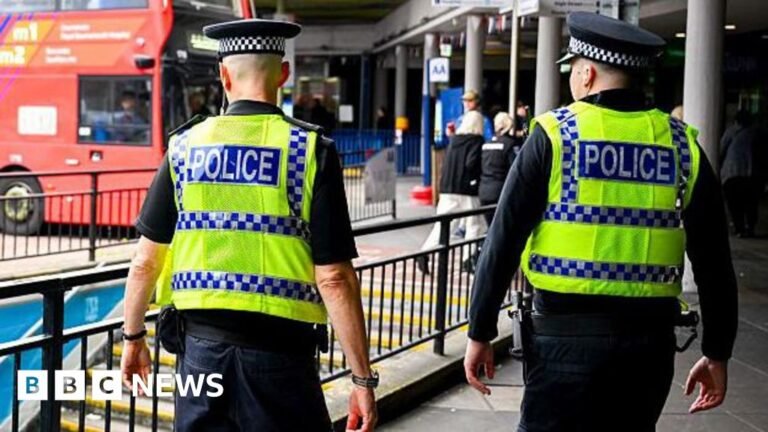
Ministers have said police should be more transparent about the nationalities of people who are charged. It comes after two men charged over the alleged rape of a 12-year-old girl in Warwickshire were reported to be Afghan asylum seekers. Police have not confirmed this, and Reform UK leader Nigel Farage has called their decision not…
PTI’s Opposition Leader in the National Assembly Omar Ayub Khan and Opposition Leader in the Senate Shibli Faraz, were removed from their seats, according to notifications by the respective houses’ secretariats that came to light on Friday. On Tuesday, the Election Commission of Pakistan (ECP) had disqualified the Senate and National Assembly opposition leaders, Sunni…