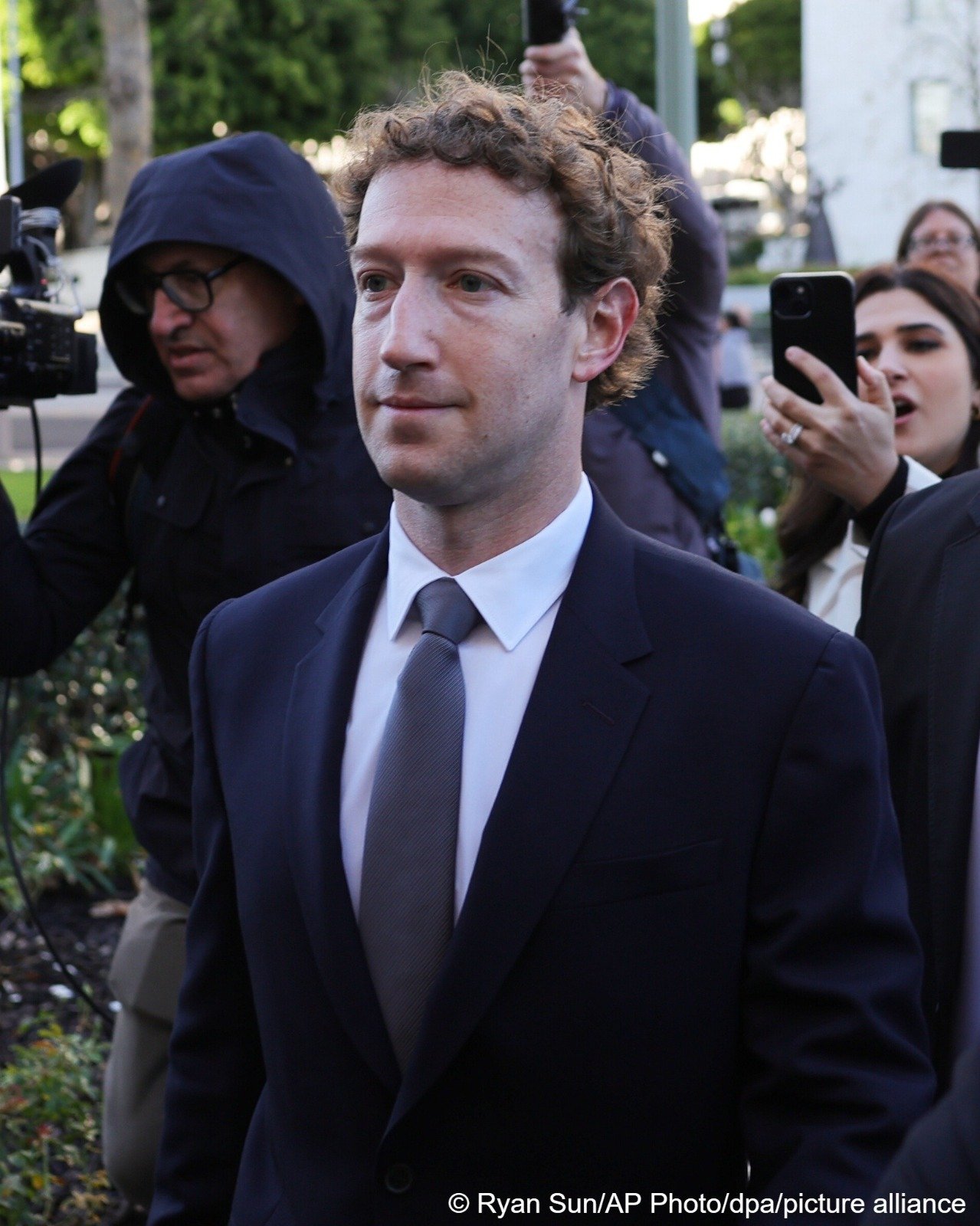
Zuckerberg Testifies in Landmark Social Media Addiction Trial — Accused of Deliberately Harming Children’s Mental Health
Los Angeles, February 19, 2026Meta CEO Mark Zuckerberg took the witness stand before a jury in Los Angeles Superior Court on Wednesday in a landmark trial that could reshape the future of social media regulation in the United States.It marks the first time Zuckerberg has testified about child safety in front of a jury. (PBS)…
Los Angeles, February 19, 2026
Meta CEO Mark Zuckerberg took the witness stand before a jury in Los Angeles Superior Court on Wednesday in a landmark trial that could reshape the future of social media regulation in the United States.
It marks the first time Zuckerberg has testified about child safety in front of a jury. (PBS) The trial centers on a now 20-year-old woman, identified in court only as “Kaley” or by the initials KGM, who says she became addicted to social media as a young girl and that excessive use exacerbated her depression, anxiety and suicidal thoughts.
Kaley’s lawsuit claims she began using social media young — YouTube at age 6, then Instagram at 9 — and that after becoming hooked on the platforms, her body image issues, depression and suicidal thoughts worsened. The suit points to features like beauty filters, infinite scroll and auto-play as being tantamount to a “digital casino.” (NPR)
During cross-examination, lawyers directed Zuckerberg’s attention to a 2020 internal Meta document showing that 11-year-olds were four times as likely to keep coming back to its apps compared to older users. (NPR) Zuckerberg admitted that many users lie about their age to gain access, saying enforcement is “very difficult.”
The landmark trial is the first of a consolidated group of cases from more than 1,600 plaintiffs, including over 350 families and over 250 school districts, scheduled to be argued before a jury in Los Angeles County Superior Court.
Some experts have drawn comparisons between the social media trial and the tobacco industry lawsuits of the 1990s, which sought to hold companies accountable for their products and how they were marketed.
Meta denied the allegations, with a spokesperson stating: “The evidence will show our longstanding commitment to supporting young people.”