Myanmar’s Junta Chief-Turned-President Min Aung Hlaing Arrives in India for Landmark Five-Day Visit
Military ruler set to meet PM Modi in New Delhi as both nations seek to deepen bilateral ties amid regional tensionsNew Delhi / Naypyidaw | June 1, 2026Myanmar’s junta chief-turned-president, Senior General Min Aung Hlaing, has arrived in India on a significant five-day state visit during which he is scheduled to hold high-level talks with…
Military ruler set to meet PM Modi in New Delhi as both nations seek to deepen bilateral ties amid regional tensions
New Delhi / Naypyidaw | June 1, 2026
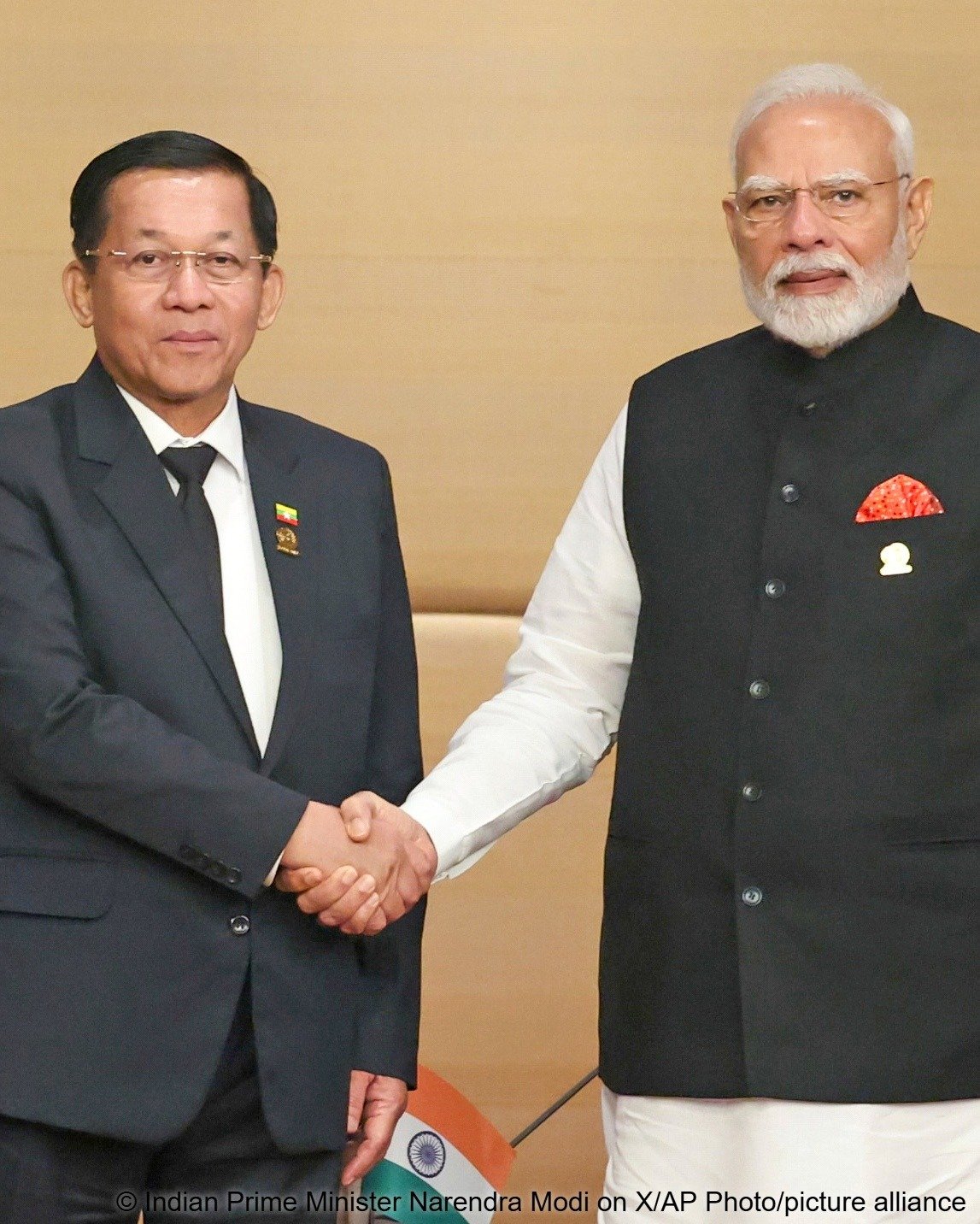
Myanmar’s junta chief-turned-president, Senior General Min Aung Hlaing, has arrived in India on a significant five-day state visit during which he is scheduled to hold high-level talks with Indian Prime Minister Narendra Modi. The visit marks one of the most consequential diplomatic engagements between the two neighbouring nations in recent years, with both sides expected to focus on strengthening bilateral ties across trade, security, and connectivity.
The visit comes at a particularly delicate moment in regional geopolitics. Myanmar has been engulfed in a brutal civil conflict since the military seized power in a coup in February 2021, displacing millions and drawing widespread international condemnation. Despite pressure from Western governments to isolate the junta, New Delhi has chosen a path of continued engagement, citing its longstanding policy of prioritising strategic neighbourhood relations and border security over political considerations.
Indian officials indicated that the agenda for the Modi-Hlaing summit will include discussions on the stalled Kaladan Multi-Modal Transit Transport Project, the India-Myanmar-Thailand Trilateral Highway, and measures to curb cross-border militancy that has increasingly destabilised India’s northeastern states of Manipur and Mizoram. New Delhi has grown increasingly concerned about armed ethnic groups operating along the porous 1,643-kilometre shared border.
Trade and energy cooperation are also expected to feature prominently in the talks. India views Myanmar as a critical land bridge to Southeast Asia and a key component of its Act East Policy. Bilateral trade, though constrained by Myanmar’s ongoing instability, remains an area of mutual interest, with Indian infrastructure investment in the Rakhine State corridor seen as strategically vital.
Human rights organisations and opposition groups have strongly criticised India’s decision to host Min Aung Hlaing, arguing that the visit lends international legitimacy to a regime accused of grave atrocities including ethnic cleansing, mass killings, and systematic suppression of pro-democracy movements. The National Unity Government of Myanmar, which operates in exile, urged New Delhi to reconsider its engagement with the military administration.
New Delhi, however, has maintained that constructive dialogue remains the most effective instrument for promoting stability in Myanmar and safeguarding India’s own security interests in its volatile northeastern frontier. Foreign Ministry sources indicated that Indian officials would privately raise concerns over the humanitarian situation while preserving the overall framework of diplomatic engagement.
Regional analysts note that India’s willingness to host Hlaing also reflects a quiet strategic competition with China, which has cultivated deep influence over the Myanmar military. By maintaining its own channel of engagement, New Delhi seeks to prevent Naypyidaw from drifting entirely into Beijing’s orbit, a scenario it considers deeply unfavourable to its long-term regional interests.