“A Completely Different, Much Shorter War”: Russian FM Lavrov Warns Europe Against Attacking Russia
MOSCOW — Russian Foreign Minister Sergey Lavrov warned Wednesday that any European military aggression against Russia would trigger a war that is “completely different” and “very short,” while criticizing European leaders for repeatedly discussing the need to prepare for war with Russia.Speaking at the International Youth Festival in Yekaterinburg, Lavrov said Russian officials have repeatedly…
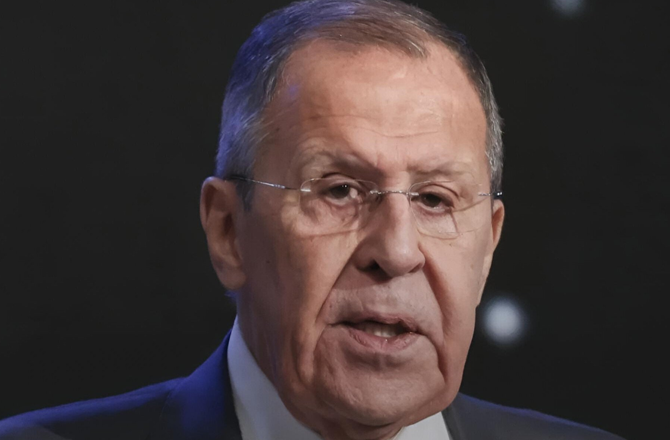
MOSCOW — Russian Foreign Minister Sergey Lavrov warned Wednesday that any European military aggression against Russia would trigger a war that is “completely different” and “very short,” while criticizing European leaders for repeatedly discussing the need to prepare for war with Russia.
Speaking at the International Youth Festival in Yekaterinburg, Lavrov said Russian officials have repeatedly stated Moscow has no intention of attacking Europe. “Russia has said time and again that we are not going to attack Western countries and have no interest in doing so,” he said. “But if Europe, which regularly talks about preparing for war against Russia, attacks the Russian Federation, this would be a completely different war — and it would be very short.”
Lavrov went on to criticize NATO’s eastward expansion, saying the West had long ago chosen a policy of “containing” Russia rather than confrontation, a stance he said Russian leadership — including President Vladimir Putin personally — has repeatedly reiterated. He also took aim at European leaders’ rhetoric about war preparedness, which he said has become a major topic among political circles in Brussels.
He further accused European nations of openly discussing plans to deploy active-duty troops on Ukrainian soil in order to protect what he described as an “openly Nazi and Russophobic government.”
At a roundtable on Ukraine held Tuesday, Lavrov reiterated that the objectives of Russia’s “special military operation” have remained unchanged since the outset: securing Russia’s safety, preventing NATO from reaching its borders, and protecting the rights of Russians and Russian-speaking populations.