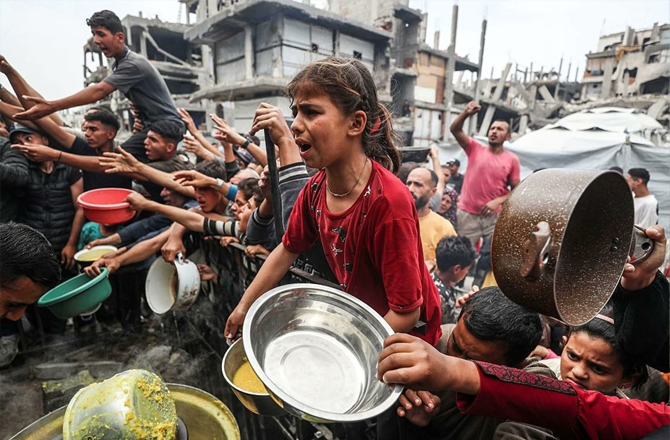
Gaza: Severe funding shortfall forces WFP to end monthly food aid for 500,000 Palestinians
Gaza (Staff Reporter) — The United Nations World Food Programme has announced that it will end monthly food assistance for nearly 500,000 people in Gaza due to a severe shortage of funds. The number of aid recipients has been reduced from 1.6 million to 1.1 million, while food rations have also been cut. The decision…
Gaza (Staff Reporter) — The United Nations World Food Programme has announced that it will end monthly food assistance for nearly 500,000 people in Gaza due to a severe shortage of funds. The number of aid recipients has been reduced from 1.6 million to 1.1 million, while food rations have also been cut. The decision comes at a time when nearly two-thirds of Gaza’s population is facing severe food insecurity and fears are growing that the humanitarian crisis will worsen with the arrival of winter.
The UN World Food Programme has announced that it is scaling back its aid operations in Gaza due to an acute funding shortfall, leaving nearly 500,000 Palestinians without monthly food assistance. According to the programme, the number of people receiving monthly aid has been reduced from 1.6 million to 1.1 million from October.
The decision is likely to worsen the difficulties of families who depend on humanitarian assistance to meet their basic needs because of war, unemployment and the destruction of their homes. WFP’s Country Director for Palestine, Antoine Renard, told the AFP news agency: “This month, we are reducing by 500,000 the number of people we are assisting.”
He said the decision was not made because needs had declined, but because funds were not available. He warned that humanitarian conditions in Gaza remain extremely dire, with most people displaced and displacement continuing due to air strikes.
The reduction in aid is not limited to the number of beneficiaries; the programme has also reduced the size of food packages. Families who previously received two food parcels will now receive only one, while the quantity of wheat flour will also be reduced. The monthly cash assistance for 75,000 families has been cut from 1,250 Israeli shekels to 750 shekels.
As a result, affected families will have less money to buy food from markets. The number of hot meals provided through community kitchens has also been reduced. According to the WFP, the number of meals provided daily has been cut from 250,000 to 150,000. Some families in remote areas will now receive food every other day instead of daily.
According to the programme’s latest estimates, nearly 1.4 million people in Gaza, or about two-thirds of the total population, are facing severe food insecurity or worse conditions. Of these, nearly 200,000 people are in situations requiring immediate humanitarian assistance.
The WFP said large-scale assistance last year had helped reduce the worst levels of hunger, but the current situation remains fragile and further cuts in aid could reverse the gains made. According to Antoine Renard, after last year’s ceasefire announcement, the WFP expanded its operations and was reaching 1.5 million to 1.8 million people every month.
He said the agency is now forced to reduce aid rather than maintain or expand it. According to him: “This is not happening because we do not have humanitarian access to deliver food, but because we do not have funds.”
The WFP has said it urgently needs 450 million dollars to continue key aid operations in Gaza and the West Bank over the next six months. According to the agency, it has received nearly half the usual funding for the Palestinian territories in 2026.
Reduced funding from donors has affected the operations of UN agencies, while growing needs in other global crises are also putting pressure on available resources. The reduction in aid activities has come at a time when large-scale reconstruction has not begun in Gaza, even a year after the ceasefire.
Residential buildings, hospitals, schools, agricultural land and infrastructure suffered severe damage during the war. Due to unemployment and the loss of income sources, a large number of families cannot afford to buy food. According to reports citing UN figures, nearly 80 per cent of Gaza’s population is facing unemployment, further increasing dependence on humanitarian aid.
Restrictions on the entry of goods and transport costs are also among the problems in delivering aid to Gaza. Israeli authorities impose restrictions on items they classify as dual-use, while aid agencies say limited availability of fuel, vehicle parts and other essential supplies makes delivering aid more expensive and difficult.
According to the WFP, although food is available in markets in some areas, many families cannot afford it because of unemployment and reduced purchasing power. The arrival of winter has also increased concerns. Thousands of families in Gaza are living in temporary tents or damaged buildings, where cold, rain and a lack of adequate shelter could worsen their difficulties.
WFP’s Deputy Executive Director Carl Skau urged the international community to increase humanitarian funding. He said that instead of reducing aid at this time, efforts should be intensified to preserve the progress already achieved and to help affected families recover.