EU takes major step to protect ICC from US sanctions
Brussels (Staff Reporter) — Following Washington’s announcement of sanctions against the International Criminal Court, the European Union has begun considering various measures, including activating its “blocking statute,” to protect the court from possible effects. The European Commission has clarified that preparations are under way to keep the court’s work running and protect its operations, but…
Brussels (Staff Reporter) — Following Washington’s announcement of sanctions against the International Criminal Court, the European Union has begun considering various measures, including activating its “blocking statute,” to protect the court from possible effects. The European Commission has clarified that preparations are under way to keep the court’s work running and protect its operations, but no decision has yet been made on whether the blocking statute will be implemented, and if so, when.
According to the Anadolu news agency, European Commission spokesperson Seabhán Mac Guire said during a midday briefing in Brussels on Monday that, following Washington’s announcement of sanctions against the ICC, the Commission was in contact with EU member states on the matter. She said possible measures to protect the court’s work were being examined, while consultations with other member states of the court were also continuing.
The spokesperson clearly stated: “The blocking statute is still under consideration.” She added: “We do not have a final date or timeline for its implementation, nor do we want to make a preemptive announcement about whether it will be implemented or not. We are still hoping for a better solution under which the court can continue its important work.”
The blocking statute is a legal mechanism of the European Union designed to protect European companies and individuals from complying with certain foreign sanctions. Its purpose is to counter the extraterritorial effects of measures through which another power seeks to apply its laws or sanctions to European institutions and business activities.
If the mechanism is activated in this case, it could help reduce difficulties faced by European institutions, service providers and other relevant parties working with the court due to US sanctions. However, its practical impact will depend on the legal and administrative measures the European Union adopts.
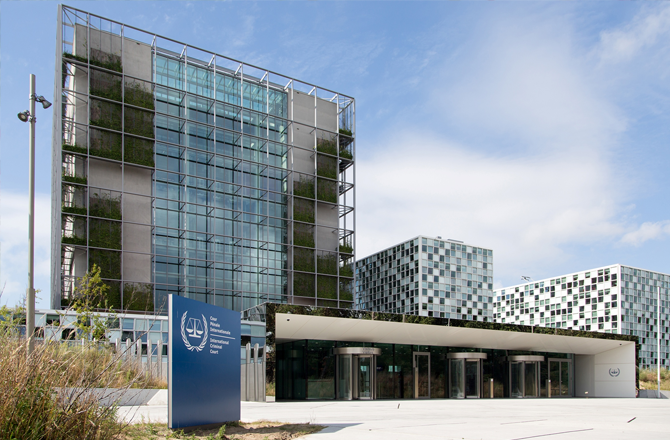
Mac Guire said the Commission was also consulting several member states of the court so that practical steps could be taken to protect the ICC’s activities if US sanctions take effect. She refrained from giving details of the measures under consideration, but said the Netherlands was playing a prominent role in this regard. The International Criminal Court is headquartered in The Hague, Netherlands.
The development came after US Secretary of State Marco Rubio announced sanctions against the court. Rubio warned the court that if it did not end what he described as its “threats,” the United States would “shut down” the ICC.
In the context of US actions, an important question before the European Union is how it can protect the court’s independence and daily operations from possible external pressure. The ICC is an independent international judicial institution responsible for investigating and prosecuting allegations of genocide, crimes against humanity, war crimes and the crime of aggression.
The possible effects of sanctions on such an institution cannot remain limited to its officials; they can also create difficulties for financial transactions, business services and institutions cooperating with the court. The challenge before the European Commission is to ensure the continuity of the court’s work while also protecting European institutions from US measures that could affect their activities within European borders.
According to the Commission, consultations and preparations are continuing, but a final decision on implementing the blocking statute has not yet been taken. Therefore, it would not be correct to say at this stage that the European Union has implemented this legal measure against US sanctions.