
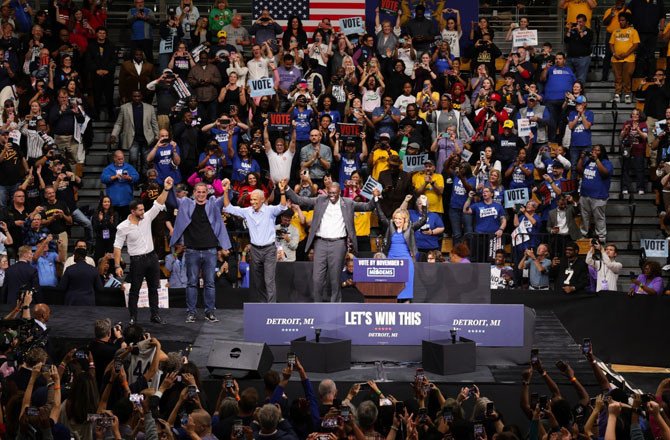
US Midterms: Democrats Win Control of Both Chambers of Congress
Washington: The Democratic Party delivered a major blow to President Donald Trump’s Republicans in the November 3 midterm elections, winning majorities in both the House of Representatives and the Senate. The result shifts the balance of power in Washington for the remaining two years of Trump’s second term.Before the vote, Republicans held the Senate 53–47…
Washington: The Democratic Party delivered a major blow to President Donald Trump’s Republicans in the November 3 midterm elections, winning majorities in both the House of Representatives and the Senate. The result shifts the balance of power in Washington for the remaining two years of Trump’s second term.
Before the vote, Republicans held the Senate 53–47 (Democrats and allied independents holding 47) and led the House 219–214. This time, 35 Senate seats and all 435 House seats were contested. Democrats crossed the 218-seat threshold needed for a House majority.
In the Senate, James Talarico defeated Republican Ken Paxton in Texas, a state Trump won by about 14 points in 2024 and where no Democrat has won statewide in 32 years. In Kansas, Adam Hamilton beat Sen. Roger Marshall, in a state where Democrats last won a Senate seat in 1934. Josh Turek won in Iowa, Annie Andrews in South Carolina and Roy Cooper in North Carolina. In Maine, Troy Jackson defeated longtime Republican Sen. Susan Collins, and in Ohio, former Democratic Sen. Sherrod Brown won. In Michigan, Abdul El-Sayed claimed victory over Republican Mike Rogers, though counting and final confirmation were still under way in some states.
Inflation, living costs, Trump’s tariff policy and the war with Iran dominated the campaign. Democrats argued tariffs and the war pushed up fuel and other prices, while Republicans branded Democratic candidates extremists and pressed cultural issues. A RealClearPolling average through October 30 showed Democrats leading the House generic ballot 52% to 43.1%.
After the results, Trump wrote on social media that his party would have won big had he been on the ballot himself. He later accepted the outcome, congratulated Democrats and said he was willing to work with them on issues including immigration, while warning he would veto what he called unreasonable legislation.
The majorities give Democrats greater power to oversee and investigate the administration, and in the Senate to block nominees for Cabinet posts, ambassadorships and federal judgeships. But passing laws still requires both chambers and the president’s signature, and overriding a veto needs a two-thirds majority, which would require Republican votes.


