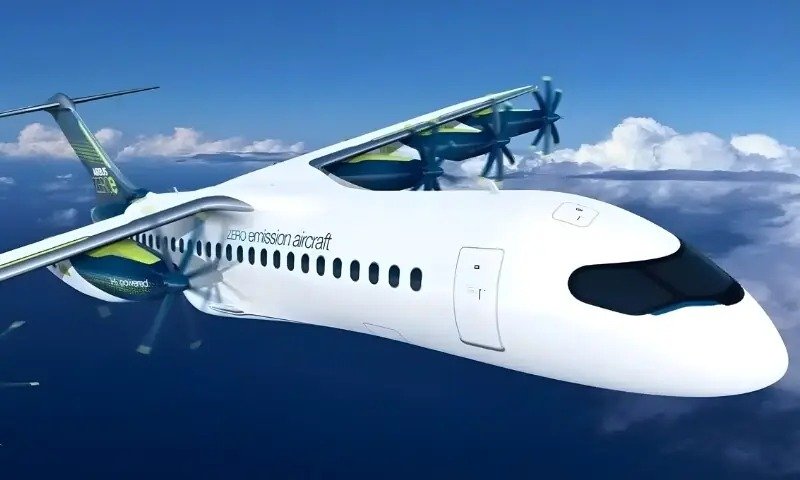
China Solves Oil Shortage Challenge: Successful Test of Hydrogen-Powered “Water-Fueled” Aircraft
Beijing (April 15, 2026) — In a major breakthrough for green aviation and energy security, China has successfully conducted the world’s first test flight of a megawatt-class hydrogen-fueled turboprop engine, marking a significant step toward developing aircraft that can run on hydrogen — often described as “water-powered” since hydrogen can be produced from water.On April…
Beijing (April 15, 2026) — In a major breakthrough for green aviation and energy security, China has successfully conducted the world’s first test flight of a megawatt-class hydrogen-fueled turboprop engine, marking a significant step toward developing aircraft that can run on hydrogen — often described as “water-powered” since hydrogen can be produced from water.
On April 4, 2026, the state-owned Aero Engine Corporation of China (AECC) tested the AEP100 hydrogen turboprop engine on a 7.5-tonne unmanned cargo aircraft at Zhuzhou Lusong Airport in Hunan province.
Key details of the maiden flight:
Flight duration: 16 minutes
Speed: 220 km/h
Altitude: 300 meters
Distance covered: 36 kilometers
The engine performed normally throughout the flight, maintaining stable operation as the aircraft completed all scheduled maneuvers and landed safely.
This test is being hailed as the first real-world flight of a megawatt-scale hydrogen propulsion system in aviation. Chinese officials and state media frame it as a strategic move to reduce dependence on imported oil, particularly in the aviation sector where traditional kerosene (jet fuel) dominates and full electrification remains challenging for larger aircraft.
Hydrogen is positioned not only as a cleaner, near-zero emission fuel but also as a tool for enhancing China’s energy independence. The successful flight demonstrates that China has established a complete technological chain for hydrogen aviation engines — from core components to full system integration — paving the way for future industrial and commercial applications.
Experts note that while challenges like liquid hydrogen storage and cryogenic systems remain, this milestone moves hydrogen aviation technology from laboratory research into practical testing. It comes amid global energy market pressures and aligns with China’s broader push for sustainable aviation and reduced fossil fuel reliance.
This development positions China at the forefront of next-generation green aviation technology.