UK: One-Millisecond Software Glitch Cancels Over 2,000 Flights
London: British investigators say the September 8 air traffic control failure was traced to a minor software fault that began within a single millisecond. It led to the cancellation of more than 2,000 flights across the UK and also disrupted passengers travelling between Britain and the UAE.According to National Air Traffic Services (NATS), the affected…
London: British investigators say the September 8 air traffic control failure was traced to a minor software fault that began within a single millisecond. It led to the cancellation of more than 2,000 flights across the UK and also disrupted passengers travelling between Britain and the UAE.
According to National Air Traffic Services (NATS), the affected part of the National Airspace System allocates identification codes to individual aircraft when staff make a manual request. While processing one such request, the system received a higher-priority message and temporarily paused it. When processing resumed, a software fault meant it did not restart correctly, corrupting the output and later affecting flight data updates. NATS stressed that the “one millisecond” refers only to the critical sequence that triggered the failure, not to the length of the disruption.
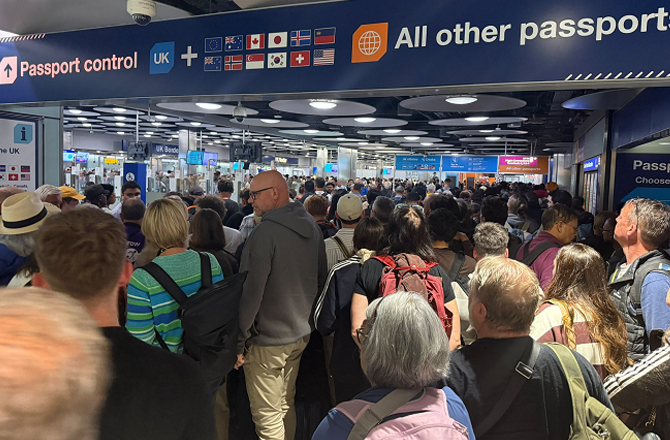
With less information available to controllers, NATS restricted aircraft movements to maintain safety while it restarted systems and reloaded flight data. The restrictions lasted around six hours. Operations returned to normal that evening, but clearing the passenger backlog took more than two days.
By the numbers
Aviation analytics firm Cirium reported 1,746 cancellations on September 8 and 399 on September 9, a total of 2,145.
Airlines UK said over 330,000 passengers were affected, with about 155,000 facing cancellations and about 180,000 facing delays.
British Airways alone cancelled about 550 flights over two days, affecting roughly 85,000 passengers.
UAE travellers
Etihad’s Heathrow–Abu Dhabi flight EY64 was cancelled and EY66 delayed. EY68 faced a long delay after inbound EY67 was diverted to Paris Charles de Gaulle. Etihad said its teams helped affected passengers with hotel stays and rebooking. Gulf News reported that disruption continued the next day, with EY77 (Abu Dhabi–Manchester) and EY61 (Abu Dhabi–Heathrow) departing late. Emirates also confirmed UK flights were affected and advised passengers to check flight status before heading to the airport.
Was it a cyberattack?
NATS has ruled out a cyberattack. Chief Executive Martin Rolf also dismissed speculation of military interference. The company said the incident was unrelated to the August 2023 air traffic control outage and that flight safety was never compromised. The findings are preliminary and will face independent scrutiny. UK Transport Secretary Heidi Alexander has ordered an independent review into the cause and the resilience of the UK’s air traffic control infrastructure.