UVAS, FonGrow Sign MoU to Strengthen Livestock Production and Reproductive Biotechnology
By Dr Ansab Ali | Lahore, Pakistan LAHORE: The University of Veterinary and Animal Sciences (UVAS), Lahore, and FonGrow Private Limited (FGPL) have signed a Memorandum of Understanding (MoU) to promote cooperation in livestock production, reproductive biotechnology, research, and capacity building. The agreement was signed by UVAS Vice-Chancellor Prof. Dr. Masood Rabbani and FGPL Secretary…
By Dr Ansab Ali | Lahore, Pakistan
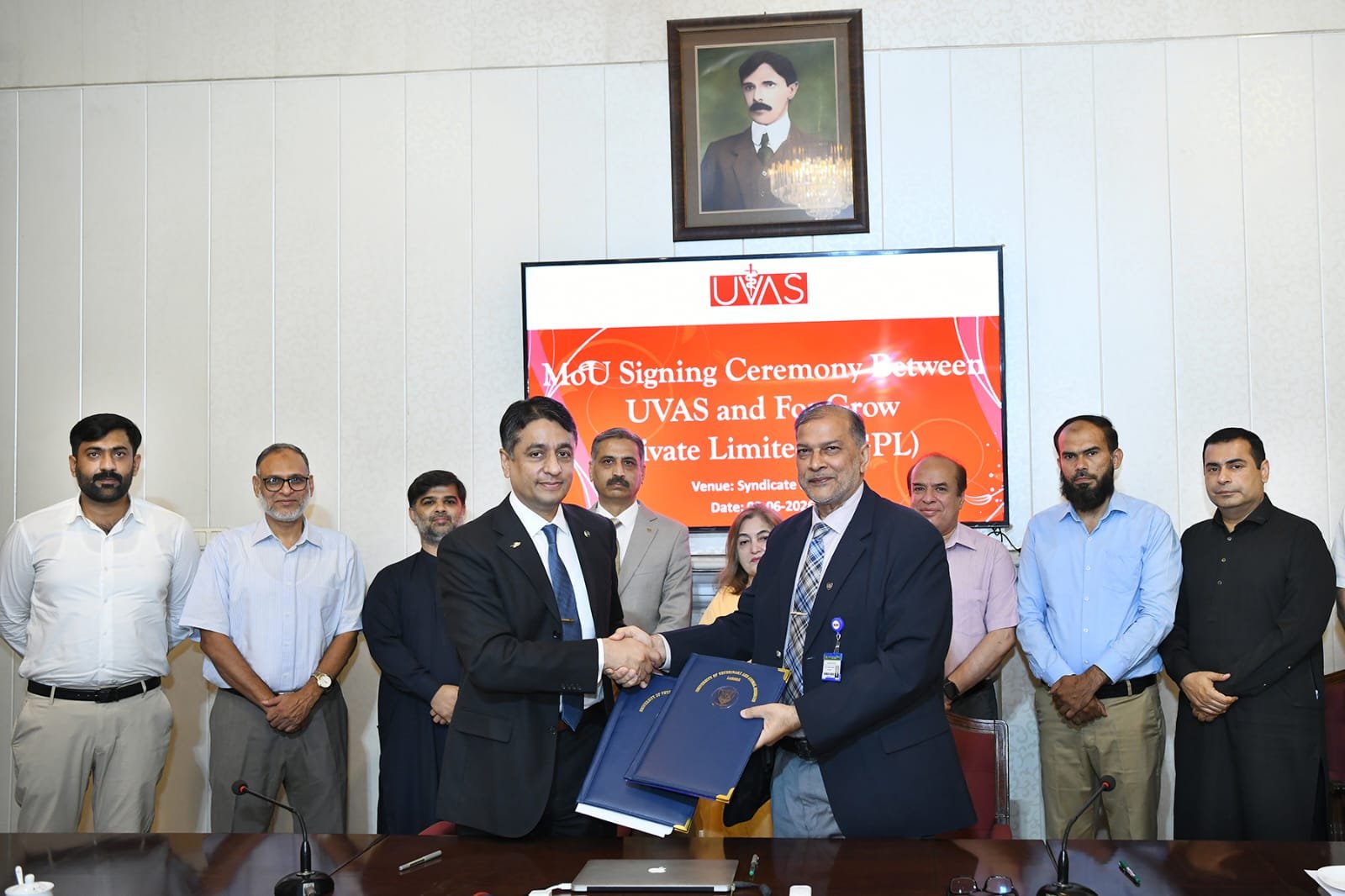
LAHORE: The University of Veterinary and Animal Sciences (UVAS), Lahore, and FonGrow Private Limited (FGPL) have signed a Memorandum of Understanding (MoU) to promote cooperation in livestock production, reproductive biotechnology, research, and capacity building.
The agreement was signed by UVAS Vice-Chancellor Prof. Dr. Masood Rabbani and FGPL Secretary Colonel (Retd.) Rai Kashif Amin Khan during a ceremony held at UVAS. The event was attended by Deans Prof. Dr. Habib-ur-Rehman, Prof. Dr. Kamran Ashraf, Prof. Dr. Saima, senior faculty members, and representatives of FonGrow Private Limited.
Under the MoU, both institutions will collaborate in the fields of education, research, technology transfer, and professional development related to livestock production and reproductive biotechnology. The partnership aims to facilitate joint student internship and training programs, professional short courses, faculty and student exchange initiatives, and a range of capacity-building activities.
The agreement also provides for the development of Standard Operating Procedures (SOPs) covering farm management, semen production units, in-vitro fertilization processes, and knowledge transfer systems to enhance productivity and innovation in the livestock sector.
As part of the collaboration, the Department of Animal Breeding and Genetics at UVAS will act as the lead technical unit for quantitative genetics, genomic evaluation, and advanced statistical analysis of livestock herds raised under the FonGrow program.
Officials from both organizations expressed confidence that the partnership would contribute to scientific advancement, sustainable livestock development, and the adoption of modern reproductive technologies in Pakistan’s livestock industry.