US Media Says Trump’s Strait of Hormuz Remarks Were a Joke; Iran Responds with Sarcasm
WASHINGTON/TEHRAN: US media reports have suggested that President Donald Trump’s remarks about declaring the Strait of Hormuz a US territory were made as a joke rather than as part of a serious government policy. Iran has rejected the claim and sharply criticised Washington.According to reports, Trump made the remarks during a political rally in Garden…
WASHINGTON/TEHRAN: US media reports have suggested that President Donald Trump’s remarks about declaring the Strait of Hormuz a US territory were made as a joke rather than as part of a serious government policy. Iran has rejected the claim and sharply criticised Washington.
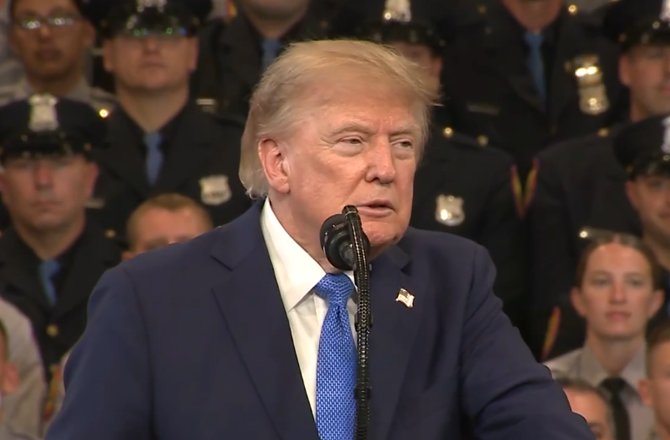
According to reports, Trump made the remarks during a political rally in Garden City, New York, saying that he would declare the Strait of Hormuz a territory of the United States after defeating Iran. He also claimed that Washington maintained a complete blockade of the strategic waterway and that no ship could pass without US permission.
Wall Street Journal reporter Brian Schwartz, citing an unnamed senior White House official, reported that Trump had not discussed the proposal with his advisers and that the statement was intended as a joke. The reporter, who attended the speech, said Trump made the comment while laughing but later insisted that it was true.
Iran’s military command dismissed claims of US control over the waterway as “baseless lies and slander.” Iranian Deputy Foreign Minister Kazem Gharibabadi wrote on X that the Strait of Hormuz could not be conquered through a tweet, an aircraft carrier, an order or an election speech.
He said the strait had belonged to Iran, belonged to Iran at present and would remain under Iranian control. Iranian officials have also called on the United States to acknowledge its alleged defeat in the conflict and end its intervention in the region.
Iranian authorities said no vessel would be allowed to pass through the strait without Iran’s permission and supervision. Washington, meanwhile, describes Iran’s actions as a naval blockade, while Tehran uses the same term for US surveillance and restrictions in the region.
Reports said that 3,771 vessels had passed through the Strait of Hormuz by August 12, during the first 166 days of the conflict. This represented only around 20 percent of the pre-war traffic, which exceeded 130 vessels a day. Only two ships reportedly passed through the strait on Friday, and no crude oil shipment was observed. Some vessels may have crossed the waterway with their transponders switched off.
The United Arab Emirates’ national oil company said two of its vessels came under attack while passing through the strait on Friday evening. The Emirati news agency also reported an attack on another vessel.
The United States and Iran agreed to a ceasefire in April through Pakistan’s mediation and reached an understanding on June 17 to negotiate a final agreement. However, talks later stalled over disagreements concerning security guarantees and freedom of navigation through the Strait of Hormuz.
Iranian Foreign Minister Abbas Araghchi said no decision had been taken to resume negotiations with the United States. He added that mediating countries, including Qatar and Pakistan, were communicating with Iran and delivering messages, but that this did not constitute formal negotiations.
The Strait of Hormuz connects the Persian Gulf with the Gulf of Oman and is one of the world’s most important energy routes, carrying around 20 percent of global energy supplies.