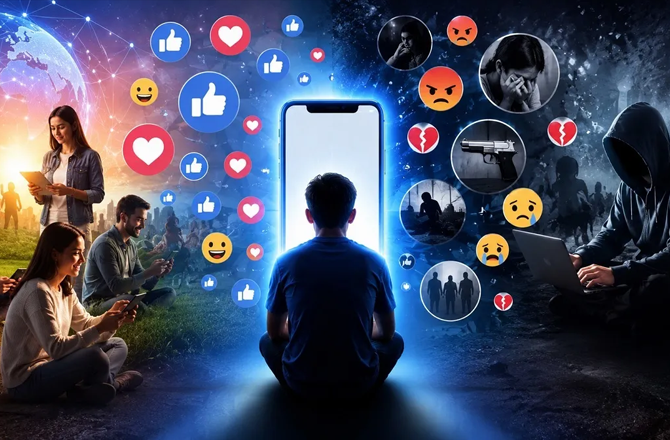
Doomscrolling May Affect Attention and Memory, New Research Suggests
London: New scientific studies are drawing attention to the possible impact of endless, aimless scrolling — especially through short videos, reels and shorts — on brain performance.A study published in July 2026 tested 57 participants, with one group watching a continuous long video and the other viewing multiple short videos of the same duration. In…
London: New scientific studies are drawing attention to the possible impact of endless, aimless scrolling — especially through short videos, reels and shorts — on brain performance.
A study published in July 2026 tested 57 participants, with one group watching a continuous long video and the other viewing multiple short videos of the same duration. In later memory tests, those exposed to short videos recalled information less accurately.
The study also found reduced activity in brain regions linked to integrating information, sustaining attention and understanding meaning. Researchers observed weaker connectivity between certain brain areas as well, which they associated with memory performance.
A separate review published in June 2026 analyzed 42 studies conducted between 2015 and 2025, covering a total of 46,912 people. The review found that heavier and more irregular short-video use was consistently associated with reduced attention, impulsive behavior, weaker working memory and lower self-control.
Researchers cautioned, however, that the available evidence does not prove short videos directly cause these problems. Still, the findings suggest that constant, purposeless and fast-moving content may negatively affect attention and memory.
In another study published in May 2026, 72 participants were asked to complete mental tasks after spending 30 minutes watching short videos, a documentary, or no video at all. Those who watched short videos showed less readiness for the next task than the other groups.
Doomscrolling refers to the compulsive habit of continuously consuming negative, alarming or distressing news on social media or news feeds, even when it increases anxiety and mental stress. Experts say the concern is not every short video, but the pattern of moving from one clip to another without a clear purpose.