Italy: Meloni Proposes Burqa and Niqab Ban in Schools, Cap on Foreign Students per Class
Rome: Italian Prime Minister Giorgia Meloni has announced plans to ban the burqa and niqab in schools and to limit the number of foreign students in each class. She said the government would soon present a proposal to the cabinet. The measures are not yet law, and the maximum number of foreign students per class…
Rome: Italian Prime Minister Giorgia Meloni has announced plans to ban the burqa and niqab in schools and to limit the number of foreign students in each class. She said the government would soon present a proposal to the cabinet. The measures are not yet law, and the maximum number of foreign students per class has not been fixed.
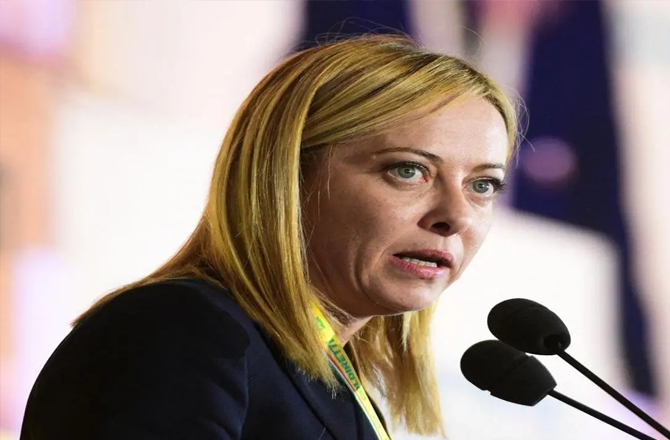
Addressing the annual gathering of the youth wing of her Brothers of Italy party in Rome on Sunday, Meloni said parents of foreign students whose children face “serious difficulties” integrating into the Italian school system would be required to attend Italian language classes. “Whoever comes to Italy and wants to build a future here must learn our language, understand our culture and respect our laws,” she said.
The proposed ban covers the burqa and niqab; Meloni did not mention the hijab. She said students should keep their faces uncovered in school and that no girl can be forced to hide her face on the basis of tradition. She gave no specific figure or percentage for the proposed cap. If only one child in a class does not understand Italian, she said, he or she can learn with the help of teachers and classmates, but if such children are too many or in the majority, it would amount to “neglect” rather than integration.
According to Reuters, students without Italian citizenship made up 11.6% of all pupils in Italian schools in the 2024-25 academic year, roughly 12 in every 100. An Italian research review of official data put their total number at 139,323. A 30% cap already exists under 2010 Education Ministry guidelines, though its implementation has been uneven.
The measures would need parliamentary approval. Once approved by the government, such a measure must be passed by parliament within 60 days or it lapses. A 1975 law bans clothing that hinders identification without a valid reason, while a 2008 court interpretation allowed face covering for religious or cultural reasons, provided the face is shown when identity must be verified.