LCCI, KCCI to Jointly Pursue Business Community’s Issues with Govt: Saigol
Pakistan Must Diversify Exports Through Value-Added and New Products: Rehan Hanif By Muhammad ShahzadLahore, Pakistan LAHORE: President Karachi Chamber of Commerce and Industry (KCCI) Muhammad Rehan Hanif, along with a delegation, visited the Lahore Chamber of Commerce and Industry (LCCI), where LCCI President Faheem Ur Rehman Saigol welcomed him. LCCI Vice President Khurram Lodhi, former…
Pakistan Must Diversify Exports Through Value-Added and New Products: Rehan Hanif
By Muhammad Shahzad
Lahore, Pakistan
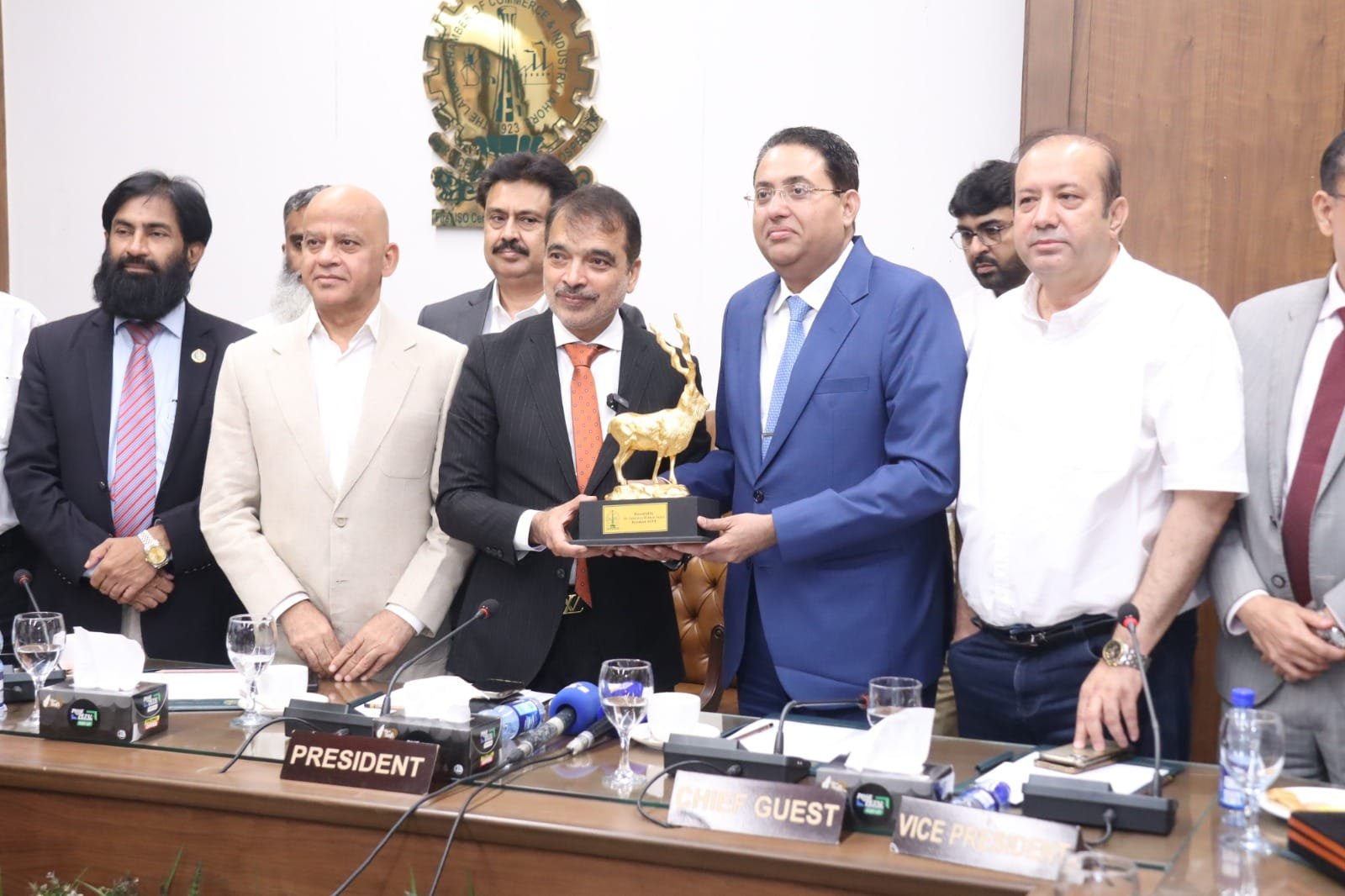
LAHORE: President Karachi Chamber of Commerce and Industry (KCCI) Muhammad Rehan Hanif, along with a delegation, visited the Lahore Chamber of Commerce and Industry (LCCI), where LCCI President Faheem Ur Rehman Saigol welcomed him.
LCCI Vice President Khurram Lodhi, former KCCI presidents Abdullah Zaki and Iftikhar Vohra, former KCCI vice president Faisal Khalil, and LCCI Executive Committee members Rana Shouban Akhtar, Mohsin Bashir and Irfan Qureshi were also present.
Welcoming the KCCI delegation, Faheem Ur Rehman Saigol said Karachi and Lahore are two of Pakistan’s major business hubs, and stronger coordination between the two chambers could play an important role in promoting the country’s economic development.
He said the LCCI and KCCI should jointly raise the concerns of the business community with the government, particularly regarding ease of doing business, investment promotion and export growth.
Saigol said Pakistan is passing through an important economic phase and that merely identifying problems is not enough. Practical and workable solutions must also be presented to the government.
He stressed the need for the government, industry, trade, investors, banking sector and chambers of commerce to move forward with a common economic vision.
KCCI President Muhammad Rehan Hanif said the All Pakistan Chambers Conference organized by the LCCI had helped strengthen coordination among chambers across the country and provided an opportunity to collectively highlight common business concerns.
He said Lahore and Karachi chambers should work together to take up shared issues with the government, adding that consistent and joint advocacy by chambers could help draw greater attention to important business-related matters.
Hanif said that following the KCCI’s demand, regular meetings between the Federal Board of Revenue chairman, relevant board members and the business community have started in Karachi. He said the initiative had reduced the need for businesspeople to repeatedly travel to Islamabad.
He added that the establishment of a PRAL office in Karachi had also made it easier for businesses to address tax-related and other relevant issues.
Saigol said chambers of commerce serve as an important bridge between the business community and the government. He stressed that the concerns and recommendations of the private sector should be given due consideration while formulating economic policies.
He said Karachi is a major economic and trade centre, while Lahore and Punjab have a strong position in industrial, agricultural and commercial activities. Effective cooperation between the two chambers, he added, could therefore benefit the business community across the country.
The LCCI president emphasized that long-term economic stability requires business-friendly, investment-friendly, industry-friendly and export-oriented policies. He said both chambers would further strengthen coordination, benefit from each other’s experience and, wherever possible, submit joint recommendations to the government.
Rehan Hanif said several important issues remained unresolved and called for a unified voice from chambers across Pakistan. He specifically referred to matters including the FTR regime, digital invoices and stickers on imported goods, saying that such measures should take into account ground realities and the practical needs of businesses.
He also stressed the need to reduce the cost of doing business, saying high electricity and gas prices remain major challenges for industry and exporters.
According to Hanif, reducing energy costs is essential for improving the competitiveness of Pakistani products in international markets. He also called for a review of IPP agreements and electricity pricing, along with broader reforms in the energy sector.
The KCCI president said Pakistan must look beyond traditional export sectors and focus on new products and industries to broaden its export base.
He stressed the need to promote exports of value-added goods, agricultural products, dairy products, roses and other products based on local resources, saying diversification could help strengthen Pakistan’s position in international markets.
Hanif also emphasized the importance of developing a skilled workforce. He said young Pakistanis could be trained in nursing, technical trades and other professions and provided opportunities in international markets, creating employment opportunities at home while increasing remittances.
He urged the business community to give greater preference to locally manufactured products to reduce imports and support domestic industry.
Hanif said improving the national economy was a shared responsibility, adding that alongside government initiatives, the business community must also play its role in promoting local industry, investment, exports and sustainable economic growth.