

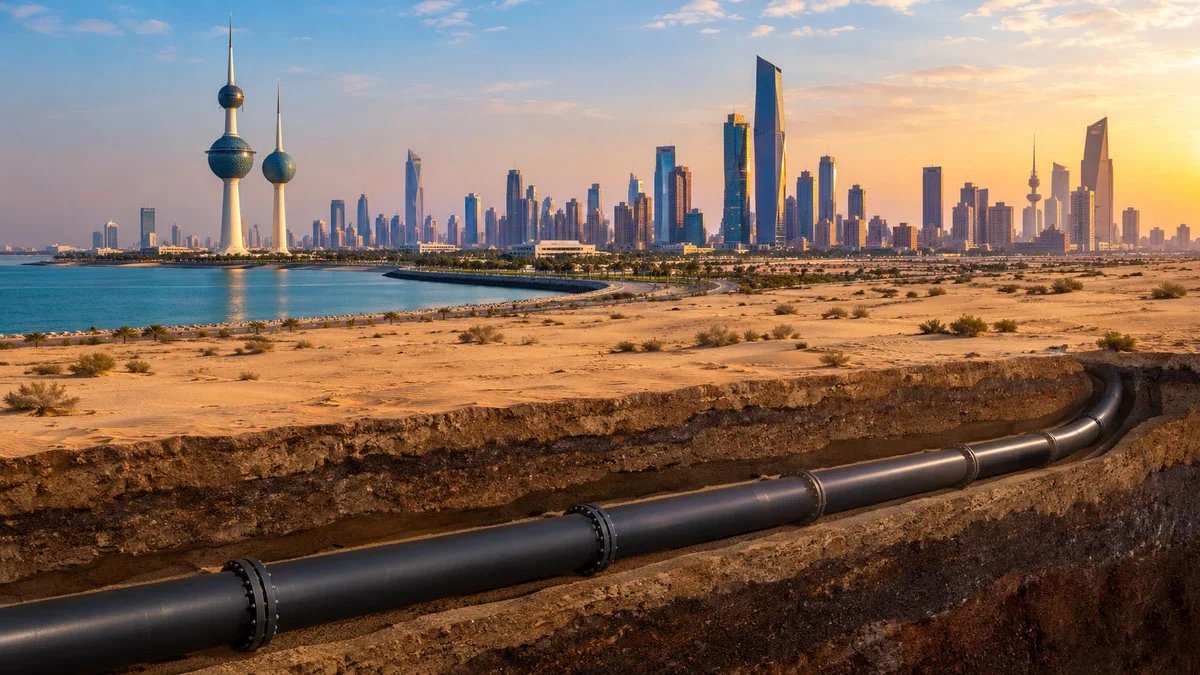
Kuwait is examining a multi-billion dollar project to reverse its current reliance on maritime routes and surface pipelines by constructing interconnected subterranean pipeline systems under the territory of neighboring transit states to ensure the uninterrupted flow of its crude oil exports in the face of growing geopolitical and maritime security threats.
Following recent attacks on surface infrastructure in the Persian Gulf and strategic Arab nations, Gulf Cooperation Council (GCC) countries increasingly view supply security as an indispensable security matter rather than a commercial consideration.
A high-level Kuwaiti government source previously said that protecting long-range crude oil exports by onshoring their transit by avoiding vulnerable sea lanes such as the Strait of Hormuz and the Bab al-Mandab Strait would secure long-term supply stability.
Under existing plans, the infrastructure would run across the Kingdom of Saudi Arabia or the Sultanate of Oman to reach open-water installations on either the Red Sea or the Arabian Sea.
There are numerous engineering tradeoffs between deciding on construction of exposed aboveground facilities and undertaking a fully buried pipeline solution to protect an oil transit route.
Fully subterranean pipelines are far more resilient against sabotage or military attacks, civilian drone operations, as well as extreme weather events like sandstorms and temperature fluctuations.
While constructing a fully underground pipeline would be a multi-billion dollar proposition with initial estimated capital costs between $3 million and $5 million per mile ($1.8 million to $3.1 million per km) compared to between $1.5 million and $2.5 million ($0.9 million to $1.6 million per km) for typical aboveground pipelines – the ongoing operational costs of surveillance, maintenance, and security protection of exposed lines can over long distances outweigh the initial cost premium of constructing an underground pipeline network.
Constructing the aboveground pipeline network running through several countries over potentially more than 1,200 km (around 750 miles) could necessitate an investment of between $3.6 billion and more than $6 billion depending on terrain and protective hardened facilities.
Even with the enormous financial and geopolitical investment and a need to achieve broad multi-nation sovereignty arrangements, energy experts contend that protecting an underground oil transportation route through major markets offers markedly more dependable assurance of supply.
Developing these subterranean inland transit systems can help to alleviate the potential for national crises to affect access to crude exports and sustain the revenue flows necessary for the Kuwaiti state.