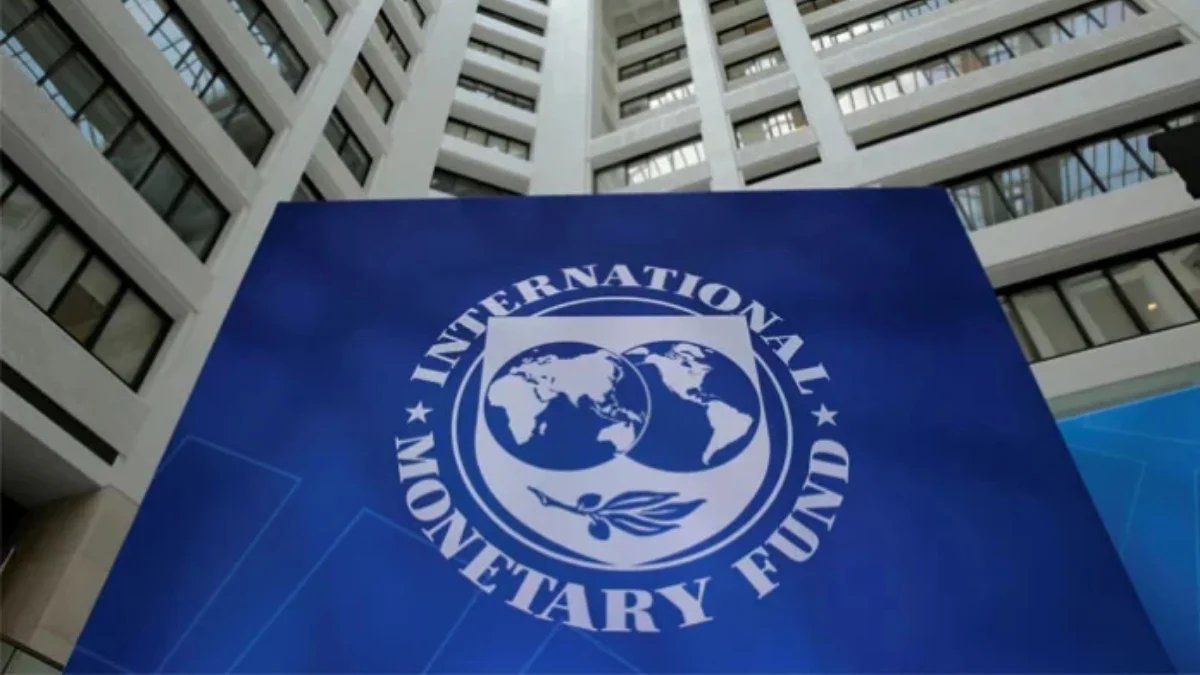
The Ministry of Finance in Pakistan has clarified what it describes as misleading assertions in a local newspaper report published on 22 September 2026 titled “Iqbal seeks role in IMF talks,” concerning the country’s IMF program, the ministry’s role in negotiations, and the government’s economic stabilization policies.
The ministry said the report did not accurately reflect the institutional arrangements governing Pakistan’s engagement with the International Monetary Fund (IMF), and could create an incorrect impression among the public and market participants.
IMF program is a whole-of-government program, not a Finance Division program
The Finance Ministry has rejected the suggestion that it exercises “tight control” over the design and negotiations of Pakistan’s IMF program.
It said the IMF’s EF and RS facilities encompass reforms and commitments falling within the mandates of multiple federal and provincial institutions, including Finance Division, Planning Commission/Ministry of Planning, Ministry of Energy, provincial governments, FBR, SBP and other relevant stakeholders.
According to the ministry, the institutions concerned lead technical discussions and work with the IMF on benchmarks within their respective areas of responsibility.
The ministry also said the IMF program was not limited to fiscal targets or economic figures. It includes structural reforms aimed at supporting growth, social protection, governance, energy-sector efficiency, climate resilience and reducing economic distortions.
It said the latest IMF staff report specifically states that policy discussions focused on accelerating reforms to support stronger growth, while protecting vulnerable households.
Petroleum Levy (PDL) is not the “central point” of the IMF program.
The Finance Ministry has disputed the description of the Petroleum Development Levy (PDL) as the “central point” of Pakistan’s IMF program.
It said the program’s fiscal strategy is substantially broader and revolves around FBR revenue mobilization, expansion of tax base, provincial taxation, expenditure rationalization, etc.
For FY27, the program specifically emphasizes additional revenue mobilization and strengthening FBR performance rather than relying solely on petroleum taxation.
The PDL is one of several revenue instruments, it added, and describing it as the centerpiece of the IMF program overstated its importance.
The ministry also said that describing the IMF program as having “no conditionality relating to petroleum levy pricing” was technically narrow.
While the program does not set a single permanent headline PDL rate, published program documents contain provisions concerning petroleum pricing and levies.
These include the alignment of domestic fuel prices with international prices through regular adjustments. The RSF also contains a reform measure involving the introduction of a supplementary carbon levy through the PDL framework.
The ministry therefore said petroleum pricing policy forms part of the broader program framework rather than being a policy developed solely by the Finance Division.
It also rejected the suggestion that the PDL could directly explain broad outcomes such as inflation, unemployment, poverty and weak growth.
The ministry said Pakistan’s inflation and growth outcomes reflect multiple factors, importantly the prevailing geopolitical situation along with domestic and international commodity prices, exchange-rate movements, monetary conditions, fiscal imbalances, external financing constraints and global shocks.
Fiscal stabilization cannot credibly be separated from growth.
The finance ministry further said fiscal stabilization and economic growth should not be treated as opposing objectives.
Pakistan entered the IMF program with limited fiscal and external buffers and substantial financing requirements, it said.
Restoring fiscal sustainability, rebuilding reserves and reducing refinancing risks are necessary conditions for durable private investment and growth.
It cited IMF third-review documents noting that fiscal consolidation contributed to reducing macroeconomic imbalances and demand pressures, supported disinflation, and external-sector stabilization through reserve build-up and recovery in overall growth numbers.
Also, the Finance Division has not pursued fiscal consolidation without social safeguards, and supported the program to incorporate explicit floors and commitments for social protection, i.e., BISP targeted cash-transfer spending, inflation adjustment of unconditional cash-transfer benefits, etc.
The latest targeted fuel-subsidy program is another initiative, while being in an IMF program, on the direction of the Prime Minister to protect vulnerable households through targeted, temporary, and fiscally sustainable interventions, rather than untargeted subsidies that create large fiscal liabilities. Sovereign debt is contingent on fiscal imbalance, and in the last financial year, debt growth has been limited to the lowest levels in two decades.
Agriculture-related commitments are not exclusively with Finance Division.
The ministry said agricultural income taxation, for instance, is constitutionally and administratively a provincial responsibility, and implementation necessarily involves provincial governments.
Any assessment of these reforms should therefore distinguish between program coordination by Finance Division and constitutional/administrative responsibilities of the relevant governments and institutions.
Lastly, a clear distinction needs to be maintained between Finance Division’s responsibility for overall program coordination and agreement on benchmarks with the IMF, and the policy-making, legislative, and implementation responsibilities of respective federal ministries and provincial governments.
The appropriate policy debate is therefore not “stabilization versus growth”, but how to transition from stabilization towards sustainable growth without any fiscal and external imbalances that necessitated reverting to IMF stabilization programs, as witnessed in the past.