
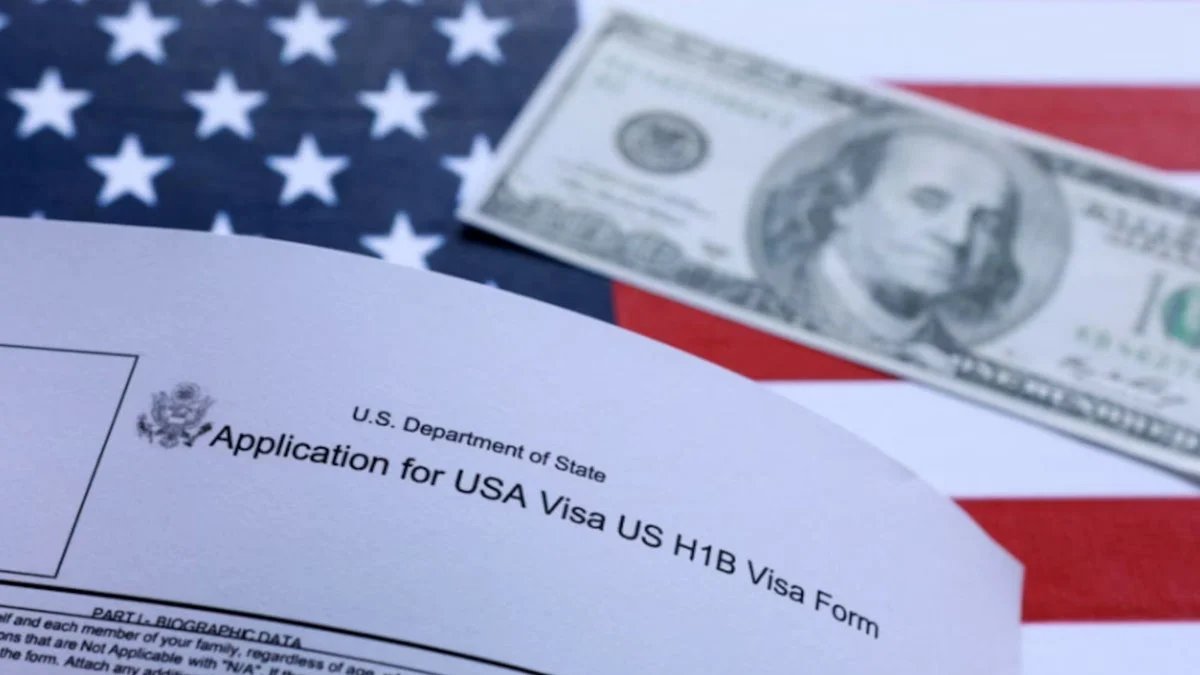
Indian IT firms are unlikely to face near-term fallout from the US suspension of a key green-card programme, as major technology companies have reduced their dependence on this route for employment, analysts said on Friday.
Washington’s move, targeting the Permanent Labor Certification programme, is part of a broad effort to reduce the number of foreign-born people in the US and curtail their pathway to residence and citizenship.
The steps do not advance both countries’ shared ambitions, India’s foreign ministry said on Friday.
“We have also seen some comments in this context by the US vice president. We believe that such descriptions are unwarranted and ignore the fact that Indian professionals in the United States are highly educated and skilled contributors to its economy and innovation ecosystem,” the ministry said.
Vance had said, without citing specific evidence, that companies are using the PERM program to replace American employees with foreign workers and undercut their wages.
ICICI Securities said that the development was negative for Indian IT stocks in the near to medium term, primarily because of a sentiment hit and longer-term talent retention concerns “rather than an immediate revenue impact.”
Indian IT firms accounted for less than 2% of the PERM applications filed between October 2024 and September 2025, the brokerage said, adding that prolonged uncertainty around residency could increase attrition among US-based workers.
Nasscom, India’s IT body, said late on Thursday that firms had significantly reduced their dependence on H-1B visas in recent years while expanding local hiring in the US.
Relatively few workers move from H-1B visas to permanent residency through PERM, Nasscom said.
The US curbs target Microsoft, Cognizant, Infosys, Tata Consultancy Services, Wipro new tab, HCL Technologies and Capgemini.
TCS, India’s largest IT services exporter, said it did not expect the suspension to affect its workforce strategy or client engagements, citing single-digit PERM applications over the past two years.
India’s IT index rose about 3%, led by TCS, which gained after upbeat second-quarter results. Both IT index and TCS logged their biggest percentage rise in six weeks on Friday. The overall market value of the 10 constituents in the IT index rose 701.336 billion rupees ($7.25 billion).
UNCERTAINTY AHEAD
The US move comes against the backdrop of AI-led disruption to India’s $315 billion IT industry, months after the Donald Trump administration increased fees for the H-1B visa program, which US employers use to hire skilled foreign workers.
IT stocks are the worst performers in India this year, slumping 25%, compared with a 14% drop in the benchmark. The firms rely on the US market for a bulk of their revenue.
“Indian IT stocks are already operating under pressure, and this additional regulatory development adds another layer of uncertainty for the sector,” said Sumit Singhania, head of research at Bajaj Broking.
Companies could face higher hiring and compliance costs as they increasingly rely on US talent and subcontracting, potentially weighing on margins, Singhania said.