
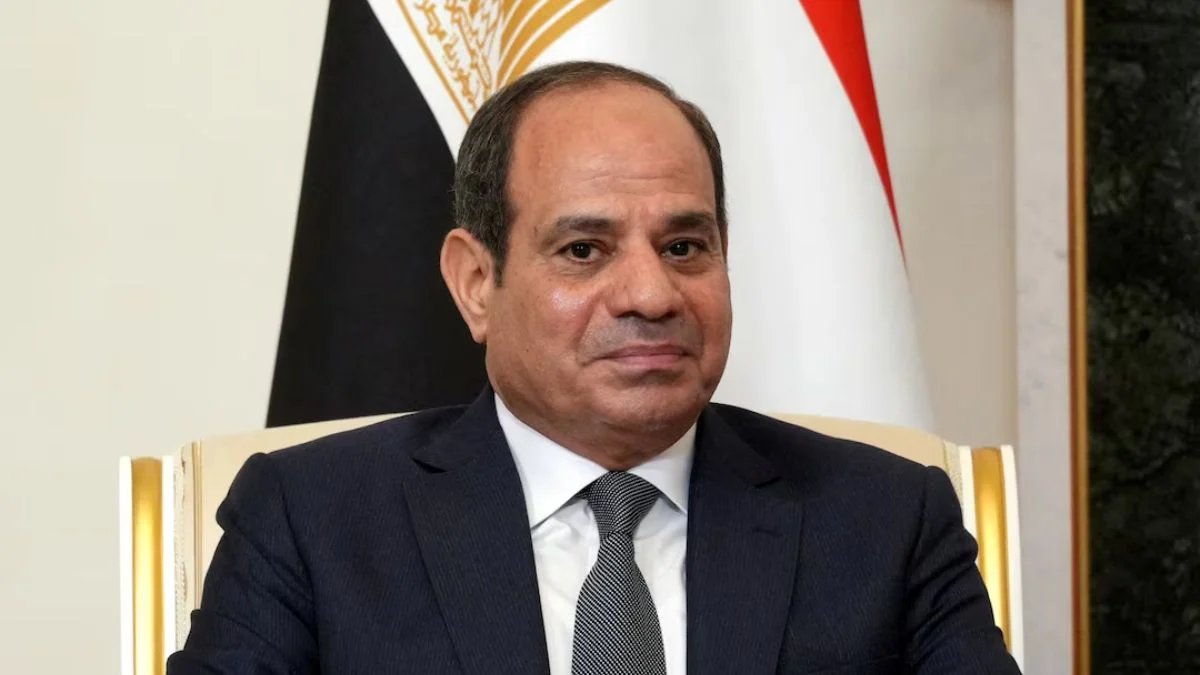
Egyptian President Abdel Fattah al-Sisi said on Wednesday that Cairo’s proposed military support for Riyadh was to “defend Saudi territory, and does not include an attack on Yemen,” according to a statement from his office.
At a government event titled Egypt Forum 2026, Sisi said the “objective is to defend the kingdom’s lands and borders, as well as those of any other Arab state, should it be requested of Egypt,” his spokesman said in a statement.
Sisi on Saturday had asked parliament to authorise support for Saudi Arabia in its war with the Houthis, “if requested”.
The parliament, which is stacked with supporters of the president, has since held two rare secret sessions, before postponing deliberations until next week.
Following the morning event where Sisi made the speech, which was reported on a delay, a high-level Egyptian delegation visited Riyadh, the kingdom’s state news agency reported.
Egypt’s top diplomat Badr Abdelatty and spy chief Hassan Rashad delivered a letter from Sisi to Saudi Arabia’s de facto ruler Mohammed bin Salman, the Saudi press agency said.
The contents of the message were not reported.
In recent weeks, Ansar Allah Houthi attacks on Saudi Arabia have reached an unprecedented scale, forcing Riyadh to shut its main airport and postpone a major investment conference.
A Houthi maritime blockade is also threatening oil exports from the kingdom, the world’s biggest crude exporter.
Saudi Arabia has since rallied a show of support from its allies. French President Emmanuel Macron, on a surprise ‘solidarity’ visit to the kingdom Wednesday said French troops would help shield the key oil terminal of Yanbu on the Red Sea.
The day before, the UK government announced it would deploy British fighter jets to help Saudi Arabia defend itself against increasing attacks.
Egypt’s tightrope
A handful of dissenting voices within Egypt’s parliament have demanded “specific objectives and clear information” on any possible deployment and an assessment of the “potential risks to the lives of our soldiers”.
Direct military involvement is unpopular in the Arab world’s most populous nation, while memories of its last disastrous deployment in Yemen, in the 1960s when thousands of soldiers were killed fighting in the North Yemen civil war, remain alive.
That mission, under President Gamal Abdel Nasser, was later compared to the US war in Vietnam.
Riyadh is one of Cairo’s strongest allies, and a key financial backer of Sisi’s administration since the former army chief ousted Islamist president Mohammed Morsi in 2013.
In his speech on Saturday, Sisi said it was “inconceivable” for Cairo to stand by as Riyadh’s security and stability were threatened, after the unconditional support the kingdom gave Egypt in the early days of his administration.
Egypt joined the Saudi-led coalition in Yemen in 2015, contributing naval and air forces and deploying warships to the Red Sea and Bab al-Mandab Strait.
But over the past decade, it has adopted an increasingly conservative foreign policy, prioritising its own national security.
It has positioned itself as a regional mediator with channels open across conflict lines, including with Hamas, Israel and Iran.
Again on Wednesday, Foreign Minister Abdelatty said Egypt’s foreign policy was defined by “wisdom and strategic balance”.
This week, Abdelatty has been in contact with Iran’s top diplomat Abbas Araghchi, who has said that Egypt’s potential involvement would make the situation “more difficult”.
“Egypt has sufficient experience to avoid entangling itself in such a highly complex conflict,” Araghchi said in an interview with Iraqi state broadcaster Al-Iraqiya aired on Tuesday.
Throughout this year, as its Gulf allies have come under attack in the war between Iran and the US, Cairo has repeatedly preached caution.
The Arab world’s largest military did not issue a response even when its own Damietta port was struck by an unidentified drone in July.
It has not joined the Mecca defence pact signed by Saudi Arabia, Turkey and Pakistan in August, which experts said was in order to maintain its strategic autonomy.
Besides its close alliance with the kingdom, Egypt also has its own economic woes to consider.
Along with Saudi Arabia, Egypt is hardest hit by disruptions through Bab al-Mandab, the southern gateway to its Suez Canal, revenues from which have not recovered since Houthi attacks began in 2023.