
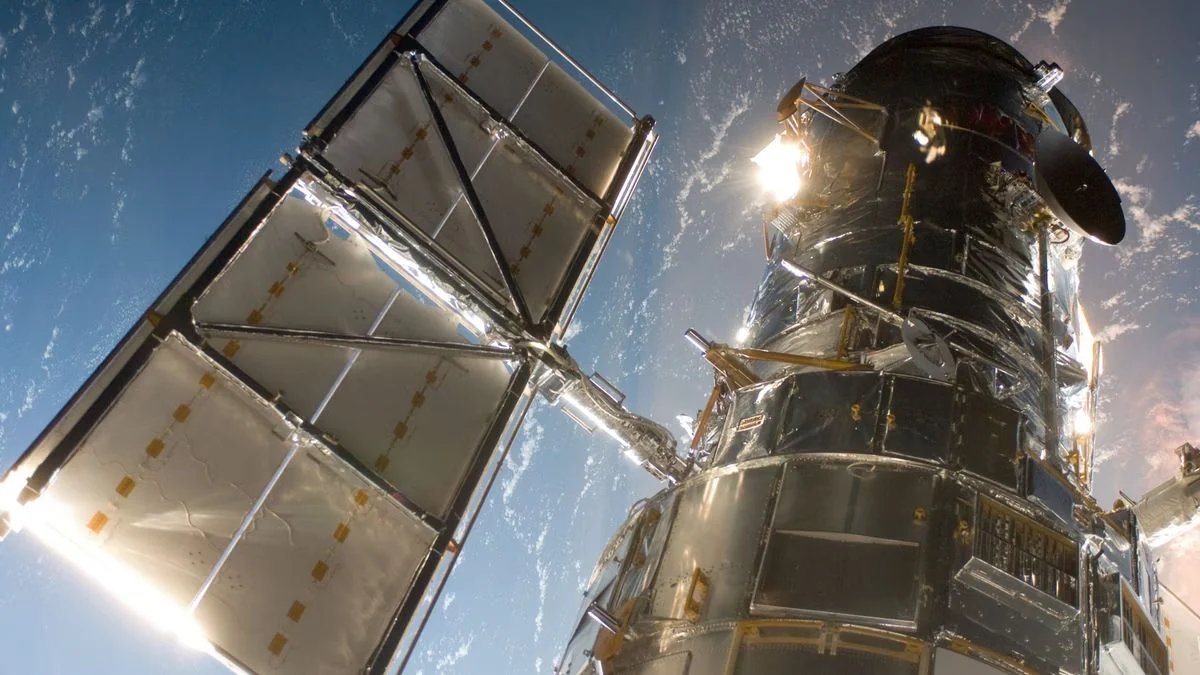
NASA is now turning to private space companies for help to save the iconic Hubble Space Telescope from burning up in the atmosphere. The 36-year-old observatory does not have its own propulsion system and is gradually losing altitude.
On October 29, NASA put out a formal Request for Information, asking private companies to suggest ways to either move the telescope to a higher orbit, carry out a servicing mission, or guide it safely back to Earth for disposal. Aerospace companies have until November 30 to send in their rescue plans.
NASA’s own estimates show there is a 10 percent chance Hubble will fall back into Earth’s atmosphere by September 2032. That risk rises to 50 percent by December 2033. Because of this, any mission to save Hubble needs to launch by 2032.
To save Hubble, a company would need to lift the heavy telescope to at least 600 kilometers above Earth without harming its delicate instruments. The chosen company would have to supply the rocket, the servicing spacecraft, and handle all mission operations.
NASA Administrator Jared Isaacman said that finding new and affordable ways to keep satellites like Hubble working longer is an important responsibility to both American taxpayers and the scientific community.
Right now, NASA does not have the budget for a special mission, so officials are counting on affordable proposals from private companies. Isaacman also has a long history with the telescope.
In 2022, the former private astronaut offered to pay for a crewed mission to service Hubble using a SpaceX Dragon capsule. NASA decided not to move forward with that idea in 2024. Since SpaceX plans to retire the Crew Dragon by 2030, experts think this new request will likely draw bids from new space robotics companies instead of those offering crewed spacecraft.
The need to find a commercial partner became more urgent after a recent robotic mission failed in orbit. NASA had hired a startup called Katalyst Space to catch the smaller Swift observatory, but the robotic vehicle missed its target. With Swift now expected to burn up in the atmosphere in the next few days, NASA wants to prevent the same thing from happening to Hubble.
Since Hubble is much bigger and heavier, letting it fall back to Earth without control could mean pieces of debris might reach populated areas. Luckily, a past shuttle mission added a soft-capture mechanism to Hubble, which will make it easier for any future rescue vehicle to dock.