Concerns Raised Over Punjab Local Government Act 2025, Demand for Early Local Government Elections
By Farzana Chaudhry | Lahore, PakistanLAHORE: WISE, a registered women’s social organization working for the promotion of women’s rights, democratic processes, labor rights and local governance in Pakistan, organized a major provincial public forum titled “Strengthening Local Governments in Punjab: Vision and Future Roadmap.” Around 130 participants from Lahore, Sheikhupura, Nankana Sahib, Faisalabad, Gujranwala and…
By Farzana Chaudhry | Lahore, Pakistan
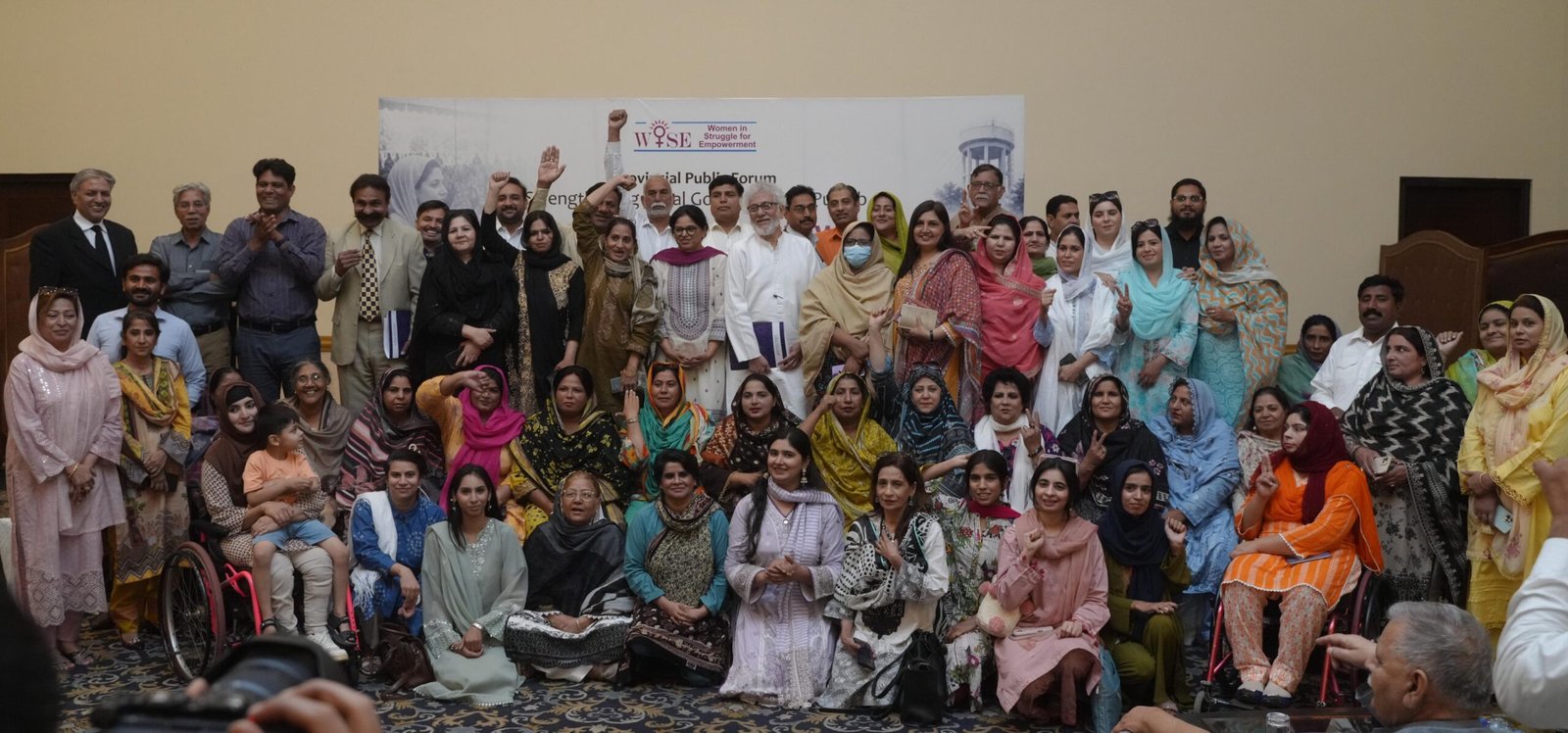
LAHORE: WISE, a registered women’s social organization working for the promotion of women’s rights, democratic processes, labor rights and local governance in Pakistan, organized a major provincial public forum titled “Strengthening Local Governments in Punjab: Vision and Future Roadmap.” Around 130 participants from Lahore, Sheikhupura, Nankana Sahib, Faisalabad, Gujranwala and Kasur attended the event.
The participants included women, youth, civil society representatives, political activists, academics, lawyers, local government experts and community leaders who discussed concerns regarding the proposed Punjab Local Government Act 2025 and presented recommendations for strengthening the local governance system in Punjab.
The first session of the forum was chaired by Bushra Khaliq. Speakers included Syed Abdul Khaliq and Prof. Dr. Shakeela Sandhu.
The second session was chaired by Tanveer Jahan, while speakers included Muhammad Tahseen, Dr. Ayesha, Ishtiaq Chaudhry and Muhammad Zahid Islam.
Participants unanimously approved a set of recommendations and demands concerning the new local government framework.
Speakers highlighted that the creation of town corporations in major cities including Lahore, Faisalabad, Multan, Bahawalpur, Sargodha, Rawalpindi, Sialkot and Gujranwala, alongside district authorities, could create administrative contradictions and governance complications. They demanded the restoration of metropolitan corporations in these cities, under which town corporations would function more effectively.
Participants further demanded that union council delimitations should be based on population, proposing one union council for every 25,000 to 30,000 residents to ensure equal representation. They also recommended dividing union councils into nine single-member wards instead of multi-member constituencies and introducing direct elections for all seats through secret ballot.
The forum also called for an increase in union council seats from 13 to 15, with at least three seats reserved for women. Participants demanded that women’s representation in corporations, town municipal councils and metropolitan tehsil councils be increased from 14 percent to 33 percent.
Another major recommendation was the inclusion of development authorities and private companies performing municipal functions under the authority of local governments to improve accountability and administrative coordination.
Participants also stressed the need to strengthen the financial autonomy of local governments. They demanded the restoration of grants previously received from the federal government, including excise duty shares, district export tax and toll tax revenues. They further proposed that at least 25 percent of the Punjab Consolidated Fund should be allocated to local governments through the Provincial Finance Commission.
The participants urged the Punjab government and members of the provincial assembly to immediately introduce amendments to the Punjab Local Government Act 2025 through an amendment bill or governor’s ordinance.
The forum also demanded that the Election Commission of Pakistan complete the delimitation process at the earliest and announce the schedule for local government elections without further delay.