
BEIJING – In the top Global Solicitation on Best Poverty Reduction Practices (Seventh Call), a hybrid rapeseed cooperation project led by China that is helping Pakistan lower edible oil imports, enhance food security, and raise farmers’ incomes has been chosen as a recommended case.
The case, “Empowering Poverty Reduction and Food Security in Pakistan through China’s Double-Low Hybrid Rapeseed Technology,” was presented on November 11 at the 2026 International Seminar on Global Poverty Reduction Partnerships in Beijing. Only 126 instances were chosen from 890 submissions from 31 different nations.
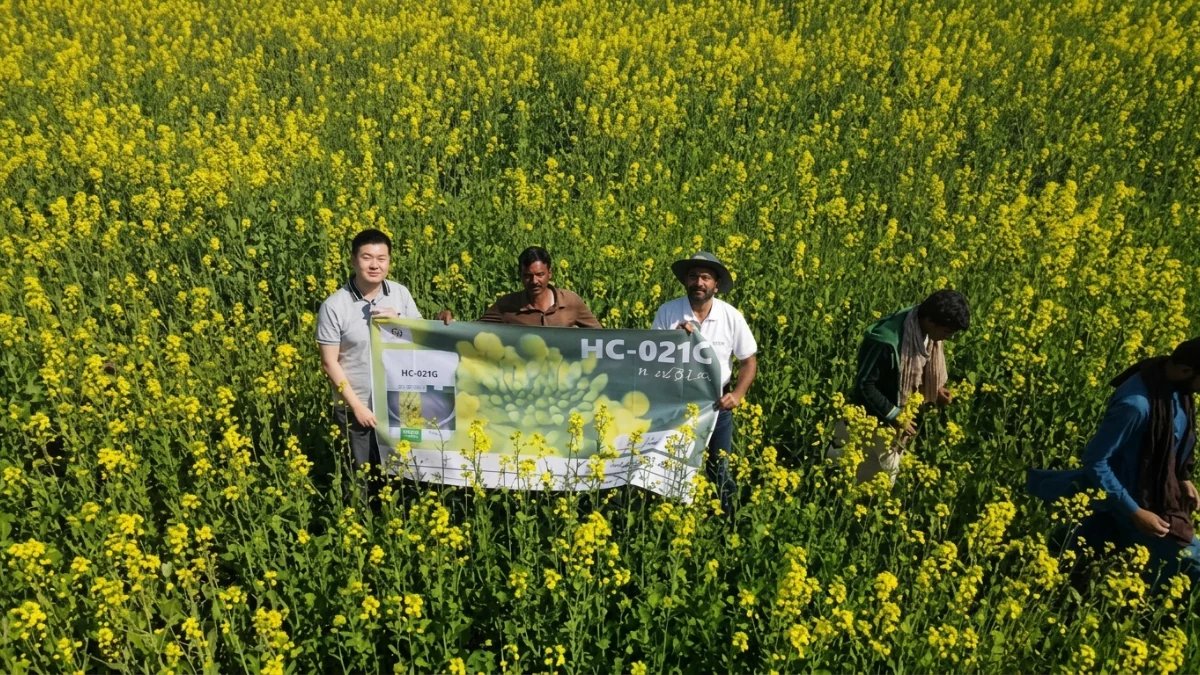
Pakistan imports around 90 percent of its edible oil requirements, spending billions of dollars annually. Since 2009, Wuhan Qingfa Hesheng Agricultural Development Co., Ltd. has been promoting hybrid rapeseed technology in Pakistan, including HC-021C, a high-yielding variety with low erucic acid and low glucosinolate content, CEN reported.
Compared with local mustard varieties, HC-021C delivers 7–9 percent higher yields and approximately 8 percent higher oil content. Its oil has a smoke point above 215°C, making it suitable for Pakistan’s high-temperature cooking practices. Its seed meal also contains 38–40 percent protein, benefiting the livestock sector.
The project details reveal that almost 3.5 million mu (233,333.33 hectares) of HC-021C have been planted, making up 38% of Pakistan’s hybrid rapeseed farming area.
The project has produced more than $350 million in agricultural output, helped about 60,000 farming households increase their annual income by an average of $800, and benefited about two million people through an integrated model that combines improved seeds, cultivation training, and agricultural machinery.