

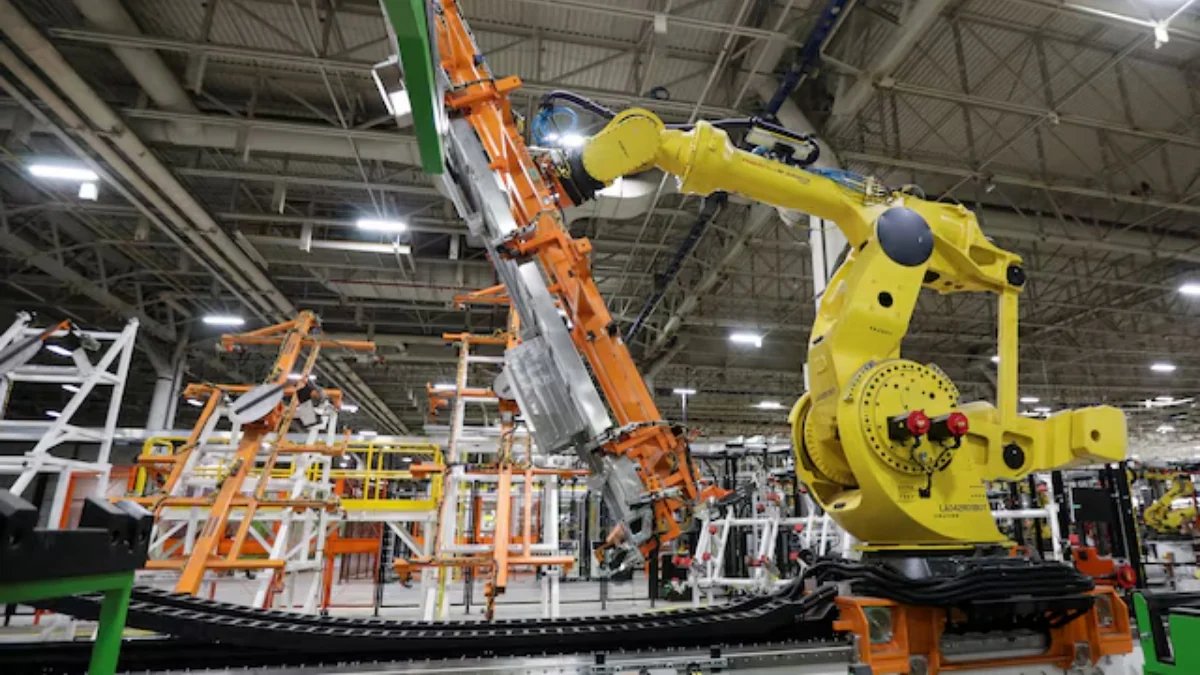
General Motors is aiming to increase use of robots and other automation by 20 percent at its North American factories by 2028, two people familiar with the matter said, as the automaker grapples with higher labor and onshoring costs.
The Detroit automaker is developing its own robots and assembling them at its Kokomo, Indiana, plant, the same people and two other people said, and is focused on using autonomous mobile robots to move parts around its plants.
The 20% automation target and production of robots in Indiana have not previously been reported.
Automation is likely to emerge as a key issue in the United Auto Workers’ next round of negotiations with GM, Ford Motor and Jeep parent Stellantis, before the contracts expire in spring 2028.
The UAW, which represents about 50,000 GM factory workers, criticized the company’s automation efforts as a job-cutting tactic.
“Their idea of being more efficient is to cut the very people who create their product and profits,” UAW Vice President Ryan Hiestand said in a statement to Reuters after publication of the initial story. “We don’t need more robots so GM can do another stock buyback.”
GM did not immediately respond to a request for comment. Earlier, the company said it uses automation to improve safety, quality and efficiency. “As competition intensifies globally, we continue to put these technologies to work in ways that support our manufacturing teams,” it said.
GM ASKING SUPPLIERS FOR MORE AUTOMATION
As manufacturers expand the use of robots and AI in their factories to boost efficiency, they risk rankling labor groups that are guarding against job losses.
GM is still buying robotics equipment from outside suppliers while developing its own in-house, an effort that company executives outlined last year.
It also is asking parts suppliers bidding on new contracts to submit automation plans for their own operations, two other people familiar with GM’s supply base said. GM is using a scorecard to rate suppliers’ automation efforts and considering the scores in contract decisions, the people said.
US automakers have increased automation to contain manufacturing costs since the UAW won record contract gains from GM, Ford and Stellantis in 2023. President Donald Trump’s drive to bring more factory work home also has put pressure on production costs.
GM said the 2023 contract would add about $575 in labor costs per vehicle; Ford pegged its added cost at $900 per vehicle. At the time, analysts said the companies likely would increase automation as a way to defray the higher labor costs. GM last year said it had about 100 roboticists, AI engineers and hardware specialists working on advanced robotics systems.
TENSIONS STIR OVER AUTOMATION
US automakers have long said their labor costs exceed those of foreign rivals and newer competitors such as Tesla, whose US factories are largely nonunion.
UAW President Shawn Fain already has warned that AI and increased automation pose a threat to workers.
“The fruits of our labor have multiplied like never before, but workers aren’t reaping the harvest. That’s theft,” Fain said at a UAW convention in June. “And if AI continues to be used as an accessory to that crime, it has to be stopped.”
During a February episode of the “Automated” podcast, Mikell Taylor, GM director of robotics strategy, said manufacturers need to design processes that take advantage of the respective strengths of workers and robots.
“How do I get the best out of both the people here and the machines here to get as much efficiency and quality as I can?” she said.
‘LESS HOURS INTO PRODUCTION’
GM and other automakers have used robots in their factories for decades to weld together body panels, for example, or move supplies between stations.
But they are exploring more ways to integrate robotics and AI into their plants to increase productivity, especially as they grapple with higher costs from rising commodity expenses and efforts to localize supply chains.
“It’s all about the end game: putting less hours into the production of the vehicle so (automakers) can be more efficient and more profitable,” said Laurie Harbour, a partner who specializes in automotive at Wipfli, a tax and advisory firm. She added that increased automation can ease labor shortages for auto manufacturers.