

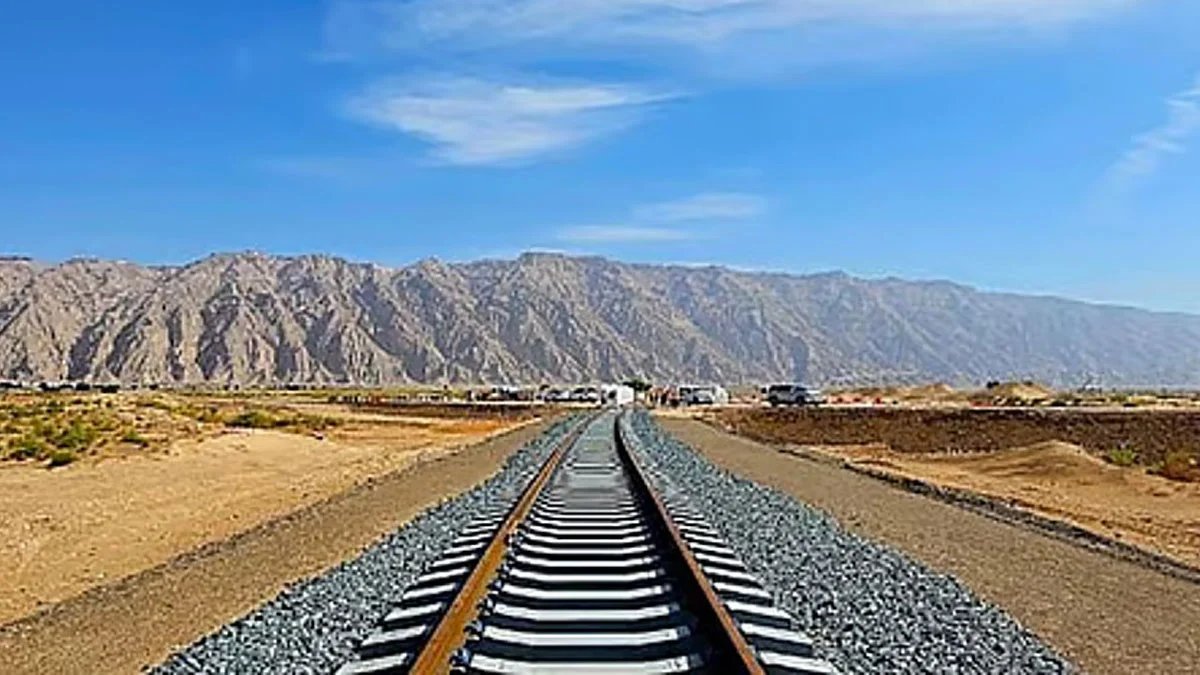
Oman has formalized the cross-border rail framework with the United Arab Emirates. Sultan Haitham bin Tarik issued Royal Decree No. 75/2026 on September 3, 2026 approving the landmark bilateral rail agreement that the governments of the two countries signed earlier on June 21, 2026.
With this legislative push, the Hafeet Rail (formerly Oman-Etihad Rail Company) – a partnership venture among Etihad Rail, Oman Rail and the Mubadala Investment Company – is gaining rapid momentum. Valued at nearly $2.5 billion, the strategic cross-border venture has already secured $1.5 billion in regional and international project finance.
Connecting Key Industrial Hubs and Borders
The proposed 238-km railway line aims to provide a strong link between Sohar Port, Oman’s main gateway, and industrial heartland, with the United Arab Emirates’ fast expanding railway network. Designed to operate passenger and heavy cargo transport, the railway corridor extends from Sohar to Al Buraimi to Al Ain and in turn to the UAE railway system.
For passengers-Ultra-modern high-speed trains are designed to shuttle at 200 kph, enabling them to ferry 400 passengers on each journey. Passenger trains are to cover the distance from Abu Dhabi to Sohar within approximately 100 minutes and that from Al Ain to Sohar within 47 minutes.
For Freight-Freight trains moving at a maximum speed of 120kph will substantially boost supply chains. The rail line is anticipated to cut existing truck transit times for cargo between Sohar and Abu Dhabi by approximately 70%. Trips are likely to come down from five to eight hours (on current trucking modes) to 100 minutes (with the completion of the rail link).
Engineering and Integration Across the Region
The ambitious project traverses difficult terrain and involves tunneling through mountains, streams and across wadi bottoms, crossing inhabited areas, requiring extensive flood defenses and bridges at multiple crossings and locations along the proposed line. Some 2.5 km of tunnels have been built in the rugged terrain.
A landmark project for regional integration – the first cross-border line of this kind among GCC nations- is considered to be a template for all other inter-regional rail links, and will help improve and integrate rail connectivity among gulf countries. It will transform regional trade patterns and increase the competitiveness of GCC countries.