

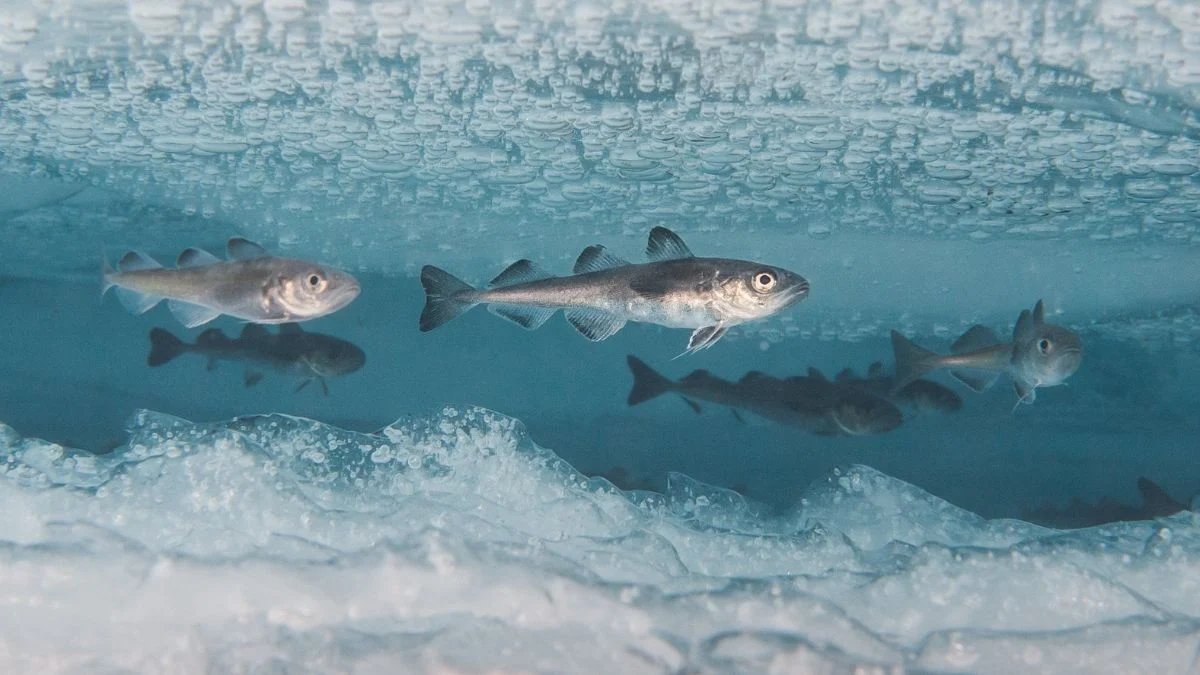
BEIJING: Chinese marine scientists on an Arctic expedition have captured five juvenile polar cod in a densely ice-covered area near the North Pole.
Researchers aboard China’s polar icebreaker Xuelong 2 caught the young fish, which were one to two years old, north of 86 degrees latitude in the northern Canada Basin. At the same time, an unmanned underwater camera recorded rare video of the small fish swimming under thick sea ice.
Polar cod are specially adapted to survive in some of the world’s harshest conditions. Their bodies make antifreeze proteins that stop their blood and tissues from freezing, allowing them to live in ocean temperatures as low as minus 2 degrees Celsius.
This discovery is good news for polar marine science. For a long time, researchers thought the remote Canada Basin was mostly a barren ocean desert where marine life struggled to find food.
But when scientists looked at the fish they caught, they found the stomachs were completely full. Water samples from the same spot showed dense swarms of zooplankton and microscopic algae, proving that these polar waters have plenty of food for young fish.
Expedition members said the catch was an unexpected success. In 2023, researchers found only one fish in the area and thought it was just luck. Finding several healthy fish together now shows that stable young populations live and feed under the permanent ice. Fossils of ear stones show polar cod have lived in the central Arctic for at least 48,000 years.
This discovery matters because polar cod are a key part of the polar food chain. They eat tiny plankton and are a main food source for seabirds, seals, and larger ocean predators. The new data will also support international efforts under a 16-year treaty that protects the central Arctic Ocean from unregulated commercial fishing, helping scientists work to protect fragile polar wildlife.