
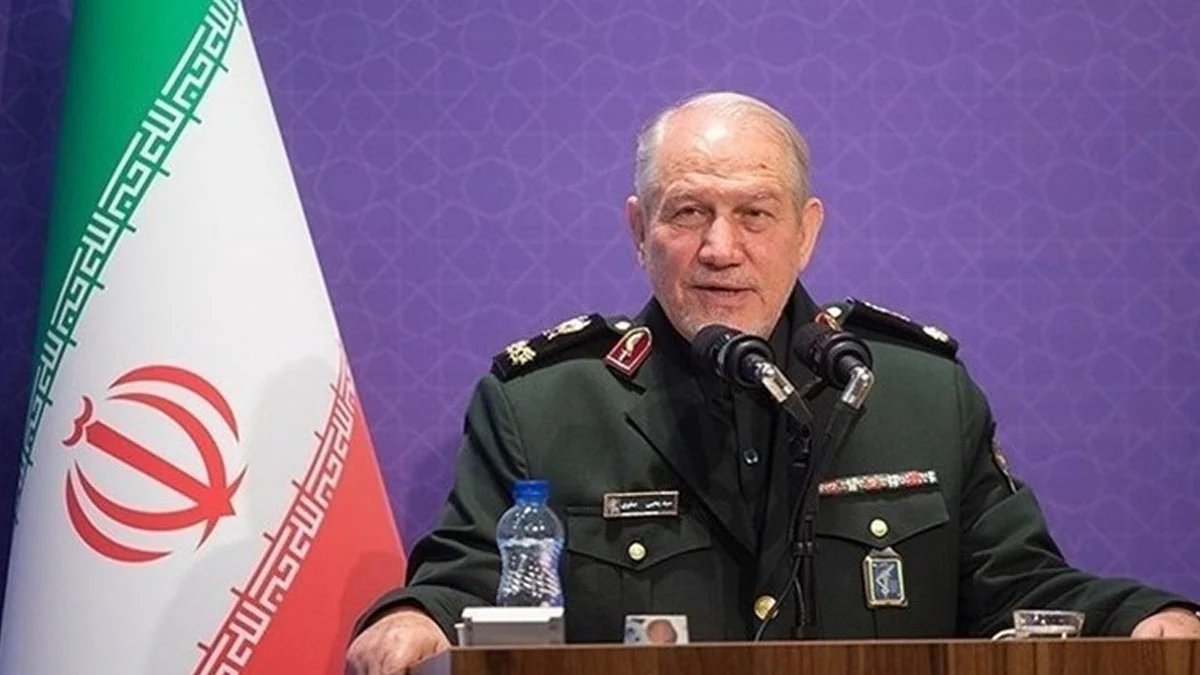
TEHRAN: A senior military adviser to Leader of the Islamic Revolution Ayatollah Seyyed Mojtaba Khamenei has said the United States has no role in the region, stressing that Iran will play a leading role in shaping the future security order in West Asia.
According to Iranian State Media, Major General Yahya Rahim Safavi said the United States had committed numerous crimes and what he described as “wicked acts” in the region.
“The Americans are on their way out and cannot remain in the region. They have spent hundreds of billions of dollars, but have failed to achieve their objectives despite that spending,” he said.
Rahim Safavi expressed hope that sustainable peace could be established through cooperation among regional countries without a US presence.
Strait of Hormuz ‘more dangerous than a nuclear weapon’
Referring to the geopolitical importance of the Strait of Hormuz and its role during the recent regional war, Rahim Safavi said Iran is the most important country in West Asia and holds a significant regional and international position.
He said the “smart management” of the Strait of Hormuz had played a key role in breaking the US maritime blockade.
The commander noted that a large portion of the world’s oil and gas passes through West Asia and the strategic waterway.
“This is a very important lever in controlling the world’s oil and gas,” he said.
Rahim Safavi said restrictions on maritime traffic through the strait had affected energy production and exports in several Persian Gulf countries, including Saudi Arabia and Qatar.
He said Iran could further expand energy cooperation with neighbouring countries.
“The Strait of Hormuz has turned into a weapon more dangerous than a nuclear weapon,” Rahim Safavi said.
He also reiterated the readiness of Iran’s armed forces and people to confront any possible future war.
Iran says it no longer trusts US talks
Iranian President Masoud Pezeshkian has said Tehran no longer trusts negotiations with the United States, saying previous rounds of talks were followed by attacks and sanctions.
According to the report, Iran has restricted transit through the Strait of Hormuz since the early days of the US-Israeli war that began on February 28 and ended under a ceasefire in early April.
Article 5 of the Islamabad MoU places responsibility for reopening and managing the strait with Iran, according to the report.
It said the United States attempted to undermine Iran’s sovereignty over the vital global energy route by establishing an unsafe corridor near the Omani coast.
The report further said the US resumed airstrikes on Iran and imposed a naval blockade in violation of the agreement that ended the war.
In response, Iran declared the Strait of Hormuz closed to all traffic.
Iran has maintained that reopening the waterway depends on the United States complying with its obligations under the MoU.
‘Iran is invincible’
Rahim Safavi also referred to what he described as crimes by the US president against Iran.
“The foolish US president must know that Iran is invincible and has a civilisation of several thousand years and a brave nation,” he said.
He said the enemy had attempted to launch a war against Iran by inciting Israel and Israeli Prime Minister Benjamin Netanyahu, killing Iranian citizens and causing extensive material damage.
However, he said the enemy had failed to achieve its objectives in the war.
Rahim Safavi expressed hope that Iran would change the course of the war in its favour and prevent another round of aggression through government efforts, national unity and the readiness of the armed forces.
He also pointed to the strategic importance of the Bab al-Mandab Strait, saying control of the waterway by Yemeni armed forces would represent another step in what he described as the continuing strategic defeat of the United States in the region.