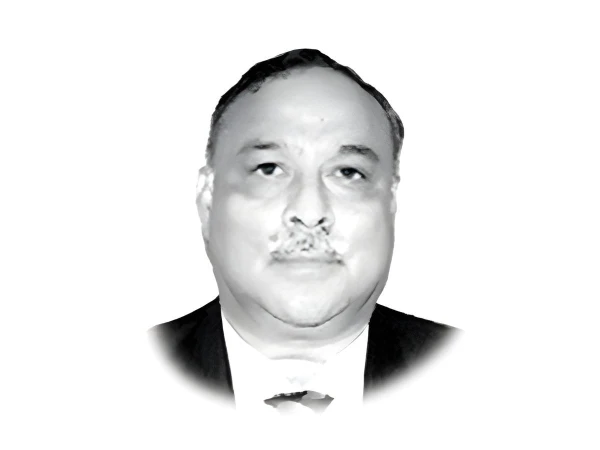


KARACHI: Syed Murad Ali Shah, the chief minister of Sindh, urged legislators, financial institutions, regulators, and development partners to go beyond increasing access to financing and instead concentrate on creating products that actually address the needs of marginalized communities. He called for a new era of client-centered and innovation-driven financial inclusion on Thursday.
Speaking at the 10th Annual Microfinance Conference (AMC-X) closing ceremony at a nearby hotel, the Chief Minister said that the conference’s theme, “Unlocking Synergies,” reflected Sindh’s own strategy for reducing poverty, in which communities, financial service providers, government agencies, and development partners collaborate to build long-term routes out of poverty.
The two-day conference brought together national and international experts to discuss women’s financial inclusion, climate resilience, agriculture financing, digital innovation, artificial intelligence and strategies to expand financial services for underserved enterprises and rural communities.
“Over the last two days, this conference has demonstrated that no single institution can solve poverty alone,” the Chief Minister said. “Real progress comes when governments, financial institutions, development partners and communities work together from the beginning.”
He appreciated the Pakistan Microfinance Network (PMN) for sustaining the conference platform for a decade and acknowledged the support of the European Union, UNIDO, the State Bank of Pakistan, the Securities and Exchange Commission of Pakistan (SECP) and other development partners in advancing inclusive finance across the country.
Highlighting a key takeaway from the conference, Murad Ali Shah said the next challenge for the financial sector was not simply opening more bank accounts but ensuring that financial products are relevant, responsive and tailored to the realities of rural households, farmers and small businesses.
“The question is no longer how many accounts we open, but whether financial products fit the person, the season and the risks that people face,” he said.
The Chief Minister described Sindh’s long-standing efforts to reduce poverty through community-led initiatives, pointing out that the People’s Poverty Reduction Program, which was introduced in 2009, has grown from two districts to encompass a significant portion of rural Sindh. He claimed that the initiative, which includes interest-free community investment funds, income-generating awards, skills development, and low-cost housing help, has organized over a million households, mostly through women-led community organizations.
“Credit alone does not lift families out of poverty,” he remarked. “What works is an integrated approach that combines finance with skills, enterprise support, housing and community organisation.”
Referring to the European Union-supported PAIDAR Programme, implemented by UNIDO, the Chief Minister said the initiative is creating new opportunities for enterprise development, rural services and access to finance across several districts of Sindh.
Murad Ali Shah also highlighted the Sindh government’s social protection initiatives. He said the province has recently approved an Early Childhood Development Programme that will provide quarterly cash support to caregivers of around 885,000 children. He added that assistance for women agricultural workers has been expanded through seasonal cash transfers, while the Mamta maternal health programme now covers 22 districts.
Turning to climate resilience, the Chief Minister said poverty reduction and climate adaptation must be treated as a single agenda, particularly in a province that remains vulnerable to floods and climate-related disasters.
He highlighted progress under the Sindh Peoples’ Housing for Flood Affectees Programme, one of the world’s largest post-disaster reconstruction initiatives, aimed at building 2.1 million climate-resilient homes. More than half a million houses have already been completed, while over 1.25 million are under construction. He noted that land ownership documents and bank accounts are being issued in women’s names to strengthen economic inclusion and household resilience.
The Chief Minister also referred to the recently launched Sindh Coastal Resilience Project, a $311 million initiative supported by IFAD, the Asian Development Bank and the Green Climate Fund. The project will benefit nearly 196,000 households in Thatta, Sujawal and Badin through investments in mangrove restoration, drainage infrastructure, climate-smart livelihoods and youth skills development.
Discussing enterprise development, Murad Ali Shah said the Sindh Enterprise Development Fund (SEDF) continues to support small and medium-sized businesses, particularly women-led enterprises. He highlighted the establishment of a one-window business facilitation centre in Karachi that provides entrepreneurs with access to business planning, licensing and financing services under one roof.
A major highlight of the ceremony was the launch of the PAIDAR Innovation Labs, an initiative designed to co-create rural financial products with the communities and enterprises they are intended to serve. Welcoming the initiative, the Chief Minister said financial solutions would be more effective when designed with the active participation of end users.
The Chief Minister asked stakeholders to continue the lessons of cooperation, creativity, and impact-driven development as he wrapped up his speech. He reiterated Sindh’s dedication to inclusive growth, stating that the government’s objective was to guaranty that every ambitious man and woman had access to capital, opportunity, and the resources necessary to create a better future.