

The Centers for Disease Control and Prevention confirmed six measles-related deaths in the US this year, according to the agency’s website on Thursday, as the country grapples with its worst resurgence of the virus in decades.
The updated figure doubles the death toll recorded in 2025 and underscores the continuing spread of the highly contagious viral disease, which was declared eliminated in the United States in 2000.
Measles cases in the US have climbed above 5,000 for the first time since 1991 and the Pan American Health Organization’s expert commission is expected to decide in coming days whether the country should retain its measles-free status.
Pennsylvania has been the hardest-hit state in the outbreak. As of November 4, the state had confirmed six measles-associated deaths this year.
The Wisconsin Department of Health Services has reported an infant’s death, while New York reported its first known measles-associated death in more than 30 years.
The CDC did not disclose the specific states where the six deaths it confirmed occurred.
The discrepancy arose after the CDC, under US Health Secretary Robert F. Kennedy Jr., switched from state health departments’ figures to the National Center for Health Statistics’ mortality data to track measles deaths.
The Department of Health and Human Services did not immediately respond to Reuters’ request for comment.
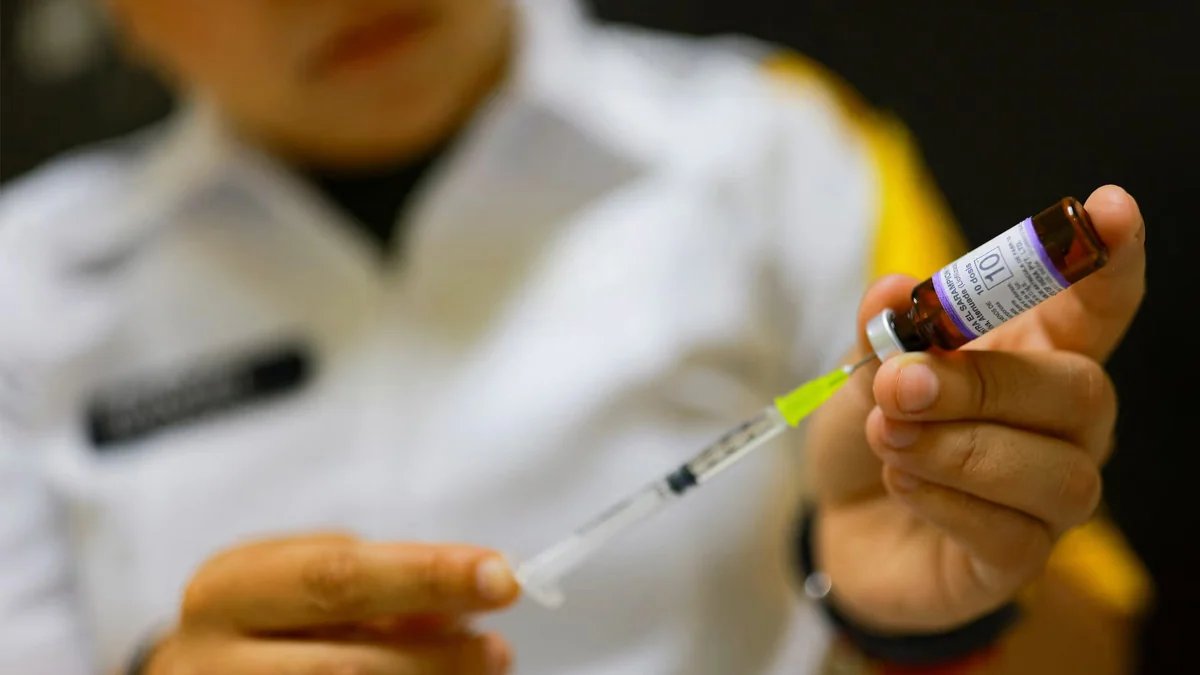
Measles can be prevented through the measles, mumps and rubella vaccine, which is about 97% effective after two doses.
Measles, also known as rubeola, is a highly contagious, vaccine-preventable illness caused by a virus in the Morbillivirus genus. It spreads easily through the air whenever an infected person breathes, coughs, or sneezes.
Because the virus can remain active in the air or on surfaces for up to two hours after an infected person leaves a space, about nine out of ten unvaccinated people who come into close contact with the virus will become infected.
Symptoms typically appear 10 to 14 days after exposure and develop in distinct stages. The illness usually begins with a high fever, persistent dry cough, runny nose, and red, watery eyes. Two to three days later, tiny white spots known as Koplik’s spots may appear inside the mouth. By day three to five, a characteristic red, blotchy rash breaks out, usually starting on the face and hairline before spreading downward across the neck, trunk, arms, and legs.
While most people recover within a couple of weeks, measles can cause severe and potentially fatal complications such as ear infections, severe diarrhea, pneumonia, and brain inflammation (encephalitis).
There is no specific antiviral cure for measles, so treatment focuses on rest, fluids, and managing fever or discomfort.
The safest and most effective way to prevent the illness and stop outbreaks is through immunization with the two-dose MMR (measles, mumps, and rubella) vaccine.