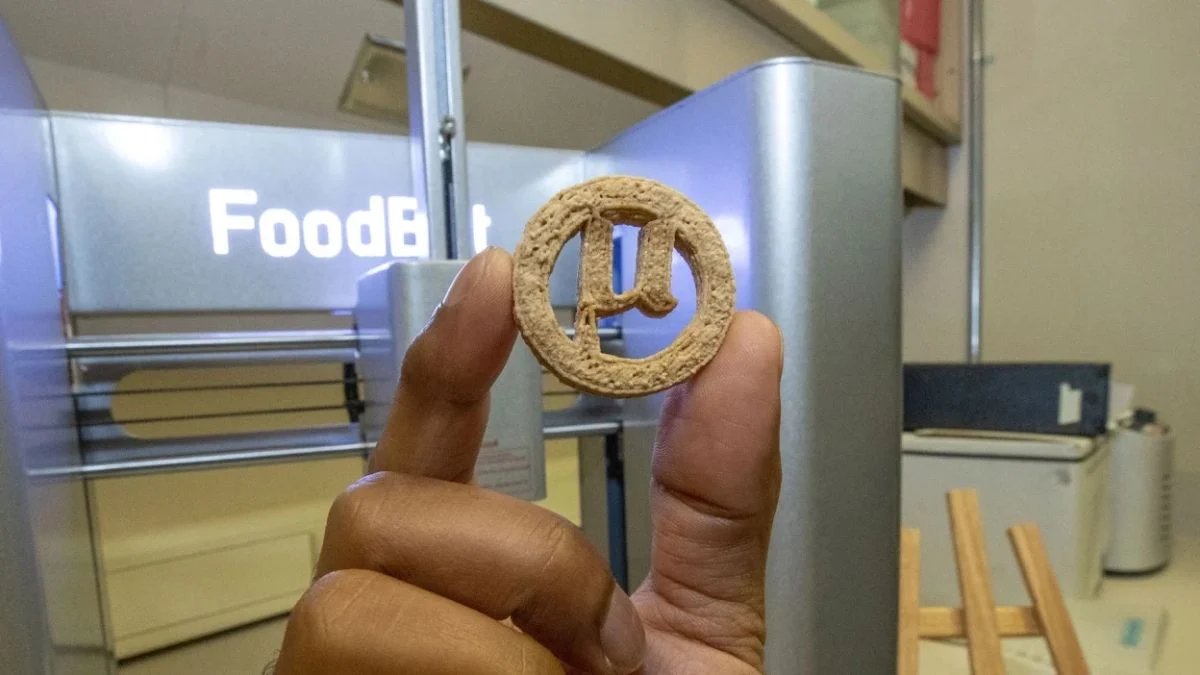
Scientists at Southern Illinois University Carbondale have developed a way to turn PET plastic waste into edible cookies, a breakthrough that could address both pollution and food shortages worldwide.
The cookies, called “µBites” (pronounced “microbites”), are made with engineered yeast that converts plastic into edible protein. Sandhya Jayasekara, a graduate research assistant, discussed the team’s findings at the American Chemical Society’s Fall 2026 meeting.
Polyethylene terephthalate, or PET plastic, is widely used in disposable water bottles and consists of carbon-rich molecules with few impurities. Associate professor Lahiru Jayakody explained that since both plastic and food are mostly made of carbon, it made sense to try turning plastic waste into something edible.
To enable the transformation, the team uses a specialized process called oxidative hydrothermal dissolution. This method breaks down PET plastic and agricultural waste, such as corn stalks, by applying water and oxygen at high temperatures, turning the tough materials into water-soluble fragments that yeast can digest.
The resulting carbon-rich liquid is fed to several specially programmed yeast strains. These microscopic biological factories convert the molecules into proteins, fats, and acids. The researchers also developed specific yeast strains that produce beta-carotene for vitamin A and synthesize plant biomass into a pleasant vanilla flavoring.
This nutrient-rich mixture is then combined with fiber, starch, and sweeteners, and then 3D-printed into µBites and cooked in a microwave.
Although the cookies have cleared initial safety checks, the team is still waiting for official approval to begin taste tests with people. For now, the unbaked µBites reportedly smell surprisingly good.
Backed by funding from NASA’s Deep Space Food Challenge and the National Science Foundation, the project is first targeting astronauts on long missions and people in disaster zones.
Jayakody hopes µBites could be available to the public in the next few years, providing a sustainable food option as global demand is expected to climb by up to 56 percent by 2050.
However, the toughest hurdle may not be scientific, but convincing people to eat food that started as plastic waste.