
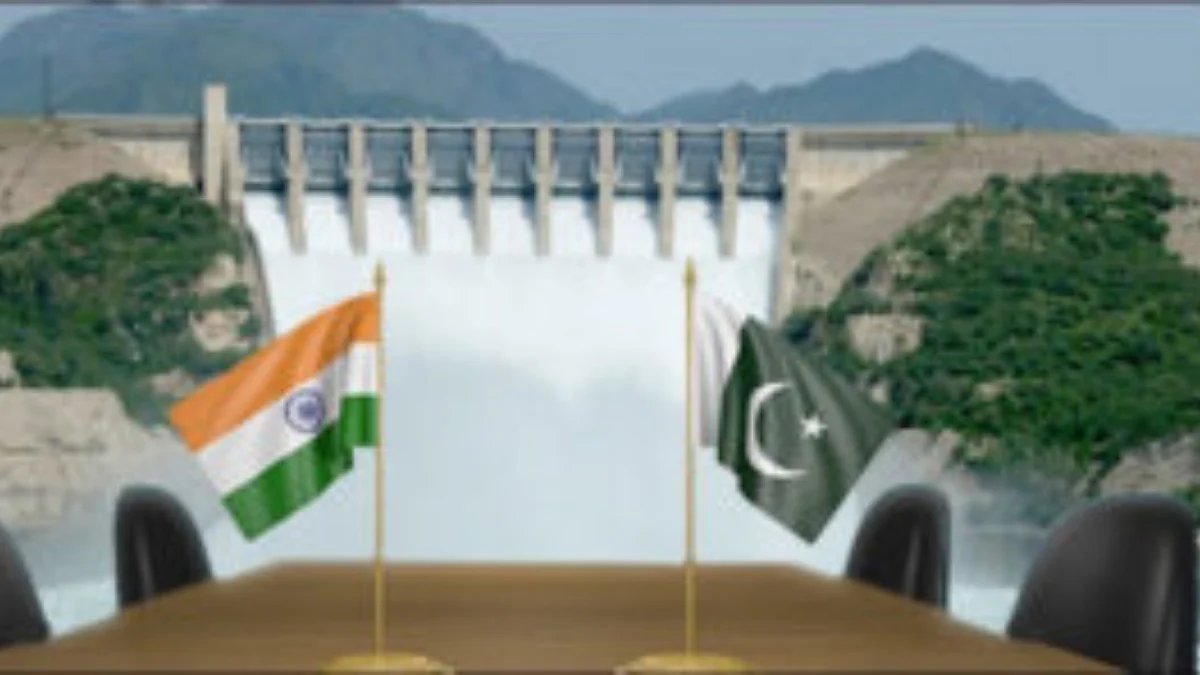
The Federal Minister for Planning, Development and Special Initiatives in Pakistan has warned that India’s decision to place the Indus Waters Treaty in abeyance has created a serious new security challenge for Pakistan, saying water could now be used as a tool of political pressure.
Speaking in a conversation with Farwa Amin, director for South Asian initiatives at the Asia Society Policy Institute in New York, the minister said the 70-year-old treaty had remained “untouchable” even through multiple wars between the two countries
“This time around, the Indian government has unilaterally held it in abeyance,” he said, describing the move as a possible first in modern history in which water had been “weaponized”.
He warned that India could potentially restrict water flows when Pakistan needed them for agriculture and release water at times when it was less useful, increasing pressure on the country’s food and water security.
Pakistan is responding by accelerating the construction of major reservoirs, including the Diamer-Bhasha and Mohmand dams.
The two projects are expected to provide about six million acre-feet of additional storage capacity once completed.
Ahsan Iqbal said Pakistan had not built a major new reservoir for four to five decades and therefore had significant ground to make up.
He said increased storage would help Pakistan deal not only with potential upstream pressure but also with increasingly unpredictable water availability caused by climate change.
Second, Islamabad is pursuing all available diplomatic channels to prevent the dispute from escalating into conflict.
“We cannot let this go unnoticed,” the minister said, adding that South Asia already has a history of wars and must now prioritize development, poverty reduction, disease control and literacy for its large youth population.
He observed that South Asia remains the least integrated region in the world despite the proven benefits of regional connectivity elsewhere.
At the same time, Islamabad says it wants to use diplomatic channels to prevent the dispute from developing into a wider conflict.
Ahsan Iqbal said Pakistan could not ignore the issue but argued that South Asia needed to focus on development, poverty reduction, health and education rather than another cycle of confrontation.
He also pointed to the region’s low level of economic integration, despite the benefits that greater connectivity has brought to other parts of the world.
On the Indus Waters Treaty, the message was unambiguous: Pakistan will build physical buffers and pursue diplomacy to ensure water is not turned into a permanent instrument of coercion.