

Running air conditioning can get expensive, especially in hot places like Florida, where I live. Still, not everyone has it. Only 20% of Europeans have AC at home, and worldwide, just about 15% of people in hot climates do, according to the International Energy Agency.
A Yale study found that air conditioning could prevent 57% of heat-related deaths. However, air conditioners can be expensive, use a lot of energy, and sometimes don’t fit well with home design in places like Europe.
New types of air conditioning are being developed in Europe. Researchers at the Institute of Architecture and Media at Graz University of Technology (TU Graz) in Austria have developed a creative solution: 3D-printed ceramic cubes.
These cubes use a traditional method called passive, or evaporative, cooling. When placed indoors, they help cool down rooms, and outdoors, they can lower the surrounding temperature. Made from ceramic clay, the 3D-printed cubes have a porous design that gives them a large surface area.
Because of their capillary properties, the cubes can absorb and hold moisture in a small space. They could be built into walls, added to large structures, or used as stand-alone units.
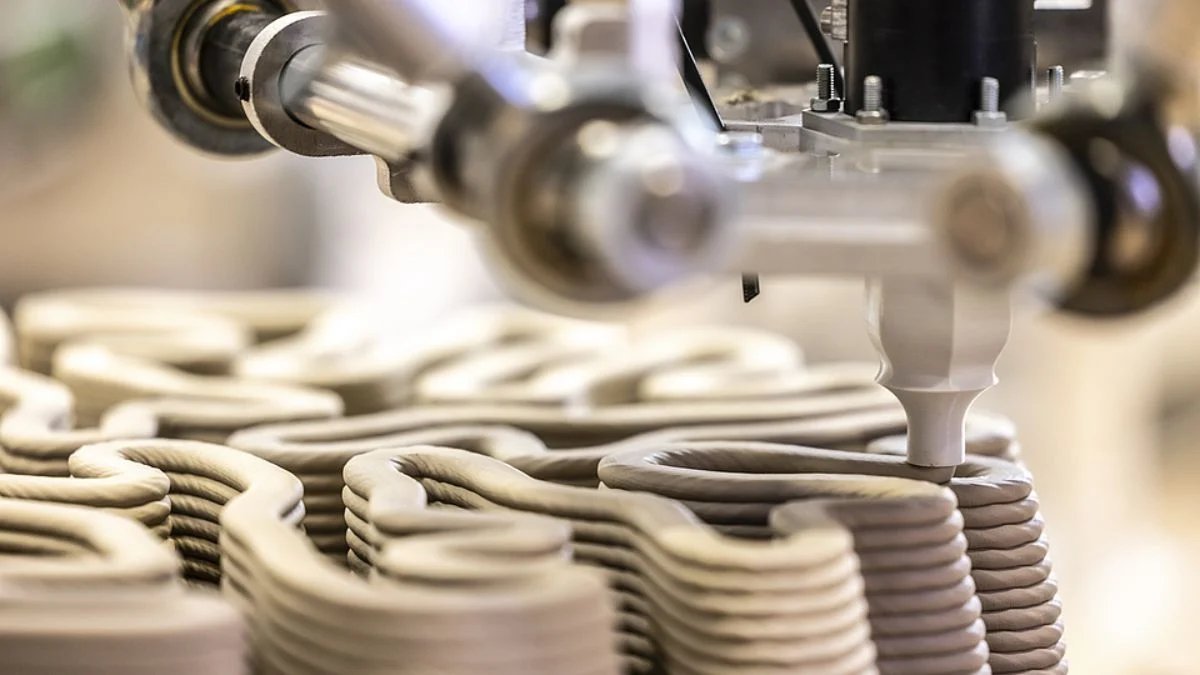
The team uses their own 3D printer, the A.R.G.O.S. 140200, which works with earth-based materials. In a test in a hot attic, the cubes lowered the temperature by almost 13 degrees Fahrenheit, making the space feel much cooler right away.
Right now, you can see outdoor displays of these cubes at the Museum of Perception in Graz, Austria, and on the TU Graz campus. The cubes sit inside a big wooden frame that’s about 6.5 feet on each side.
The special porous design lets the installation soak up moisture, which then spreads through the cubes by capillary action. This is the same way trees and plants move water from the ground up through their stems.
Since these 3D-printed cubes have proven to lower temperatures, they could be a great alternative to regular air conditioning.
One big advantage is that they don’t need constant electricity. TU Graz is looking into how to make these designs available for sale. Other similar technologies are also being developed. For example, a solar-powered cooling system using ammonium nitrate could work without electricity.
Using a fan is a cheap way to avoid turning up the AC. But what stands out about the TU Graz method is that it uses common materials and simple 3D printing, which could help keep costs low.