
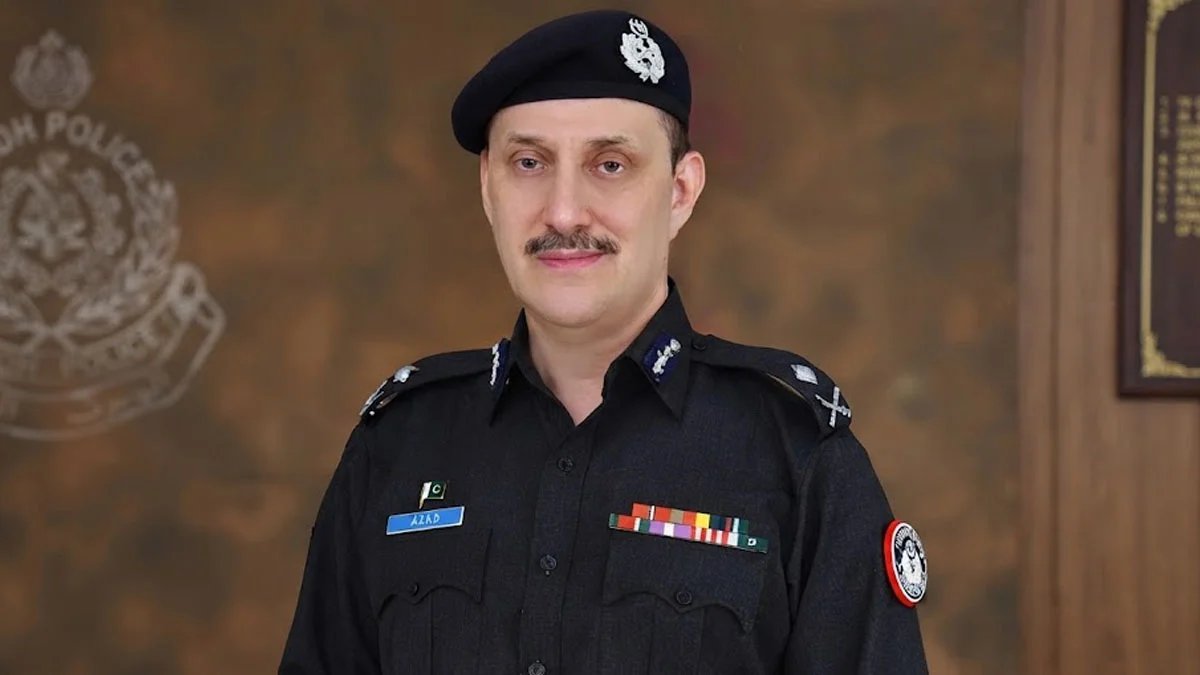
KARACHI: Additional Inspector General (AIG) of Police Azad Khan has submitted responses to 40 questions from the judicial commission investigating the Mir Raza case, explaining the police response to objections over the post-mortem report, the dispute surrounding the medical board and decisions taken during the investigation.
In his responses, Azad Khan addressed the timeline of events, his communications with police officials and medical officers, and the circumstances surrounding the August 9 meeting at the Chief Minister’s House. He also explained why the original investigation team was dissolved and a new team formed after the family expressed a lack of confidence in the probe.
Post-mortem objections and investigation
Azad Khan said an investigation team headed by SSP Samiullah Soomro was formed after progress in the probe stalled. He said no complaints had been received about witnesses being threatened, stopped from meeting their families or questioned by irrelevant officers.
Azad Khan said he learned through the media on August 5 about a letter dated August 3 in which the police surgeon raised objections to the post-mortem examination. The district police formally received the letter on August 6.
He said he learned about objections to the post-mortem report through the CPLC chief on August 4 and directed the DIG South to contact the police surgeon. According to the DIG South, the police surgeon believed the medico-legal officer’s findings were incorrect.
Azad Khan said the police surgeon had raised objections during a television programme but had not examined the body and had relied on photographs. He added that she did not mention the letter during a meeting with police officers on August 5.
Dispute over medical board
Azad Khan said he met Mir Raza’s family on August 5 but did not show them a presentation containing information obtained from the deceased’s smartwatch.
He said he learned on August 7 that the family had objections to the medical board. He expressed concern that delays in exhumation could lead to the loss of evidence and offered to approach the health secretary to request the inclusion of members nominated by Dr Sumaiya.
According to Azad Khan, the director general of health subsequently issued a supplementary order, which he shared with Dr Sumaiya. However, the police surgeon told him that the family did not agree to adding another member to the board.
Azad Khan said he tried to resolve the dispute by proposing that members of both medical boards be included and persuaded the police surgeon to proceed with the exhumation.
August 9 meeting and Dr Osama’s report
Azad Khan said he and the DIG East were summoned to a meeting at the Chief Minister’s House on August 9. He had asked SSP Samiullah Soomro to bring Dr Osama to assist with questions about the original post-mortem report, but denied inviting the doctor to the meeting.
He said participants believed the special medical board’s findings should take precedence over the original post-mortem report. Azad Khan denied asking Dr Osama to defend his initial opinion or challenge the special board’s findings.
According to Azad Khan, Dr Osama said no police officer had contacted him to influence his findings. The doctor had submitted his report in a drop box at the police surgeon’s office on July 30.
New investigation team
Azad Khan said the August 9 meeting decided to dissolve the first investigation team and form a new one after the family expressed a lack of confidence in the original team. A judicial commission was also proposed to investigate negligence and possible evidence tampering.
He said the family’s lawyer, Jibran Nasir, proposed DSP Siraj Lashari and Inspector Muhammad Ali for the new team on August 10.
Azad Khan denied receiving requests to retain or remove specific officers, show leniency towards anyone or protect any individual connected to the case.