
(24نیوز)پاکستان نے اقوام متحدہ سے خطے میں اسلحے کی دوڑ روکنے کا مطالبہ کرتے ہوئے کہا ہے کہ مقبوضہ جموں و کشمیر سمیت تمام تصفیہ طلب مسائل پر مذاکرات ہونے چاہئیں۔
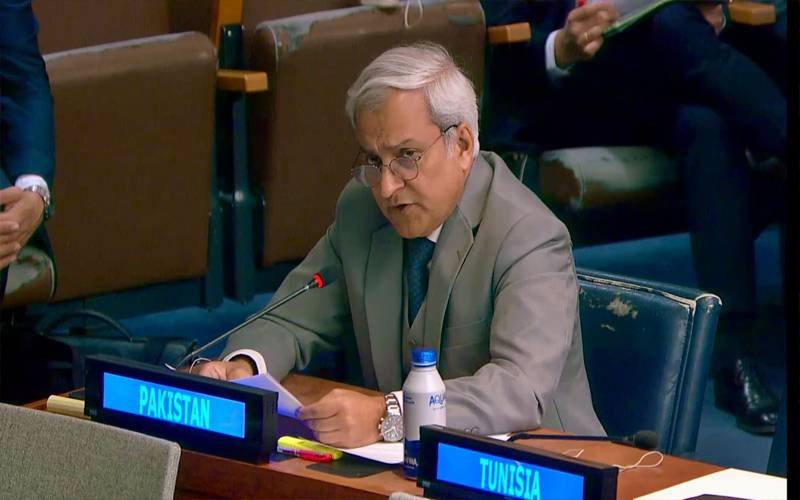
اقوام متحدہ کی جنرل اسمبلی میں پاکستان کے مستقل مندوب طاہر اندرابی نے کہا ہے کہ دنیا میں جنگوں کا دائرہ پھیل رہا ہے، بین الاقوامی قانون کی عمل داری کمزور ہو رہی ہے،تحمل کا راستہ ترک کیا جا رہا ہے۔
طاہر اندرابی نے کہا کہ مشرق وسطیٰ میں کشیدگی کم ہونی چاہئے، ایران،امریکا کے درمیان ثالثی کا نتیجہ جنگ بندی اور اسلام آباد مفاہمتی یادداشت کی صورت میں نکلا۔
Statement by Ambassador Tahir Andrabi Permanent Representative of Pakistan to the UN in Geneva At the General Debate of UNGA First Committee, (9th October 2026) ********* Chair, I congratulate you and other members of the Bureau on your elections. 2. We meet in a year in which wars have spread, international law has receded and restraint has been abandoned. Recourse to the unilateral use of force has become routine. 3. Global military spending has risen for the eleventh consecutive year. Rearmament is becoming a norm rather than compulsion. 4. The conflict in the Middle East has reverberated far beyond the region. Precious lives have been lost. Pakistan calls for immediate de-escalation, restoration of normal passage, and respect for the sovereignty and territorial integrity of all States in the region. 5. Regrettably, the Russia-Ukraine conflict has raged on for four years now. It is more than evident that there is no military solution to this conflict. 6. In Gaza, the ceasefire remains fragile. It must hold and lead to a sovereign, viable State of Palestine, with Al-Quds Al-Sharif as its capital based on the pre-1967 borders. Chair, 7. Pakistan’s answer to this disorder has been to further invest in dialogue and diplomacy, as demonstrated by Pakistan-sponsored UNSC resolution 2788 on “Strengthening Mechanisms for Peaceful Settlement of Disputes”. 8. Guided by these foundational principles, Pakistan acted as a mediator between Iran and the United States. Pakistan’s diplomatic efforts for de-escalation and broader regional stability, culminated in a ceasefire and the Islamabad Memorandum of Understanding. We continue to make efforts for a negotiated settlement of all outstanding issues for long-term peace and security. 9. Repeated aggression against sovereign States, and the failure to prevent it are deeply disturbing trends. The Mecca Joint Defence Agreement, between Pakistan, Saudi Arabia and Türkiye, defensive in character and consistent with the UN Charter, aims to promote collective efforts for peace, security and stability in the region and beyond. Chair, 10. South Asia remains hostage to a doctrine of force. In May last year, India launched an unprovoked military assault against Pakistan. Our response, in self-defence under Article 51, was precise and effective. 11. India has since elevated that aggression into declared policy — the so-called "new normal” — claiming the right to strike Pakistan at a time of its choosing, on any pretext it can manufacture. 12. It continues to hold the Indus Waters Treaty in abeyance — a treaty that provides no right of unilateral suspension — converting the water of 240 million people into an instrument of coercion. 13. It is engaged in the largest military build-up in our region — intercontinental-range, sea-based and hypersonic systems — enabled by discriminatory exemptions of export controls. Meanwhile, it evades dialogue: our last formal talks on nuclear and conventional confidence-building measures were held in 2012. 14. Pakistan does not seek an arms race. But we have the capacity to defend ourselves, as evident by our response in May 2025. We will, therefore, maintain Full Spectrum Deterrence within the framework of Credible Minimum Deterrence. The notion that a limited conventional war can be fought, and contained, under a nuclear overhang is a dangerous delusion. 15. Pakistan’s preference is not war but diplomacy. We remain ready for a meaningful dialogue on all outstanding issues, including the Jammu and Kashmir dispute, in accordance with UN Security Council resolutions. Our proposal for a Strategic Restraint Regime in the region remains on the table. Chair, 16. At the global level, Pakistan is concerned that arms control is being dismantled. Nuclear weapons are being modernized, the doctrines are being revised to expand their role across new territories, and there is open talk of returning to nuclear testing. 17. In outer space, the line between militarization and weaponization is being erased, while PAROS negotiations remain blocked. 18. The introduction of artificial intelligence in theatres of close entanglement of conventional and nuclear systems is fraught with serious risks and must be subject to effective guardrails. We believe the decision to employ nuclear weapons, in all circumstances, must remain in human hands. Chair, 19. A durable and equitable international peace and security architecture must rest on the following principles: One, universal and consistent application of the UN Charter, UN Security Council resolutions and international law; Two, implementation of the assurance in the SSOD-I that “every state has an equal right to security”; Three, faithful compliance with and fulfillment of arms control and disarmament obligations by respective states; Four, reinvigoration of conventional arms control at regional and sub-regional levels, including the establishment of zones of peace under the UN auspices; and, Five, strengthening cooperative and inclusive multilateralism in pursuit of collective security. Chair, 20. In the Conference on Disarmament, Pakistan supports the immediate start of negotiations on a legally binding instrument on Negative Security Assurances (NSAs) and on a Treaty on the Prohibition of the Placement of Weapons in Outer Space. 21. A treaty banning only future production of fissile material, while excluding stocks sufficient for thousands of new weapons, is cost-free for its proponents and will remain a non-starter. The recent announcement by some nuclear weapon states to increase their warheads without resuming fissile material production vindicates our position. 22. As a responsible nuclear State committed to global non-proliferation, Pakistan maintains a comprehensive export control regime. Our national control list was revised in October 2025 and is fully harmonized with the Nuclear Suppliers Group, the Missile Technology Control Regime and the Australia Group. This year, we also enacted the Biological and Toxin Weapons Convention (Implementation) Act, giving full domestic legal effect to our obligations under the BWC. Chair, 23. As the last President of the 2026 session of the CD, Pakistan will also introduce the draft resolution on the Report of the Conference. 24. Lastly, Pakistan has decided to contribute to the efforts towards rationalizing the work of this Committee by biennializing two of its four traditional resolutions. As a result, Pakistan will table three resolutions this year. We count on the continued support of Member States for their adoption. I thank you. ******* @TahirAndrabi @PakUN_Geneva
— Permanent Mission of Pakistan to the UN (@PakistanUN_NY) October 10, 2026
انہوں نے بتایا کہ سعودی عرب اور ترکیہ کے ساتھ مکہ دفاعی معاہدہ دفاعی نوعیت کا ہے، مکہ دفاعی معاہدہ اقوام متحدہ کے منشور سے مطابقت رکھتا ہے۔
پاکستانی مستقل مندوب نے کہا کہ جنوبی ایشیا کا خطہ بھارت کے جارحانہ عسکری نظریات کی وجہ سے عدم استحکام کا شکار ہے، جنوبی ایشیا بھارت کی بڑے پیمانے پر فوجی توسیع کے باعث دباؤ کا شکار ہے۔
طاہر اندرابی نے کہا کہ پاکستان اسلحے کی دوڑ نہیں چاہتا لیکن ضرورت کے مطابق دفاعی صلاحیتیں برقرار رکھے گا، جوہری صلاحیتوں کی موجودگی میں جنگ کو کنٹرول میں سمجھنا غلط ہے۔
یہ بھی پڑھیں:بھارت میں بڑا ہنگامہ! 250 ٹرینیں منسوخ،57 سٹیشن بند، انٹرنیٹ معطل
اقوام متحدہ میں پاکستان کے مستقل مندوب طاہر حسین اندرابی نے کہا کہ مقبوضہ جموں و کشمیر سمیت تمام تصفیہ طلب مسائل پر مذاکرات ہونے چاہئیں۔