

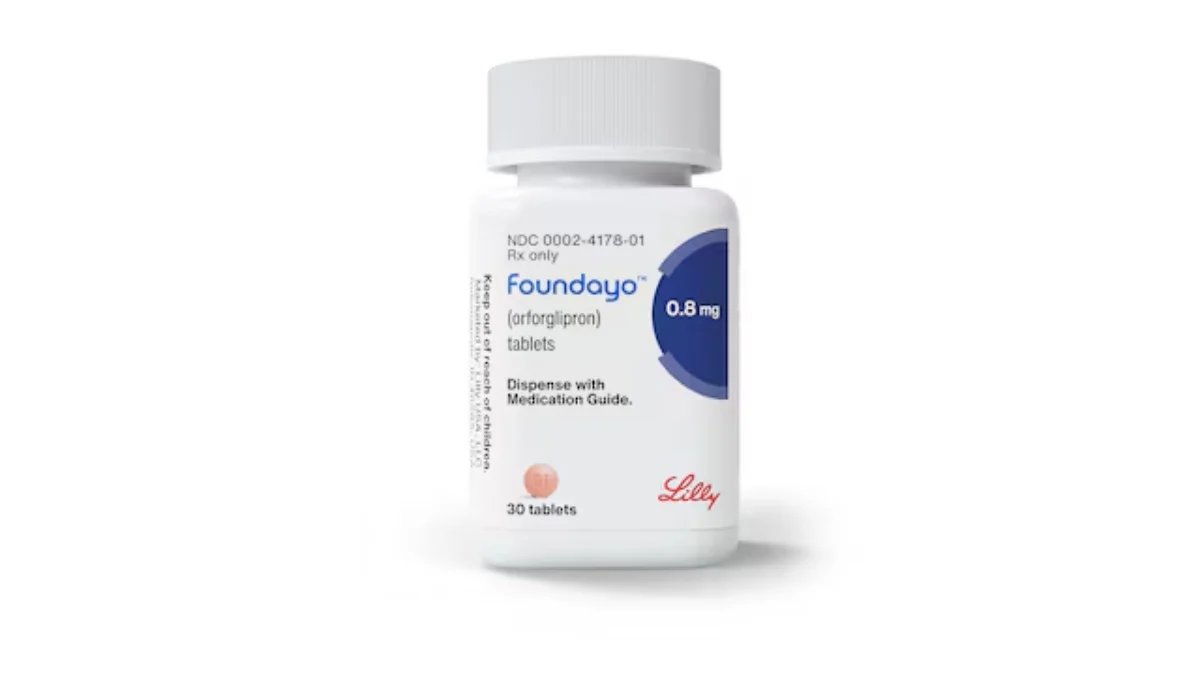
The European Medicines Agency’s committee on Friday recommended approval of Eli Lilly’s weight-loss pill Foundayo, the second oral obesity drug to win the agency’s backing after Novo Nordisk’s Wegovy pill.
The recommendation will now be reviewed by the European Commission before it gives the final nod to launch the drug in the region.
Both Novo and Lilly are racing to broaden access to their oral drugs, as they aim to secure a larger share of a market expected to surpass $100 billion by 2030.
Foundayo was launched in the US in April and in the UK in August, and generated $98 million in sales in the second quarter.
Novo’s Wegovy pill generated 3.22 billion Danish crowns ($484.50 million) in the same quarter. The pill won EU approval in July. It is also available in the US, the UK and the UAE.
The EMA on Friday recommended a marketing authorisation for Foundayo for weight management and treatment of type 2 diabetes in adults.
Bernstein analyst Courtney Breen expects the company to launch the drug in the EU for obesity around year-end, adding that for diabetes, “the launch timing depends on member-state reimbursement”.
Lilly will work with governments, payers and healthcare systems to help ensure people who could benefit from Foundayo have an opportunity to access it, said Ken Custer, president of Lilly Cardiometabolic Health.
The pill, which Lilly has sought approval for in more than 40 countries, contains orforglipron, a small-molecule GLP-1 receptor agonist that can help reduce appetite and food intake.
Early US prescription data for oral weight-loss drugs has supported expectations that pills could expand the obesity market by attracting patients who have been reluctant to use injections.
Foundayo has, however, seen a slower uptake in the US compared to Novo’s Wegovy, which was first to market.
Unlike the Wegovy pill, Foundayo can be taken at any time of the day without food or water restrictions, a feature that Lilly has touted as a key advantage of the drug.
It remains unclear whether patients perceive Foundayo’s convenience as compelling enough to drive broader adoption.