

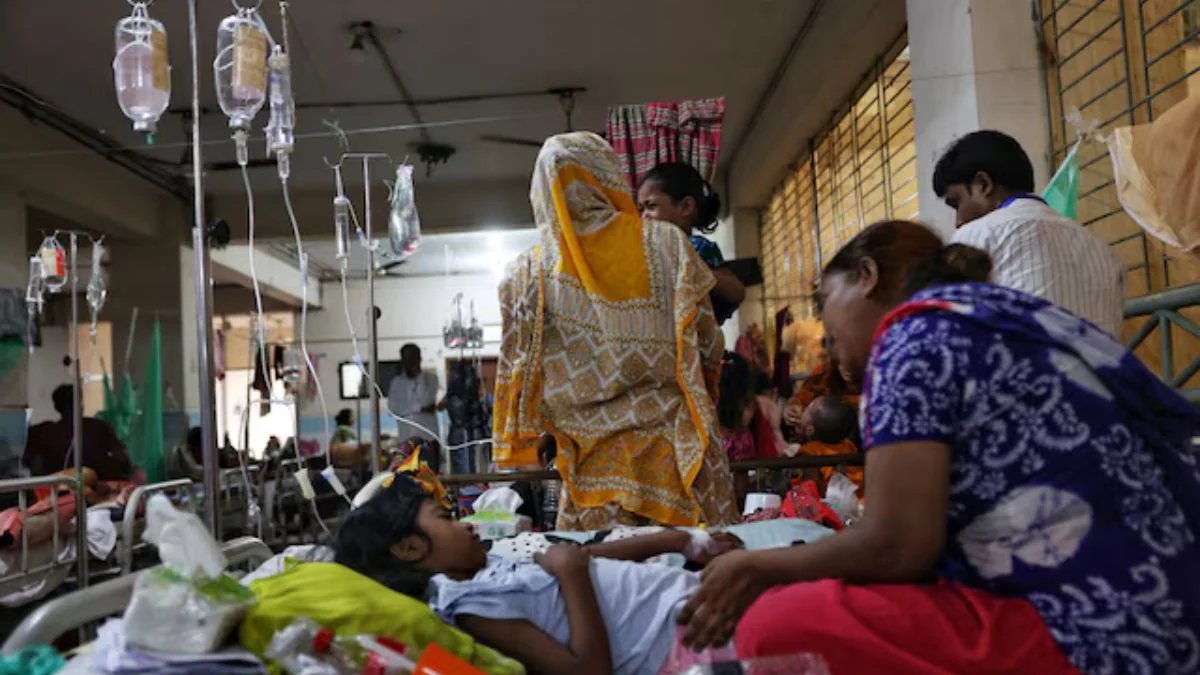
DHAKA: Bangladesh recorded its highest monthly dengue death toll of the year in October, with experts warning the outbreak is unlikely to ease significantly before December.
The outbreak has killed 418 people and led to more than 133,000 hospital admissions this year as of October 30, according to health ministry data. October alone accounted for 173 deaths, surpassing September’s 148 and making it the deadliest month of 2026 so far.
The surge comes as Bangladesh is also battling the world’s worst measles outbreak, which has killed more than 1,200 people, placing additional strain on an already stretched healthcare system.
HOSPITALS UNDER PRESSURE
Doctors said many dengue patients were only seeking hospital admission after developing severe complications. At the state-run Shaheed Suhrawardy Medical College and Hospital in Dhaka, 279 dengue patients were being treated after 67 new admissions in a single day, hospital director Mirza Golam Sarwar said.
“We are getting many patients in shock. Their blood pressure is sometimes too low to measure, and their oxygen levels are dropping,” he said.
Medicine specialist ABM Abdullah said repeat infections and delays in diagnosis and treatment were driving severe cases and deaths.
“People who have had dengue before may face a greater risk of severe illness if they become infected again,” he said, urging people to eliminate mosquito breeding sites and seek care as soon as symptoms appear.
Dhaka resident Faisal Ferdous, 33, was diagnosed with dengue in 2017, 2024 and again earlier this month. “This time, both my wife and I needed hospital treatment,” said Ferdous, who is now at home recovering.
Ferdous said the couple fell ill shortly after spending several days at a hospital where their five-year-old son was being treated for an unrelated illness.
“Every bout has been difficult, and after getting it repeatedly, you become increasingly concerned about the risk of severe illness,” he said.
Health experts warn that the circulation of all four dengue virus serotypes is increasing the risk of severe disease. People infected with one strain can later contract another, raising the likelihood of complications. Bangladesh has yet to introduce a dengue vaccine, although authorities are considering one as a longer-term measure.
CLIMATE CHANGE EXTENDS DENGUE SEASON
Entomologist Kabirul Bashar of Jahangirnagar University said deaths were unlikely to continue rising at October’s pace, but transmission would probably persist through November.
“We may see some relief, but dengue is unlikely to disappear in November. Any decline is likely to be modest, with significant improvement unlikely before December,” he said.
Bashar said mosquitoes would continue emerging from breeding sites created by earlier rainfall, sustaining transmission even as conditions become drier. Changing rainfall and humidity patterns, partly linked to climate change, were extending mosquito breeding seasons and keeping Aedes mosquitoes active for longer, he said.