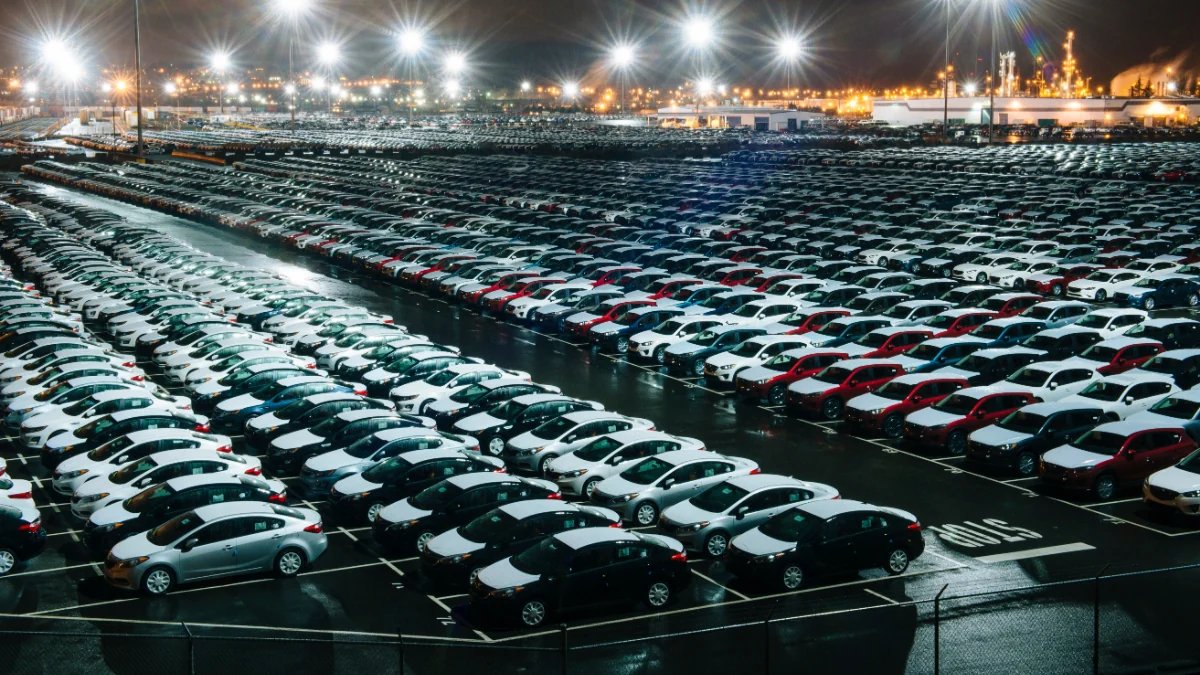
Pakistan has unveiled a new automotive policy aimed at increasing vehicle exports 30-fold, from $200 million to $6 billion, while gradually reducing prices and promoting affordable cars and electric vehicles (EVs).
Information Minister Attaullah Tarar and Prime Minister’s Advisor on Industries and Production Haroon Akhtar Khan announced the policy at a news conference on Saturday, November 7, 2026.
Haroon Akhtar said the policy had been finalized after extensive consultations, adding that Prime Minister Shehbaz Sharif had personally devoted considerable time to its preparation.
The policy is based on six key pillars: affordable vehicles, particularly for middle- and lower-middle-income households; exports; localization; vehicle safety; promotion of electric vehicles; and transparency.
He said the government had introduced a tariff policy aimed at reducing production costs and the import bill for raw materials.
“The prices of all vehicles, except luxury vehicles, will come down,” he said.
He explained that prices would decline gradually as duties on completely built-up (CBU) vehicles and assembly plants were reduced annually, with more competitive tariff structures expected within five years.
However, the expected price reductions would primarily benefit middle- and higher-income buyers, he added.
Describing large-scale industries as a government priority, Haroon Akhtar said the automotive sector played an important role in Pakistan’s large-scale manufacturing industry.
He noted that successive governments had introduced automotive policies over the past decade, but these had failed to deliver significant export growth.
The new policy places exports at its center, with manufacturers required to meet specific export targets. Companies failing to achieve those targets will face financial penalties, he said.
The government also aims to increase the use of locally manufactured components and raw materials to strengthen domestic supply chains and create employment opportunities.
Under the new policy, car manufacturers will not be allowed to collect advance payments exceeding 20 percent of a vehicle’s price at the time of booking.
A total of 45 new standards have also been added to bring locally assembled vehicles up to international quality levels.
Akhtar said the government was also placing greater emphasis on electric vehicles, particularly in light of recent regional tensions and Pakistan’s vulnerability to fluctuations in international oil prices.
The financing limit for electric vehicle purchases has been increased from Rs.2 million to Rs.10 million, while import duties on EV charging stations have been reduced.
In a post on X, Information Minister Attaullah Tarar said the policy had been developed following consultations with stakeholders, an analysis of technical data and a review of international automotive industry models.
He said the government intended to promote innovation, value addition and localization to create jobs and make Pakistan an automotive export hub.
Tarar added that expanding electric vehicle use would help reduce carbon emissions and the country’s oil import bill.
He described the policy as a significant step towards providing Pakistanis with affordable, high-quality and environmentally friendly transport.