The Chief Minister of Sindh, Syed Murad Ali Shah, has said that a significant decline in polio cases has been recorded, with only one case so far in 2026 compared with nine in 2025 and 23 in 2024.
He noted this while reviewing the province’s polio eradication efforts at a meeting of the Provincial Task Force on Polio Eradication in Karachi.
Officials said environmental surveillance data also indicated that poliovirus circulation was becoming increasingly concentrated in a small number of high-risk areas.
According to the briefing, the number of sites testing positive for poliovirus fell from a peak of 29 in March 2025 to five in August 2026.
All 14 surveillance sites outside Karachi were reported to be negative. In Karachi, six of 15 sites continued to test positive.
The province’s only confirmed polio case this year was reported in Sujawal on 10 February, officials said.
Briefing the meeting, Health Minister Dr Azra Fazal Pechuho said Pakistan’s wild poliovirus (WPV1) cases have declined sharply from 74 in 2024 to 31 in 2025 and only three so far in 2026.
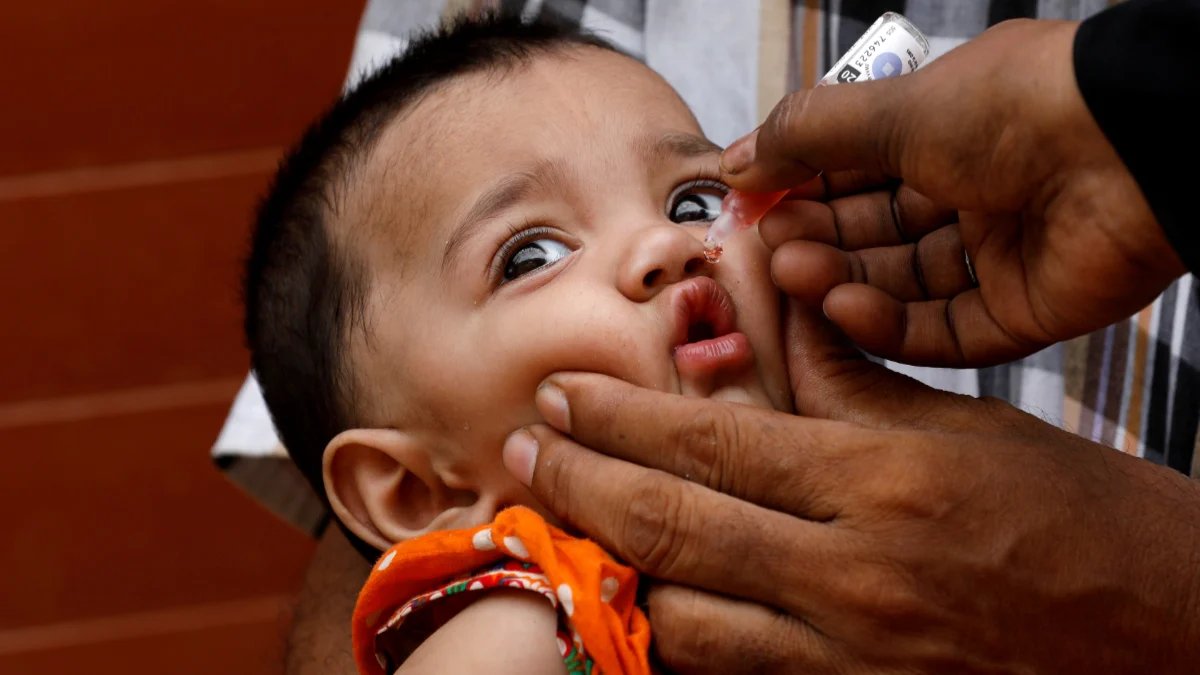
The chief minister directed officials to step up vaccination, surveillance and community engagement ahead of the Sub-National Immunization Days (SNIDs) campaign from 21 to 27 September.
Nearly 10 million children under the age of five are expected to receive oral polio vaccine during the campaign across Sindh.
Over 80,000 frontline workers will take part, while about 26,000 police personnel have been assigned security duties.
The campaign will cover 23 districts in full, along with selected union councils in seven partially covered districts.
CM Sindh also directed district administrations to address missed vaccinations, refusals, and operational gaps, and called for greater attention to migrant and mobile populations and communities with low routine immunization coverage.
Officials said the continued detection of poliovirus in environmental samples remained a warning despite the decline in confirmed cases.
The chief minister called for increased vaccination and monitoring in Karachi and other high-risk areas, as well as implementation of the Karachi Action Plan 2.0.
“Environmental samples are warning signals. We must act before the virus finds susceptible children,” he said.
Officials also reported that a 10-day follow-up campaign after the July SNIDs drive vaccinated more than 23,500 of 146,149 children who had initially been missed.
The chief minister appreciated the efforts of frontline workers, teachers, community mobilisers and health staff working in remote and hard-to-reach areas, describing them as the backbone of the eradication program.
Murad Shah directed district administrations to further reduce refusal rates through stronger community engagement and public awareness campaigns, emphasizing that building trust with parents remains critical to the success of the program.
Concluding the meeting, Murad Shah reaffirmed Sindh’s commitment to achieving a polio-free future.