

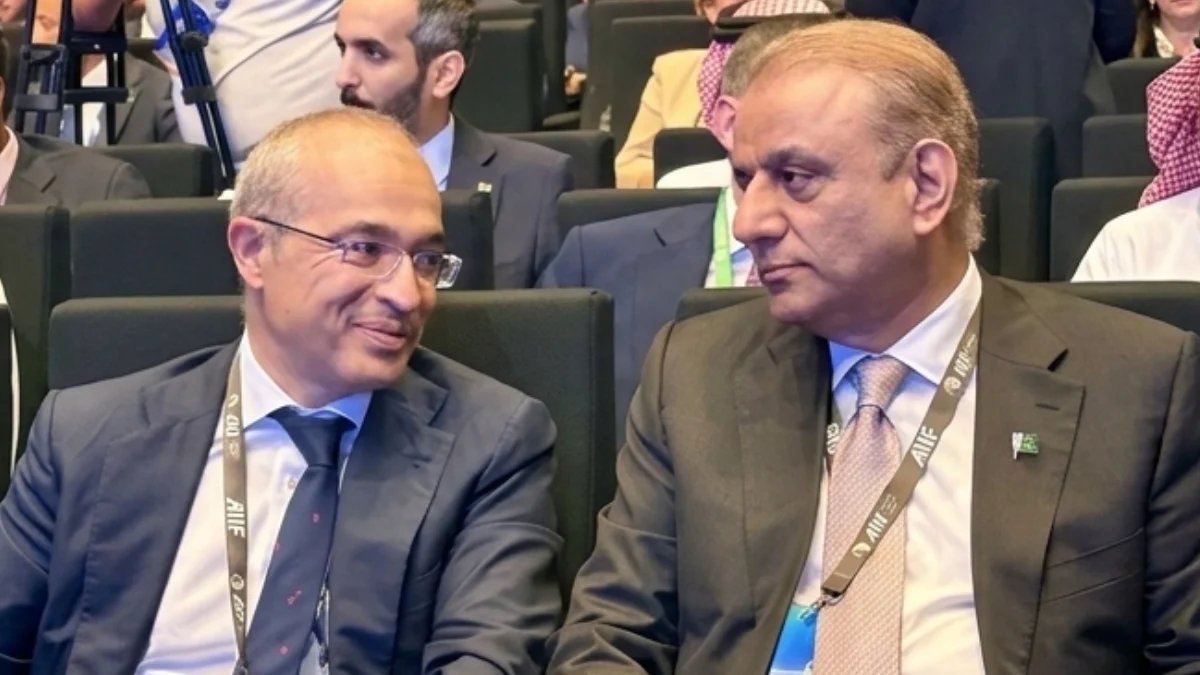
Baku: Federal Minister for Communications Abdul Aleem Khan presented Pakistan’s strategic approach to regional economic stability, trade connectivity, and infrastructure development during a high-level panel discussion at the Azerbaijan International Investment Forum in Baku. Speaking to esteemed international delegates, the Federal Minister outlined urgent global macroeconomic issues, such as petroleum and maritime freight inflationary pressures and geopolitical upheavals impacting established trade routes. He underlined that Pakistan has strict fiscal discipline and proactive national austerity measures in place to protect public finances and preserve economic resilience in unpredictable times.
Furthermore, the Federal Minister emphasized that Pakistan is positioning itself as a neutral diplomatic venue and constructive mediator during regional conflicts to de-escalate tensions and ensure long-term trade continuity.
Federal Minister for Communications Abdul Aleem Khan underscored that Pakistan is leveraging its unique geoeconomic position to serve as a reliable transshipment hub and safe haven for regional commerce especially during the current conflict in the region. He stated that Pakistan’s deep-sea ports—Karachi Port, Port Qasim, and Gwadar Port—remain fully operational to ensure uninterrupted global supply chain flow, noting that Karachi Port Trust alone efficiently handled over 54.68 million metric tons of cargo in the previous fiscal year. Highlighting Pakistan’s role as an ocean gateway for landlocked Central Asian Republics, he noted significant growth in bilateral trade, including exports to Kazakhstan exceeding $240 million and exports to Uzbekistan surpassing $118 million.
Detailing internal infrastructure modernization, the Minister outlined key motorway projects —including the M-6 Motorway, M-10, and MNJC Motorway—which serve as vital trade arteries offering seamless connectivity to Western China and Central Asia. He highlighted bilateral trade arrangements with Azerbaijan, supported by 1,500 annual reciprocal transport permits, which link Pakistani deep-sea ports directly to the South Caucasus and the Trans-Caspian Middle Corridor. Concluding his address, the Federal Minister reaffirmed Pakistan’s commitment to expanding Public-Private Partnerships, paperless TIR customs digitalization, and integrating CPEC with ECO, CAREC, and SCO networks to establish a durable Eurasian economic bridge.
Important foreign leaders, such as Azerbaijan’s Minister of Economy Mikayil Jabbarov and Turkey’s Minister of Treasury and Finance Mehmet ?im?ek, were also present at the panel discussion. The high-level discussion also included senior leadership and economic ministers from Uzbekistan, North Macedonia, Syria, Tajikistan, and Montenegro.