

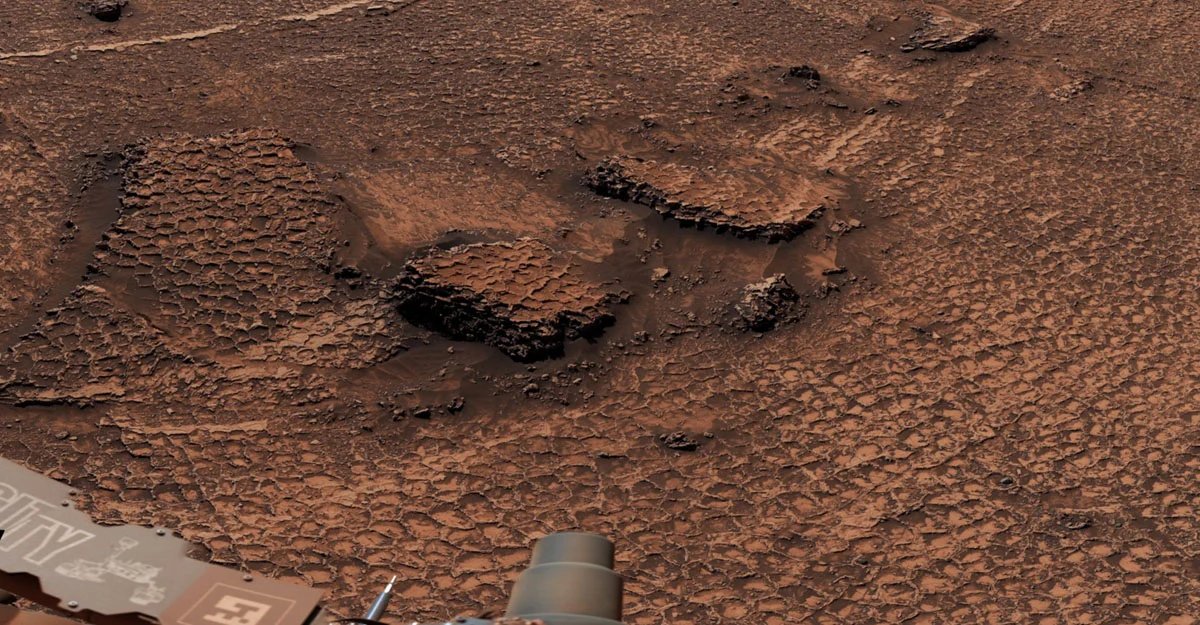
NASA’s Perseverance rover has uncovered evidence that the rim of Jezero Crater on Mars was subjected to three separate episodes of water interacting with rocks, one of which was a phase of hot groundwater deep below the surface in the ancient past.
The study, published in Communications Earth & Environment, concentrates on an area near the crater’s rim called the Margin Unit.
In orbit, scientists anticipated to find the signature of sedimentary rocks created by an ancient lake shoreline.
Perseverance uncovered igneous rocks that were modified by later water flow, suggesting the site was a meeting point for surface water, deep groundwater and hydrothermal flows.
“They used the rover’s Super Cam instrument on more than 185 geological targets to identify a three-phase pattern of water activity,” reports NASA.
“First, the rover’s Super Cam instrument on more than 185 geological targets to identify a three-phase pattern of water activity. First, carbon-dioxide-rich groundwater interacted with olivine minerals to produce abundant deposits of carbonate within cracks in the rock.
Standing surface water from Jezero’s lake precipitated silicas in the rock.
An extensive hydrothermal event at high temperature generated veins of calcium sulphate and fluorite in the eastern Margin Unit.
The finding of heated liquids is especially important for astrobiologists given that conditions beneath hydrothermal activity on Earth are conducive to supporting microbial life. As the Jezero Crater is situated within one of the biggest carbonate outcrops on Mars, the discoveries also shed light on the general climate evolution and history of the planet.
The timing of all three hydrological events has been deduced but researchers are analyzing the results further to pinpoint their specific time frames.