
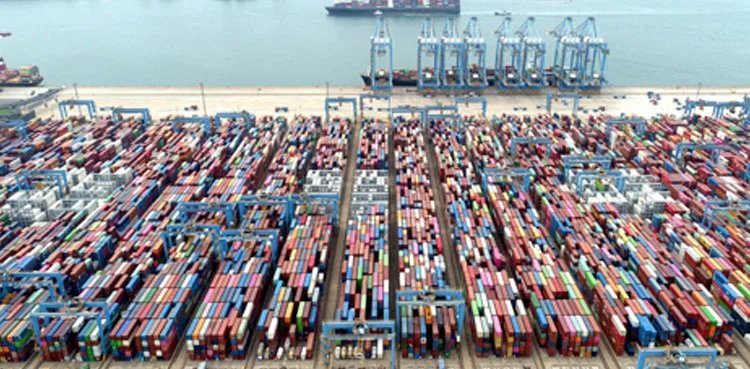
The Trump administration accused Chinese exporters of orchestrating a system of “illegal transshipment” through more than 40 third countries to dodge US tariffs, branding the practice “The Great Transshipment Scam” as China rejected allegations.
The 25-page document alleges Chinese firms have systematically diverted goods through lower-tariff jurisdictions since the US kicked off its trade war with China in 2018.
The 40 countries named as participants in the alleged transshipment scam include major US trading partners such as Canada and Mexico, as well as allies such as Japan, South Korea, the European Union and Israel.
Most Southeast Asian countries are also on the list, among them Indonesia, Malaysia, Thailand, Vietnam, Singapore, Cambodia, Laos, Myanmar and the Philippines. South Asian countries such as India, Bangladesh and Sri Lanka are also named.
The report says that the administration will increase the use of artificial intelligence to monitor trade and spot transshipped goods, an initiative it calls the “Detective Border”.
It alleges that exporters use limited assembly, relabelling, repackaging, re-invoicing and false country-of-origin declarations to disguise Chinese-origin products and secure more favourable tariff treatment on entry into the US.
The White House report says that Chinese exporters have “increasingly routed goods through third countries … where limited assembly, finishing, repackaging, relabelling or documentation changes could create the appearance of a different national origin.”
“For years China to launder its exports through more than 40 countries, rob our treasury of tens of billions of dollars, and steal the paychecks of American workers,” said Peter Navarro, the White House senior counsellor for Trade and Manufacturing.
The Chinese embassy in Washington said that Beijing opposed the “overstretching of the concept of national security” and the use of state power to suppress Chinese enterprises”.
It also warned that any “unilateral actions or agreements concerning transshipped goods must not target or harm the interests of third parties.”
“We firmly oppose any party seeking to strike a deal at China’s expense or engaging in baseless economic coercion that severely infringes upon the legitimate rights and interests of relevant enterprises and gravely disrupts the stability of global industrial and supply chains,” embassy spokesperson Liu Chang said.
“Should such situations arise, China will resolutely take necessary measures to safeguard its legitimate rights and interests.”